Fushimi Inari at Night: A Local's Guide to Visiting After Dark
I lived in Kyoto for six years. During university, Fushimi Inari was my backyard.
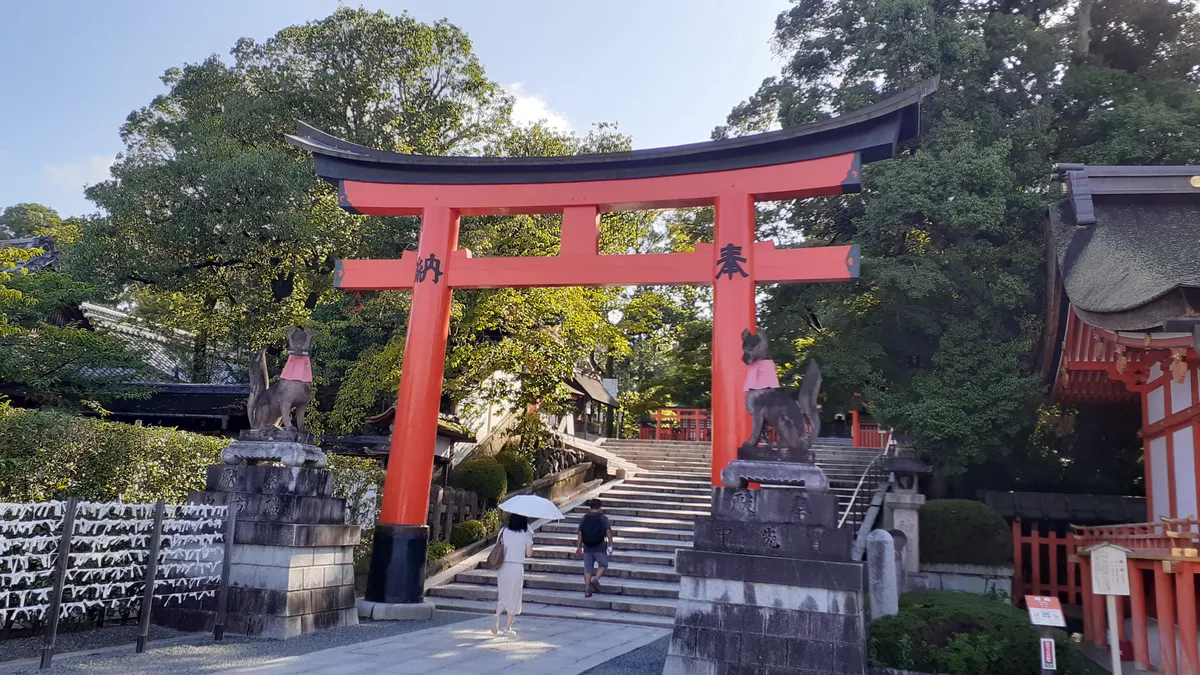
Most people only know the daytime Fushimi Inari — the one packed with tourists. But this shrine is open 24 hours, and its true character reveals itself after the crowds leave. Vermillion torii gates float in the glow of stone lanterns, fox statues stare back at you from the darkness, and the only sounds on the mountain trail are your own footsteps and the hum of insects.
Having visited countless times during my years living in Kyoto, I can say this: nighttime Fushimi Inari is a completely different place from the daytime version. I’m not recommending this as a clever hack to avoid crowds. I’m recommending it as the right way to experience the spiritual atmosphere this shrine was always meant to have.
Why Go at Night
Let’s be honest — the daytime crowds at Fushimi Inari are exhausting. People line up to take photos in front of the senbon torii, shuffling forward while bumping into the person ahead. Experiencing that famous orange tunnel as “your own space” is virtually impossible during the day.
The Practical Benefits
- No crowds. After 8 PM, the number of people on the trail drops to a fraction of daytime levels. Past 10 PM, you can have the entire torii tunnel to yourself.
- Free admission. Just like during the day, Fushimi Inari is always free.
- No time limits. There’s no closing gate, so you can stay as long as you like.
- Completely different photos. Long exposures of lantern-lit paths, empty corridors of torii gates — the images you get at night look nothing like daytime tourist snapshots.
The Real Reason: The Atmosphere Transforms
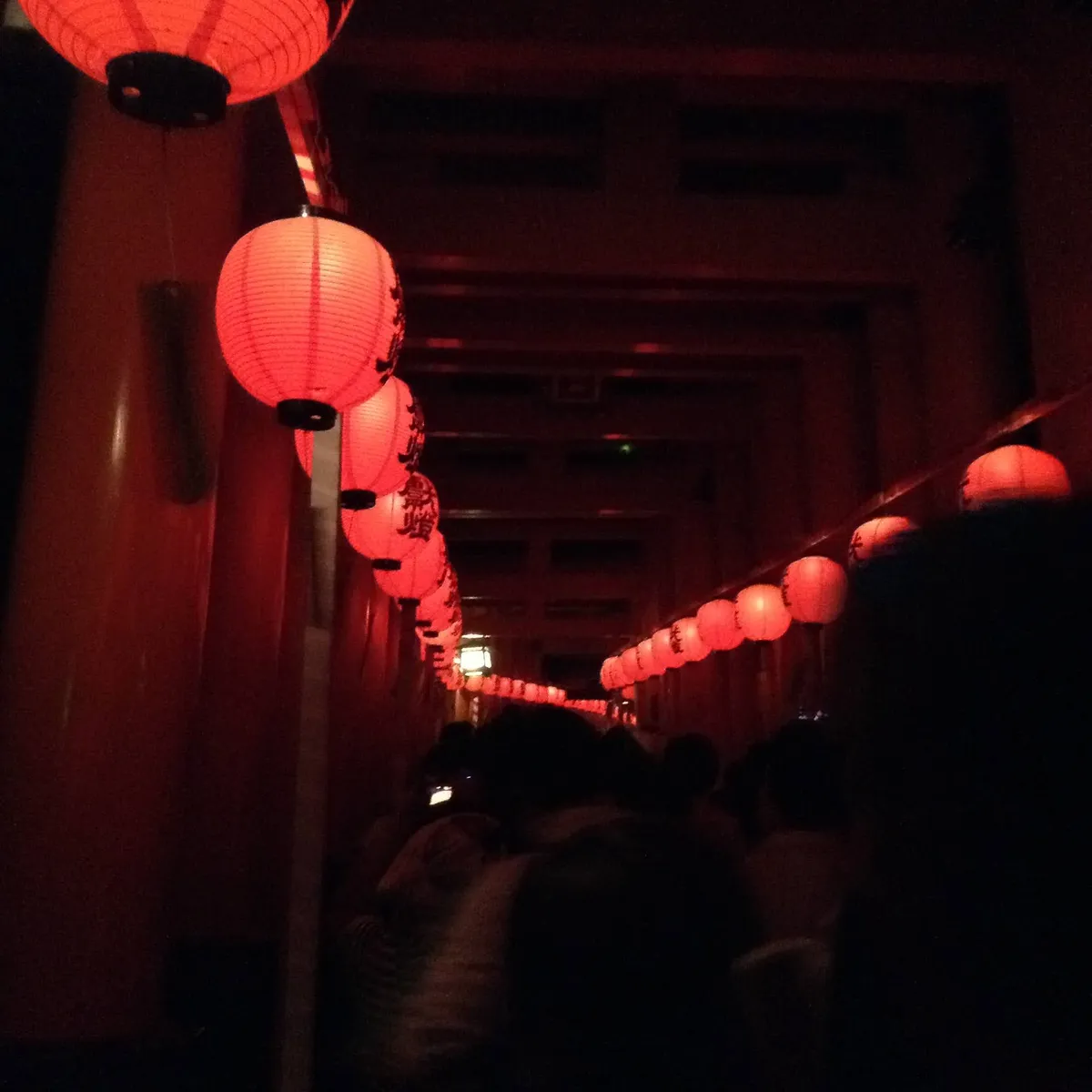
The real reason I keep coming back to Fushimi Inari at night isn’t to avoid crowds. It’s because the atmosphere changes completely.
Fushimi Inari is a Shinto shrine dedicated to Inari, the deity of rice, abundance, and foxes. The tens of thousands of torii gates were donated over centuries by individuals and businesses as offerings. Walking through them at night — with only lantern light, the sound of crickets, and the faint rustle of something in the underbrush — you can feel the shrine’s original character as a place of worship. It’s a feeling you’ll never get while standing in line behind a tour group during the day.
The fox statues — kitsune — take on a different presence at night too. These messengers of the Inari deity are daytime photo spots, but when shadows cut across their stone faces after dark, they genuinely feel like they’re watching you. In six years of living in Kyoto, I got chills more than once from the sensation of being “watched” by the foxes of Fushimi Inari.
The Trail at Night: Section by Section
The trail at Fushimi Inari runs from the main shrine at the base to the summit of Mount Inari (233 meters) — a loop of roughly 4 kilometers. At night, the experience changes dramatically depending on how far you go.
Base Shrine Area (0-10 minutes)
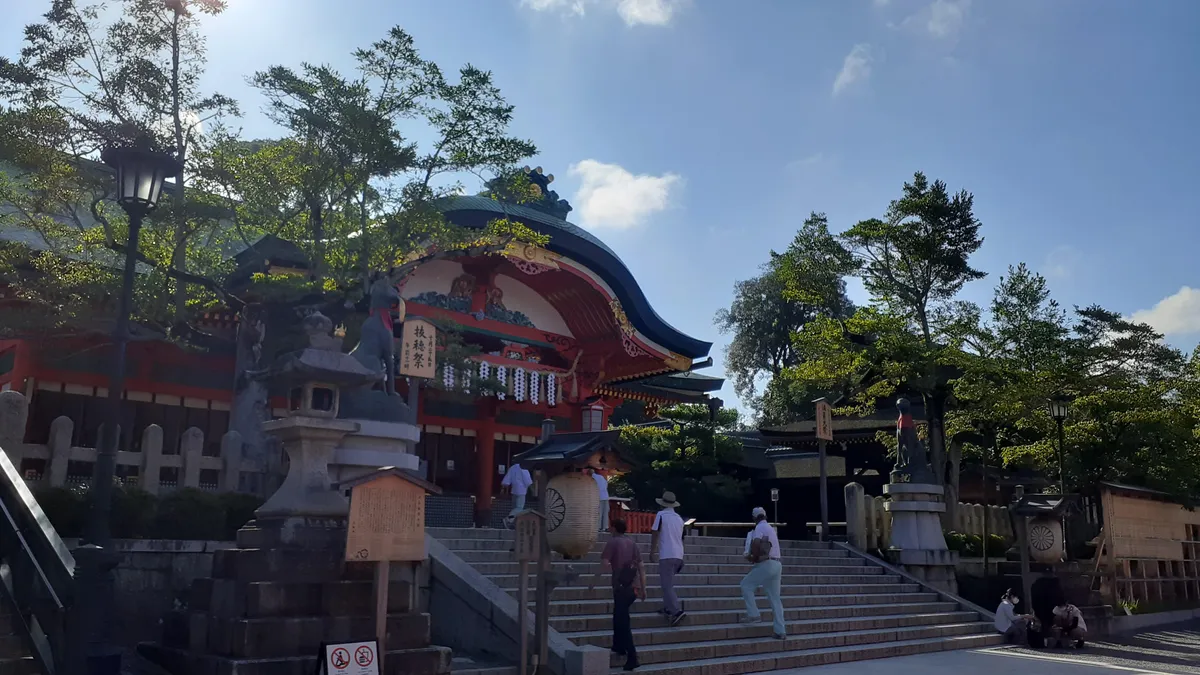
The main hall (honden) and the tower gate (romon) are illuminated until around 10 PM. At night, the vermillion buildings stand out beautifully against the dark sky — a different kind of beauty from the daytime view. The grounds are nearly deserted, a far cry from the daytime chaos.
The shrine office and ema (prayer tablet) area close at sunset, but you’re free to walk through the grounds.
Senbon Torii — The Thousand Gates (10-20 minutes)
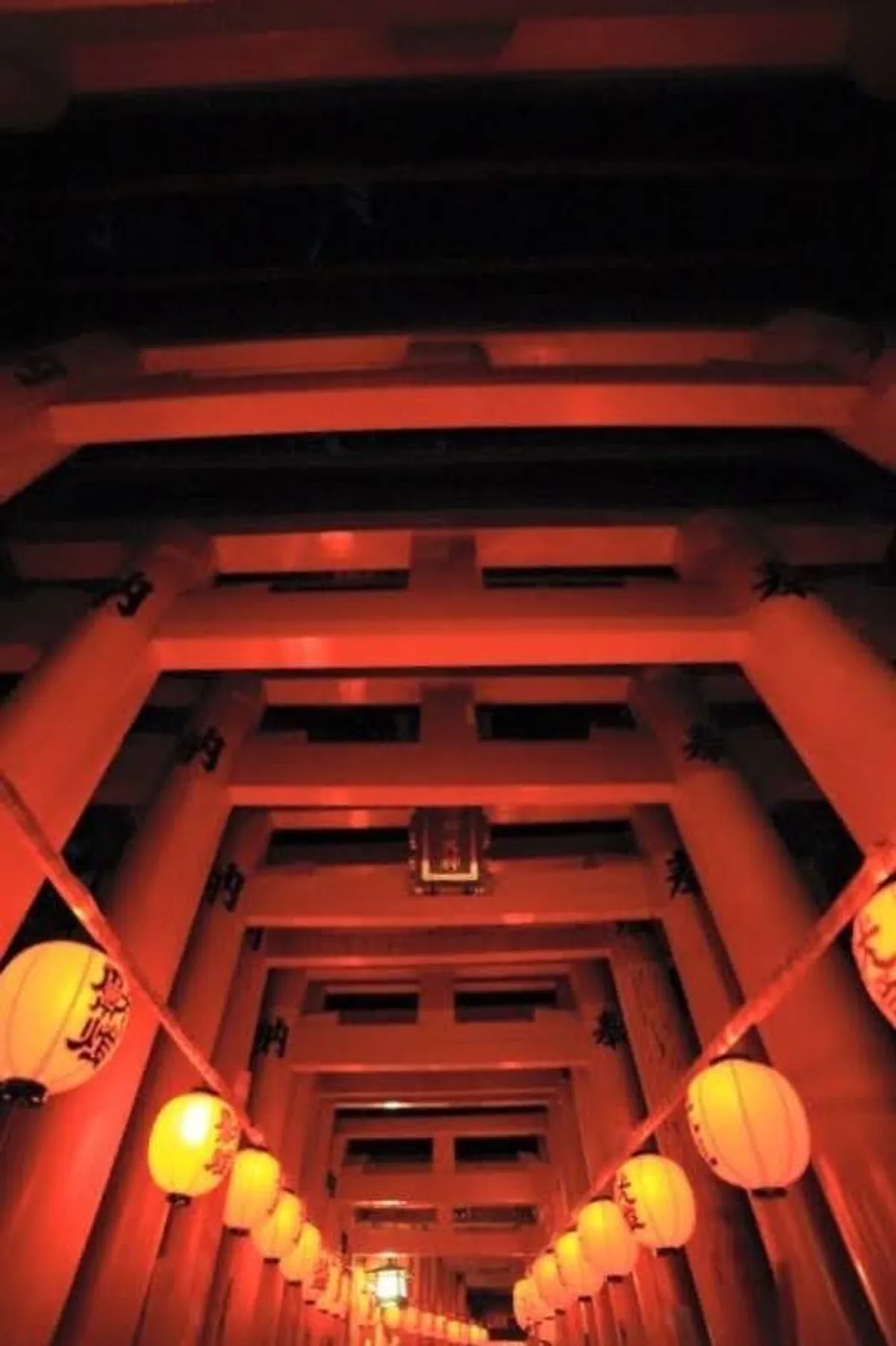
Behind the main hall, the famous tunnel of orange torii gates begins. At night, nearby stone lanterns cast their light on the inner surfaces of the gates, creating a warm orange tunnel.
This is the most moving section of a night visit. During the day, you shuffle through the senbon torii shoulder-to-shoulder. At night, you can stop and examine each gate up close. The black characters carved on the back of each one record who donated it and when — corporate names alongside individual names. Noticing the sheer depth of that history is something that only happens at night.
Photography tip: Set up a tripod at the entrance to the senbon torii and use a 2-3 second exposure. Any remaining visitors become ghostly blurs, and the gates themselves look as if they’re glowing from within.
Okusha Shrine to Yotsutsuji Intersection (20-45 minutes)
Past the senbon torii, the trail continues upward. The Omokaru-ishi (heavy-light stones) at the Okusha Shrine — stone lantern tops you lift to test your fortune — are accessible at night too.
The path to Yotsutsuji intersection is lit by stone lanterns and some electric lights. The trail is paved with stone steps, manageable in the dark with a phone light.
Yotsutsuji is the recommended turnaround point for night visitors. From here, you get a panoramic view of southern Kyoto’s night skyline — city lights stretching all the way to the horizon. That view alone is worth the climb. It’s about 30-40 minutes from the base at an easy pace.
Upper Mountain Trail: Yotsutsuji to Summit (45-90 minutes)
Beyond Yotsutsuji, the trail changes character entirely. The lights disappear, the path narrows, and some sections of stone steps are rougher. The density of torii gates thins out.
This section is genuinely dark. Your phone light goes from “nice to have” to “can’t walk without it.” The forest closes in, and all you hear are your own footsteps and things moving in the trees above (cicadas in summer, dead silence in winter).
Whether you should go depends on your comfort level. The trail is well-maintained and not dangerous, but it is isolated. On a weeknight after 10 PM, you might not see another person for 20-30 minutes. Some people find that exhilarating. Others find it unnerving.
If you do go to the summit, there’s a small shrine at the top, but the view isn’t particularly impressive. The destination isn’t the point — the journey is. The descent loop from the summit takes a different route, about 90 minutes back to the base.
Best Time for a Night Visit
The experience at Fushimi Inari changes significantly depending on what time you go.
| Time | Crowd Level | Lighting | Atmosphere |
|---|---|---|---|
| 5-7 PM (after sunset) | Moderate | Natural light + lanterns starting to glow | Transitional — still feels like daytime |
| 7-9 PM | Low | Lanterns lit, main hall illuminated | Best. Great atmosphere + accessibility |
| 9-11 PM | Very low | Main hall lights beginning to dim | Quieter, slightly edgier |
| 11 PM-2 AM | Nearly empty | Minimal lighting | For adventurous types |
| 2-5 AM | Deserted | Dark | Not recommended for most |
The sweet spot is 7-9 PM. The main hall is still illuminated, the lanterns are glowing, there are enough people around to feel safe but few enough to feel special, and you’ll have plenty of time for the last train back to central Kyoto.
Seasonal Differences
- Spring (March-April): Cherry blossoms line the trail. Sunset around 6:15 PM. Pleasant temperatures for an evening walk. See our cherry blossom season guide for planning across Japan. If you’re in Kyoto during spring, the fresh green maples at Kifune Shrine are equally stunning.
- Summer (June-August): Hot and humid even at night. Bring water. The upside is the forest canopy keeps things cooler. In June, you might even spot fireflies near the streams.
- Autumn (October-November): Some autumn foliage along the trail (though Fushimi Inari isn’t a top koyo destination). Comfortable temperatures. Sunset around 5 PM.
- Winter (December-February): Cold but the atmosphere is superb. Your breath hangs visible in the lantern light. Very few visitors. On rare occasions when snow settles on the torii gates, the beauty is breathtaking. Sunset around 4:45 PM.
- New Year’s (Dec 31-Jan 1): The one exception to the “empty at night” rule. Thousands come for hatsumode (the first shrine visit of the year). The shrine is fully lit and food stalls run through the night. It’s a completely different experience, but one worth having.
Motomiya Festival: Fushimi Inari’s Night at Its Finest
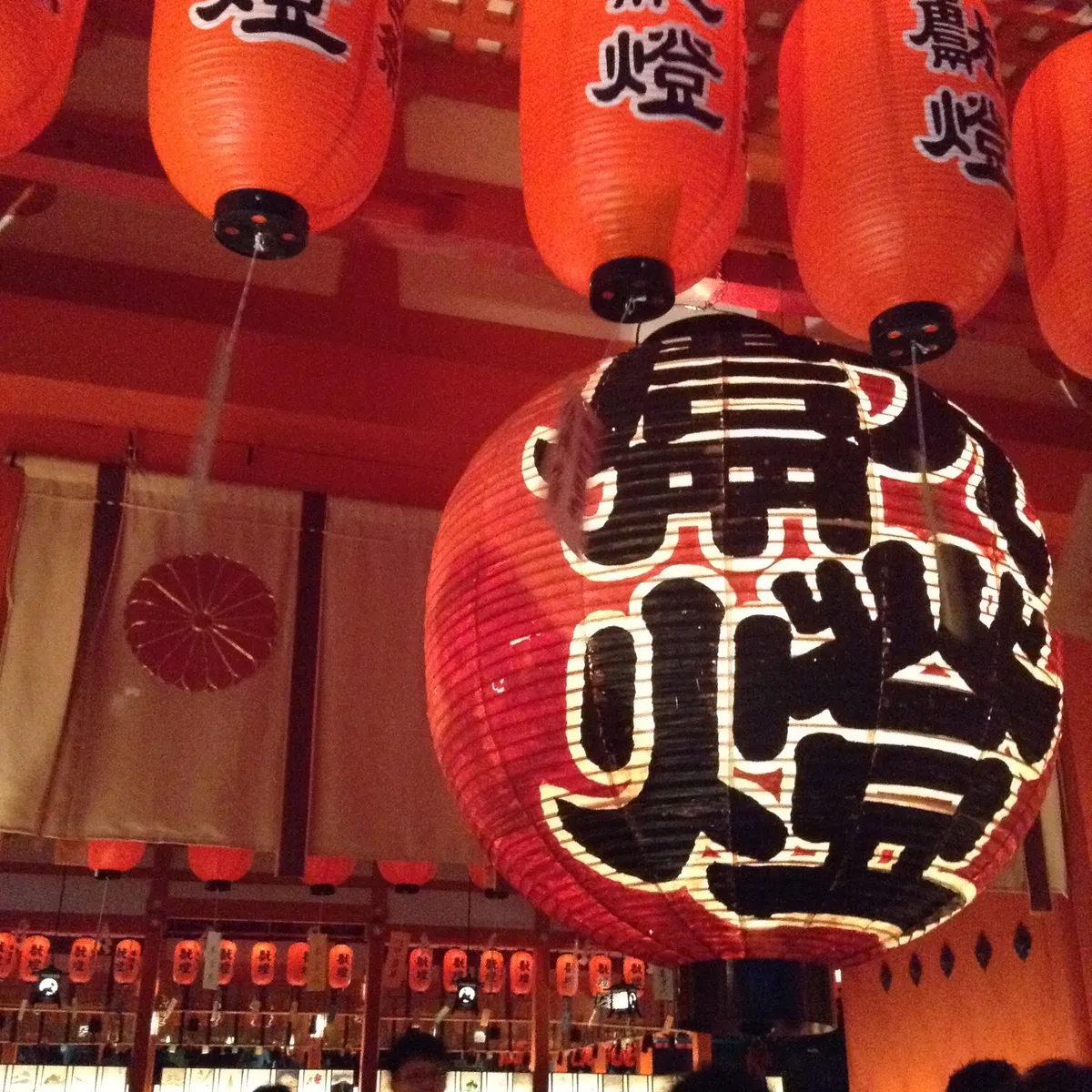
If you can only visit Fushimi Inari on one night of the year, make it the Motomiya Festival in July. Thousands of chochin (red paper lanterns) are lit across the entire mountain, turning the torii tunnels crimson. Even the upper trail sections that are normally pitch-dark are lined with light, transforming the whole mountain into another world.
When I went to the Motomiya Festival during my years in Kyoto, walking through the senbon torii bathed in red light was one of the most unforgettable nights of my six years there. Locals come dressed in yukata, food stalls line the approach, and the shrine takes on a festive beauty quite different from its usual quiet serenity.
Fushimi Inari’s “Other” Draw: The Fushimi Sake District
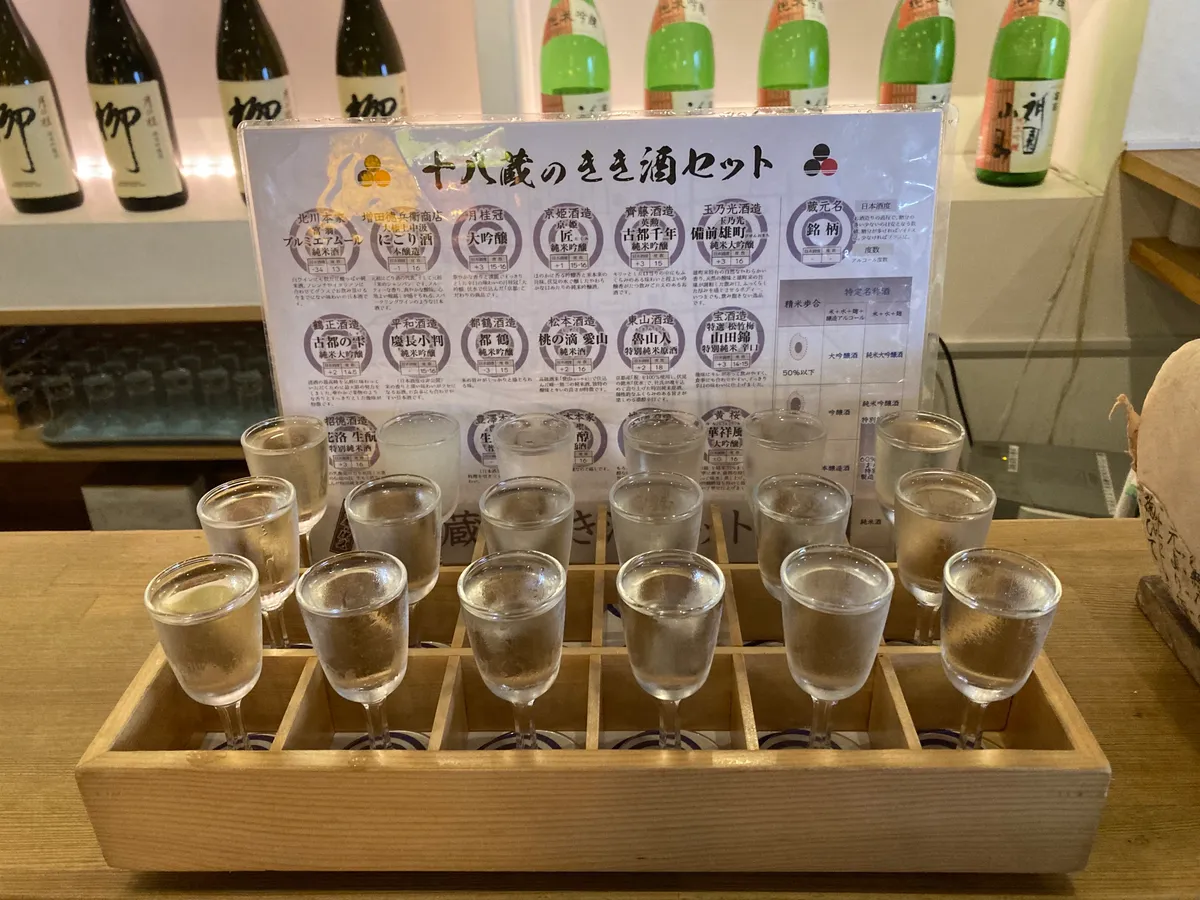
Here’s what most guides miss: the Fushimi district where the shrine sits is also Kyoto’s largest sake-brewing neighborhood. Major breweries like Gekkeikan, Kizakura, and Takara Shuzo are all concentrated here, drawing on Fushimi’s prized underground water — known as gokosui — for their craft.
If you’re visiting Fushimi Inari, the ideal plan is sake breweries by day, shrine by night. I did this more times than I can count.
- Gekkeikan Okura Sake Museum: Exhibits on the history of sake brewing, with tastings included (¥600)
- Fushimi Yume Hyakushu (former Gekkeikan headquarters): A cafe offering tasting sets — like the 18-variety sampler in the photo
- Kizakura Memorial Hall: Also brews beer, so you can try local craft brews alongside sake
- Jikkokubune boat ride: A canal cruise past the brewery-lined waterfront (especially beautiful paired with cherry blossoms in spring)
The sake district is about a 15-minute walk from Fushimi Inari Station. Starting from Chushojima Station gives you easier access.
Getting There and Getting Back
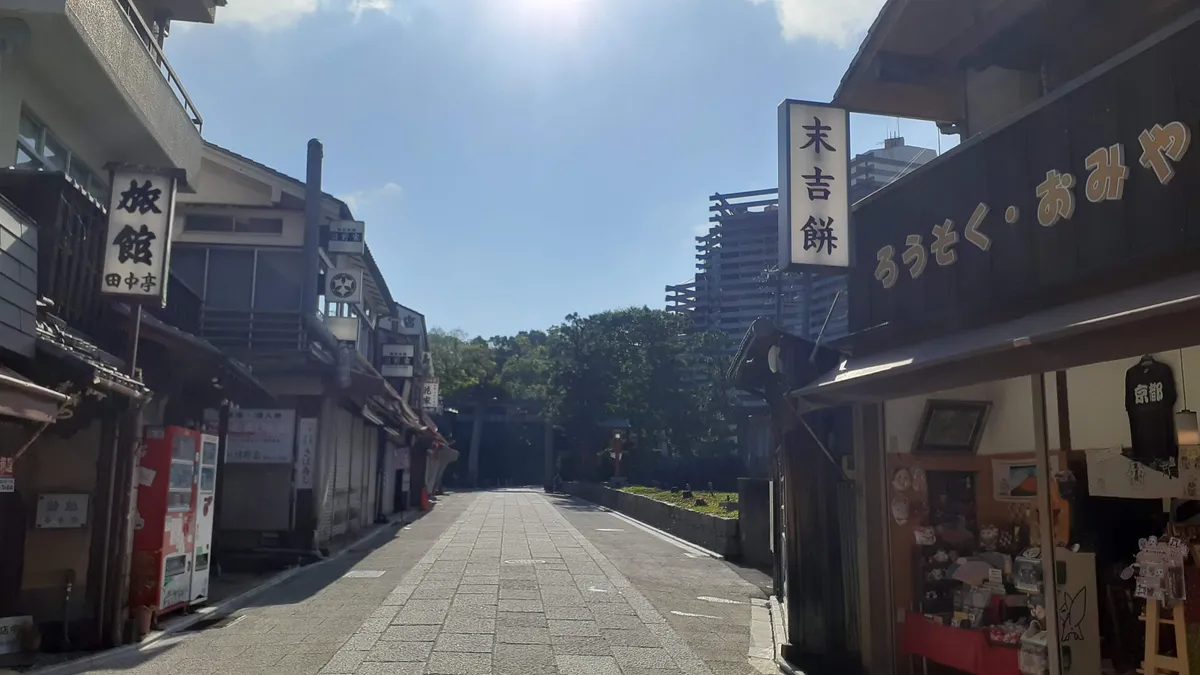
Getting to Fushimi Inari
Fushimi Inari is in southern Kyoto, easily reached from the city center.
- JR Nara Line: Get off at Inari Station — 1 minute walk to the shrine entrance. It’s 5 minutes from Kyoto Station (¥150). The fastest route.
- Keihan Line: Get off at Fushimi-Inari Station — 5 minute walk. More convenient if coming from the Gion or Higashiyama area.
Getting Back at Night (Important)
Last trains run between 11 PM and midnight, depending on your destination.
| Route | Last Train |
|---|---|
| JR Inari → Kyoto Station | ~11:30 PM |
| Keihan Fushimi-Inari → Gion-Shijo | ~11:45 PM |
| Keihan Fushimi-Inari → Osaka (Yodoyabashi) | ~11:15 PM |
If you miss the last train:
- Taxi to central Kyoto runs about ¥1,500-2,500 (15-20 minutes)
- Taxi to Kyoto Station costs ¥1,200-1,800
- The GO Taxi app works in Kyoto, but late-night availability is limited
Plan your visit backwards from your last train. If you want to reach Yotsutsuji (45 minutes up, 30 minutes down) and catch the 11:30 PM train from Inari Station, you need to start climbing by 10:00 PM at the latest.
Building It into Your Kyoto Night
Dinner First, Then the Shrine
Eat in the Fushimi area or in central Kyoto before heading south. There are no restaurants at the shrine at night — just vending machines near the base.
Gion First, Then Fushimi Inari
The most atmospheric nighttime route in Kyoto: start with a walk through Gion after dark, then take the Keihan Line south to Fushimi-Inari Station (15 minutes). You’ll arrive around 8-9 PM — perfect timing for the night visit.
Kyoto to Osaka Night
If you’re heading to Osaka, the Keihan Line runs directly from Fushimi-Inari to Yodoyabashi in Osaka (about 50 minutes). Visit the shrine in the early evening, then continue on to Dotonbori for a late-night dinner.
For more nighttime Japan beyond Kyoto, check out our guides to Golden Gai in Shinjuku and Kanazawa’s nightlife scene. If you’re extending your trip to the Sea of Japan coast, Kanazawa’s food scene is reason enough to make the journey.
Night Photography Guide
Fushimi Inari at night is a photographer’s paradise, but the darkness brings its own challenges.
Gear
- Tripod: Essential for sharp images. Torii tunnel shots require 1-4 second exposures.
- Wide-angle lens: The gates are close together. A 16-24mm equivalent captures the depth of the tunnel.
- Phone camera: Modern phones (iPhone 15+, Pixel 8+) handle night mode surprisingly well. Use a mini tripod or prop your phone against a lantern.
Best Spots
- Senbon Torii entrance — The classic shot. Set up your tripod at the mouth of the tunnel for a symmetrical long-exposure image. Best before 9 PM when there’s still enough light.
- Stone lanterns near Okusha — Individual lanterns lit against dark backgrounds make striking compositions.
- Yotsutsuji lookout — Kyoto’s city lights spread out below. Go wide angle and include a torii gate in the foreground for context.
- Fox statues — Side-lit by lanterns, the kitsune guardians become dramatically photogenic at night.
Etiquette
- Don’t use flash near other visitors or near the shrine buildings. It’s disrespectful and ruins the atmosphere.
- Keep tripods out of the walking path. In the dark, other people could trip over them.
- If someone is praying at a sub-shrine, wait quietly rather than photographing them.
What to Bring and What to Know
What to Wear
- Shoes with good grip. Stone steps get slippery, especially after rain. Sandals and heels are out of the question.
- Layers. The mountain trail is noticeably cooler than the city. Even in summer, a light jacket is worth carrying.
What to Bring
- A flashlight or fully charged phone. Essential beyond the senbon torii.
- Water. Vending machines at the base, but nothing on the upper trail.
- Cash. For vending machines and taxis. The shrine is free, but if you’d like to make an offering, ¥5 coins are considered lucky at Shinto shrines.
- Insect repellent in summer. Mosquitoes are active on the forested trail.
What Not to Do
- Don’t play music or talk loudly. The silence is part of the experience and a courtesy to other visitors.
- Don’t climb on the torii gates or sit on shrine structures. These are active religious objects.
- Don’t leave trash behind. There are no bins on the trail — carry everything out.
- Don’t let the darkness rush you. The whole point of a night visit is to slow down. Stop at each sub-shrine, read the inscriptions on the backs of the gates (many include English explanations), and let your eyes adjust to the dark.
For general tips on shrine etiquette, see our Japan travel tips for first-timers.
If you’d rather explore with a local guide who knows the hidden spots, a Kyoto evening walking tour takes the guesswork out of navigating the dark trail. For broader context on Kyoto’s temples and shrines, a Kyoto temples and shrines guided tour is great preparation before your solo night visit.
Fushimi Inari Taisha is an active shrine. Visit times, lighting, and access may vary during special events or maintenance. Expect different crowd patterns during cherry blossom season and New Year’s.
Frequently Asked Questions
- Is Fushimi Inari open at night?
- Yes, Fushimi Inari Taisha is open 24 hours a day, 365 days a year. There is no admission fee and no closing time. The main shrine buildings close around 5-6 PM, but the torii gate trail remains fully accessible throughout the night.
- Is it safe to visit Fushimi Inari at night?
- Generally yes. The lower sections of the trail are well-lit and other visitors are usually present until midnight. The upper mountain sections are dark and isolated — bring a flashlight and sturdy shoes. Solo visitors should consider staying on the lower loop if uncomfortable with dark trails.
- How long does it take to walk Fushimi Inari at night?
- The full loop to the summit takes 2-3 hours at night — about 30-60 minutes longer than daytime due to slower navigation in dark sections. The popular lower loop to the Yotsutsuji intersection takes 45-60 minutes and is the recommended night route for most visitors.
- What should I bring for a night visit to Fushimi Inari?
- A flashlight or phone with a charged battery (the upper trail is very dark), water, comfortable walking shoes with good grip, a light jacket (mountain trails are cooler at night), and cash for vending machines near the base. Tripod if you want night photography.
- When is the best time to visit Fushimi Inari at night?
- Between 7-10 PM for the best balance of atmosphere and accessibility. The lower gates are still lit, some other visitors are around for safety, and the crowds have thinned dramatically from daytime levels. For complete solitude, visit after midnight — but expect total darkness on the upper trail.