Kanazawa Food Guide: What to Eat and Where
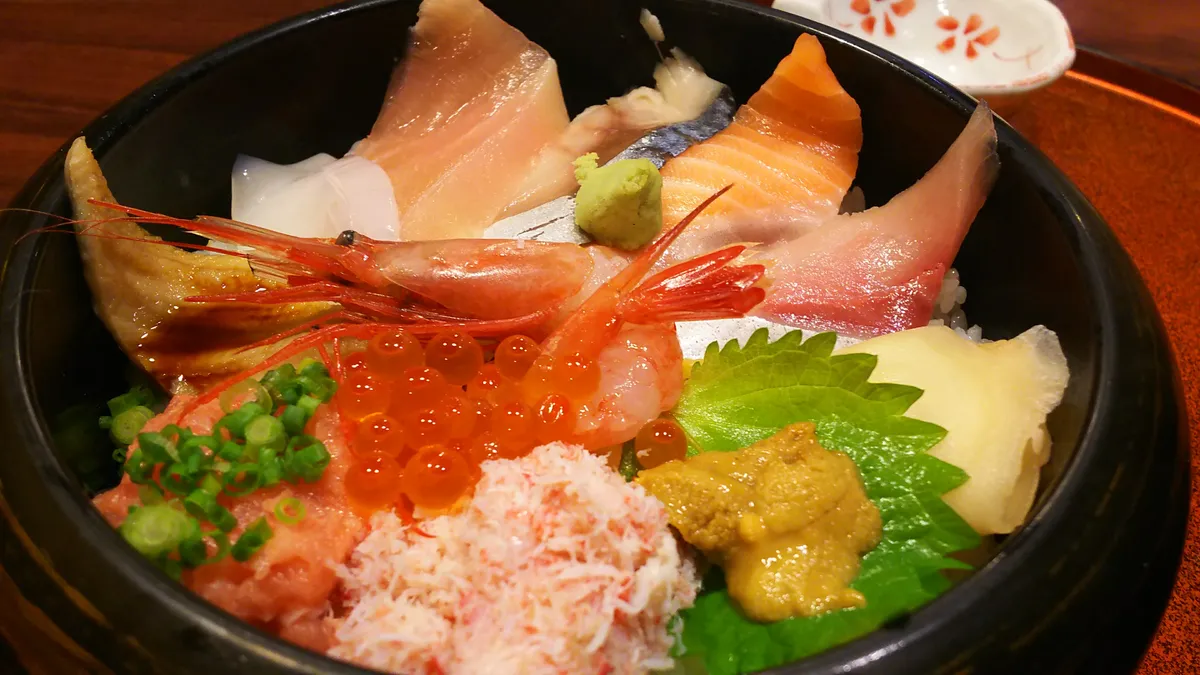
Kanazawa is one of the best food cities in Japan — yet most international visitors have never heard of it.
I’ve visited Kanazawa twice: first in the summer of 2017, then again in December 2025. Both trips confirmed the same thing — the baseline level of an everyday meal in this city is remarkably high. Facing the Sea of Japan in Ishikawa Prefecture, Kanazawa has direct access to some of the country’s richest fishing grounds. The cold Tsushima Current delivers an extraordinary variety of seafood: sweet shrimp, yellowtail, snow crab, and the prized nodoguro (blackthroat seaperch) that sushi chefs across Japan covet. Add centuries of refined kaga ryori — the court cuisine developed under the wealthy Maeda clan — and you get a city where even a casual meal at a market stall can be a revelation.
Here’s what makes Kanazawa special for food lovers: Tokyo-level quality at a fraction of Tokyo prices. A stunning kaisendon (seafood bowl) that would cost ¥3,500+ in Tsukiji runs ¥1,800–2,500 here. An omakase sushi dinner that might set you back ¥20,000 in Ginza goes for ¥8,000–12,000 in Kanazawa. The ingredients are just as fresh — often fresher, since there’s no middleman between the port and your plate.
This guide covers everything I ate my way through in Kanazawa: the must-try dishes, where to find them, what to expect at the famous Omicho Market, and the restaurants worth planning your trip around. If you’re already thinking about what else to do in Kanazawa, consider this the companion piece for your stomach.
Kanazawa’s Must-Try Dishes
Before we talk restaurants, let’s cover the local specialties you should actively seek out. These aren’t tourist dishes — they’re genuine everyday staples that locals eat year-round, and Kanazawa’s food identity runs deep.
Kaisendon (Seafood Rice Bowl)
Kaisendon is the dish Kanazawa is most famous for, and for good reason. A generous bowl of vinegared sushi rice topped with a jewel-toned mosaic of raw seafood — think ruby-red tuna, translucent amaebi (sweet shrimp), glistening ikura (salmon roe), creamy uni (sea urchin), and thick slices of buri (yellowtail).
I still remember the shock of my first kaisendon in Kanazawa. The sweet shrimp from the Sea of Japan had a custard-like smoothness and natural sweetness that was clearly a different animal from what I’d eaten elsewhere. The seafood bowl I had first thing in the morning at Omicho Market was as beautiful as any photo I’d seen online — and it tasted even better.
What to order: Start with a mixed kaisendon (¥1,800–2,800) to sample the range, then graduate to specialty bowls like nodoguro don or uni ikura don if you want to splurge. Most restaurants at Omicho Market let you build your own bowl from a selection of toppings.
Nodoguro (Blackthroat Seaperch)
If Kanazawa had an official fish, it would be nodoguro. This deep-sea fish — also called akamutsu — has an incredibly high fat content that gives it a rich, buttery flavor often compared to toro (fatty tuna). The name literally means “black throat,” referring to the dark coloring inside its mouth.
You’ll find nodoguro served every way imaginable in Kanazawa:
- Grilled with salt (shioyaki) — the most traditional preparation, letting the natural oils caramelize. Around ¥1,500–3,000 per fish depending on size
- As sashimi — delicate, melt-in-your-mouth slices. Best at sushi counters
- As sushi — often lightly torched (aburi) to release the oils
- In a rice bowl (nodoguro don) — grilled fillets over rice with broth for pouring, similar to hitsumabushi style
Budget tip: A whole grilled nodoguro at a sit-down restaurant can run ¥2,000–4,000, but you can try a single piece of nodoguro sushi at Omicho Market for around ¥500–800 — still enough to understand what the fuss is about.
Jibu-ni (Kanazawa’s Signature Stew)
Jibu-ni is the dish that best represents Kanazawa’s kaga ryori — the refined cuisine that developed over centuries in this castle town. It’s a gently simmered stew made with thinly sliced duck (or chicken), fu (wheat gluten), shiitake mushrooms, and seasonal vegetables in a mildly sweet dashi broth thickened with wheat flour.
The flour coating on the duck creates a silky, almost velvety texture in the broth. It sounds simple, but the balance of flavors is subtle and deeply satisfying — the kind of dish that reveals why Japanese cuisine earned UNESCO Intangible Cultural Heritage status.
Where to try it: Most traditional Japanese restaurants (washoku) in Kanazawa serve jibu-ni, but it’s particularly good at the long-established spots in the Higashi Chaya and Kazuemachi geisha districts. Expect to pay ¥800–1,200 as a standalone dish, or find it included in kaga ryori set menus.
Kanazawa Curry
This one surprises most visitors. Kanazawa has its own curry style — darker, thicker, and sweeter than standard Japanese curry, served on a stainless steel plate with a fork (not a spoon). It’s topped with a crispy deep-fried pork cutlet (tonkatsu) and a generous heap of shredded cabbage, and the curry itself is almost gravy-like in consistency.
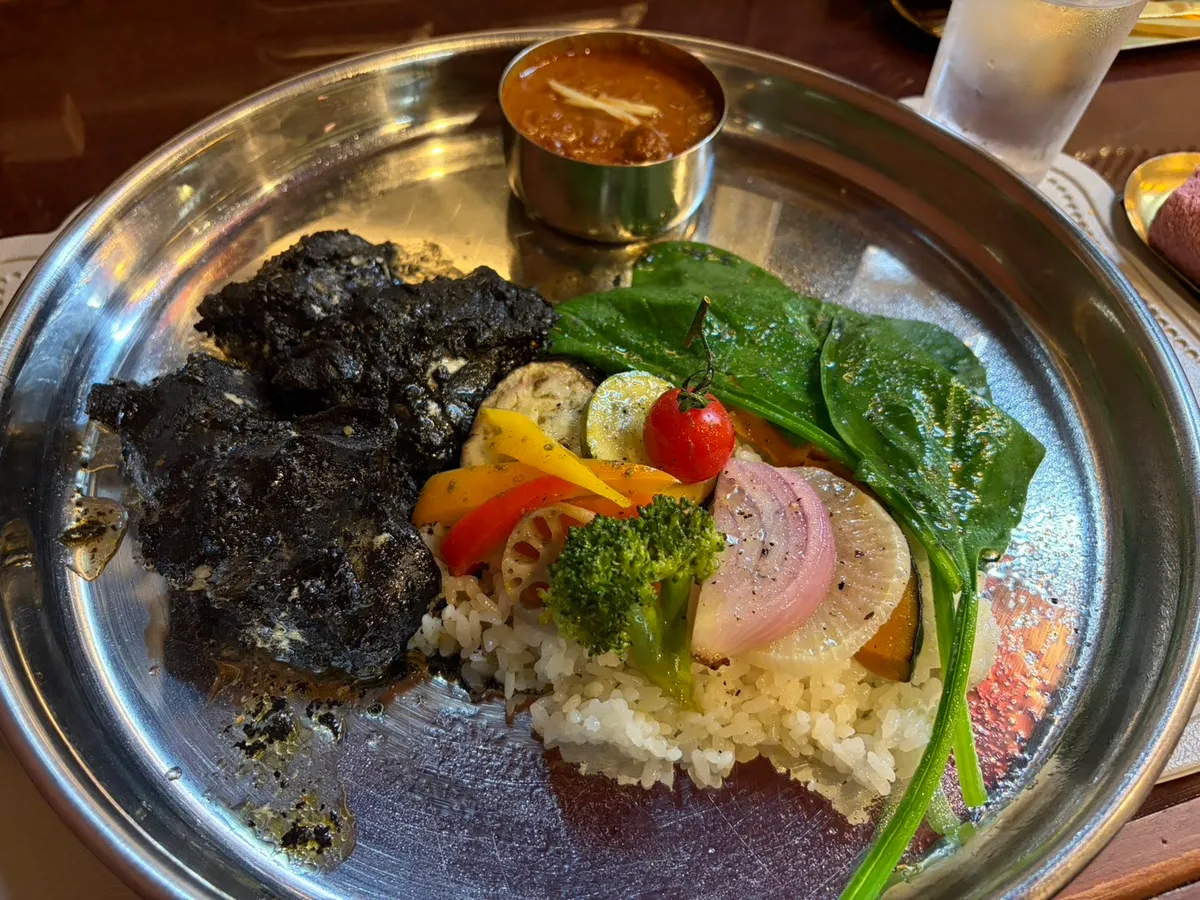
I had mine at a shop near Kanazawa Station, and that distinctive balance of richness and sweetness was nothing like Tokyo curry. The two biggest names are Champion Curry (locally called Champion no Curry) and Go Go Curry, both of which originated in Kanazawa. Champion Curry has been around since 1961 and claims to be the originator of Kanazawa-style curry.
What to expect: A large plate of Kanazawa curry with tonkatsu runs ¥750–1,000 at most shops. It’s filling, satisfying comfort food — perfect for a rainy day (and Kanazawa has plenty of those, being one of Japan’s rainiest cities).
Kabura-zushi (Fermented Turnip Sushi)
This is a winter specialty you won’t find anywhere else in Japan. Kabura-zushi consists of slices of buri (yellowtail) sandwiched between pieces of pickled kabura turnip, then fermented with koji rice malt for several days.
The result is complex and funky — somewhere between sushi and a European fermented fish dish. It’s an acquired taste, but if you’re adventurous with fermentation (think kimchi or Scandinavian gravlax), you’ll appreciate the depth. Traditionally made and eaten during the New Year period, you can find it at specialty shops and high-end restaurants from November through February.
Kaga Vegetables
Kanazawa has 15 officially designated heritage vegetables (kaga yasai) that have been cultivated in the region for generations:
- Kaga renkon — lotus root with a particularly starchy, sticky texture, often grated into soup or deep-fried as tempura
- Gensuke daikon — a short, round radish sweeter than the typical long Japanese daikon
- Kaga thick cucumber — served pickled or in sunomono vinegar salads
You’ll encounter these throughout Kanazawa’s restaurants, especially in kaga ryori course meals and kaiseki dining.
Omicho Market: Kanazawa’s Kitchen
Omicho Market is to Kanazawa what Tsukiji (now Toyosu) is to Tokyo — the beating heart of the city’s food culture. But Omicho has been operating for over 300 years, and it serves locals just as much as tourists. With roughly 170 shops packed into a covered arcade near Kanazawa Station, this is where the city’s culinary life revolves.
What I Found at Omicho Market
The market layout is organic rather than orderly. Narrow aisles connect clusters of fishmongers, produce stalls, pickle shops, and small restaurants. The fish displays alone are worth a visit — massive snow crabs stacked in rows, trays of glistening amaebi, whole nodoguro lined up on ice, and fishmongers shouting over each other to attract customers.
When I visited in December 2025, it was the height of crab season. Just walking through the market, the sheer spectacle of the day’s catch hitting the stalls was overwhelming.
Hours: Most stalls open around 8:00–9:00 and close by 17:00. Some restaurants open as early as 7:00. Closed on Sundays and some Wednesdays (check ahead during holidays).
Best time to visit: Aim for a weekday morning, ideally 8:30–10:00. You’ll see the market at its most active — fresh catches being unloaded, locals doing their daily shopping — without the lunch-hour crush. By 11:30 on weekends, popular restaurants can have 30–60 minute waits.
Best Eats at Omicho Market
Omicho Kaisendon Ya — One of the most popular kaisendon spots in the market. Their standard seafood bowl features 8–10 types of fresh seafood and costs around ¥2,200. Expect a queue of 15–20 minutes during peak hours, but the line moves fast.
Mori Mori Sushi — A popular conveyor belt (kaiten) sushi chain with a branch inside the market. Don’t let the conveyor belt format fool you — the quality is remarkably high because of the market location.
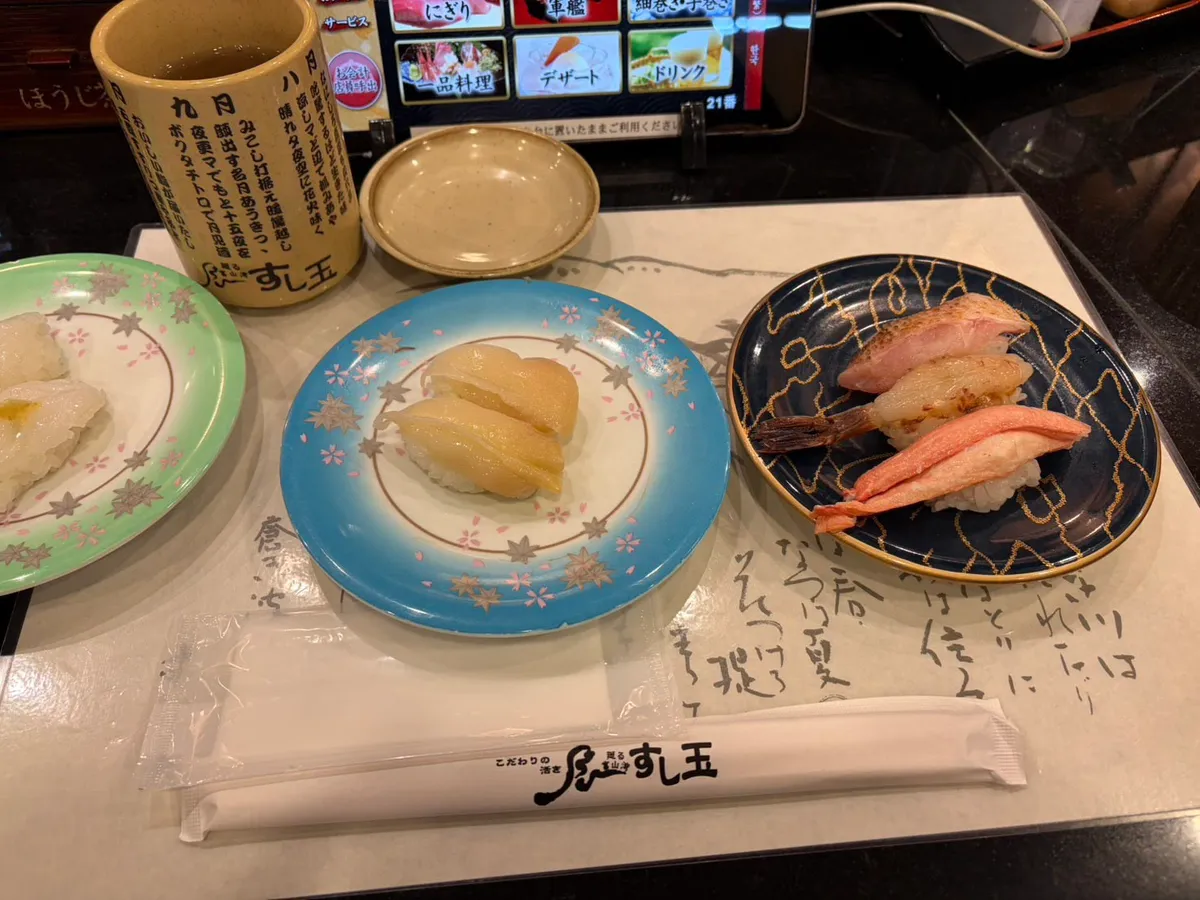
When I actually ate at Mori Mori Sushi, I was genuinely stunned by the level of this conveyor belt operation. Cuts that would carry a premium price tag in Tokyo were casually riding past on plates. A satisfying lunch runs ¥2,000–3,000. The nodoguro and local seasonal fish plates are the standouts.
Daimatsu Suisan — A seafood stall famous for grilled scallops, crab legs, and oysters that you can eat while standing. Individual items run ¥300–800 each, making this an affordable way to graze through the market.
Insho — A small counter restaurant (about 10 seats) that specializes in crab. During snow crab season (November–March), their kani don (crab bowl) is exceptional. Expect ¥2,500–4,000 depending on the season.
Pro tip: The upper floor of the Omicho Market building (called Omicho Ichiba-kan) has a food court with several restaurants. The quality is nearly as good as the ground floor, but waits are typically shorter because most tourists don’t venture upstairs.
What to Buy
Beyond eating at the market, Omicho is excellent for food souvenirs:
- Dried seafood — small dried fish, shrimp, and kelp make lightweight, easy-to-pack gifts
- Pickled turnip (kaburazushi) — available November–February
- Soy sauce — Kanazawa has regional soy sauce varieties that are slightly sweeter than standard Kanto-style
- Kaga-bo fu — decorative wheat gluten cakes, a Kanazawa specialty used in soups and stews
Best Restaurants in Kanazawa
Beyond Omicho Market, Kanazawa has an outstanding restaurant scene that rewards exploration.
High-End Dining
Zeniya — Widely considered the finest kaiseki restaurant in Kanazawa. Chef Shinichiro Takagi has earned Michelin stars and is known for creative interpretations of kaga ryori that respect tradition while pushing boundaries. A dinner course runs ¥15,000–25,000 per person. Reservations essential, ideally 2–4 weeks ahead.
Shinnei — Located in a beautifully restored 100-year-old townhouse in the Higashi Chaya district. The chef trained at top Kansai restaurants and presents refined chakaiseki (tea ceremony cuisine) highlighting Hokuriku’s seasonal ingredients. Their aged sashimi prepared from fresh Noto Peninsula fish is a signature. Dinner courses from ¥12,000.
Kinjoro — A ryokan (traditional inn) restaurant open to non-guests for lunch. The setting — a gorgeous wooden building with private tatami rooms overlooking a garden — is as much a draw as the food. Lunch kaga ryori courses start at ¥6,000 and include jibu-ni, seasonal sashimi, and a procession of small plates that showcase Kanazawa’s culinary heritage.
Mid-Range Picks
Itaru Honten — An izakaya (Japanese gastropub) near Katamachi that locals swear by. The atmosphere is lively and welcoming, with an open counter where you can watch chefs prepare dishes. Known for excellent grilled nodoguro, fresh sashimi, and a good sake selection sourced from Ishikawa breweries. Budget ¥3,000–5,000 per person with drinks. If you’ve experienced izakaya culture in Tokyo’s bar-hopping scene, Itaru offers the Kanazawa counterpart — more intimate, more local.
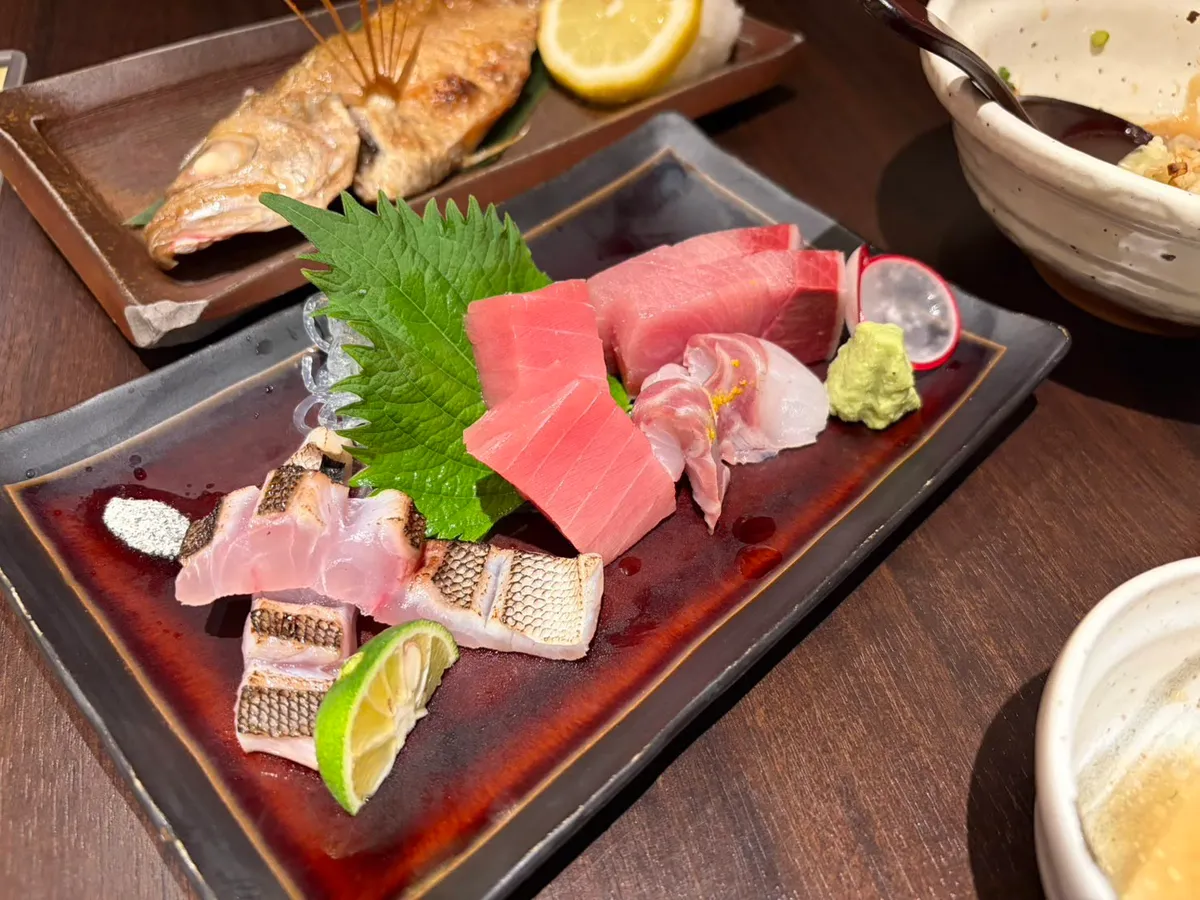
This is the sashimi platter I had at a Kanazawa izakaya in December — tuna, yellowtail, and local fish. Winter fish from the Sea of Japan carries a different level of fat. The same quality in Tokyo would easily cost twice the price.
Tamazushi — A sushi restaurant near Omicho Market that offers exceptional value. Their lunch omakase starts at ¥3,500 for about 10 pieces of nigiri plus a roll — far below what you’d pay for equivalent quality in larger cities. The counter seats give you a front-row view of the chef’s knife work.
Yamashita — A tempura specialist in the Korinbo area. They use seasonal local vegetables (kaga yasai) and seafood in their tempura sets, served at a wooden counter. Lunch sets run ¥2,000–3,500. The lotus root tempura is a Kanazawa-specific highlight.
Budget-Friendly Options
Champion Curry (Honten) — The original Kanazawa curry shop, operating since 1961 on Route 8. A large katsu curry (pork cutlet curry) costs just ¥850 and is enough food to skip your next meal. Cash only.
Turban — Another classic Kanazawa curry institution, founded in 1971. Some locals argue Turban’s curry is actually superior to Champion’s, with a slightly less sweet, more savory profile. Medium curry with tonkatsu: ¥800.
Ohmi-cho Janai-ka — A standing-only (tachigui) sushi spot inside Omicho Market. Quick, no-frills, and remarkably fresh. Five pieces of sushi and a roll for around ¥1,200. Perfect for a fast lunch when the seated restaurants have long waits.
Hirayama — A neighborhood oden shop (simmered pot dish) that’s been serving winter comfort food for decades. Kanazawa-style oden uses a lighter broth than Tokyo versions, and the local specialty ingredients include kuruma-fu (wheel-shaped wheat gluten) and kani-men (crab shell stuffed with crab meat and innards). Individual skewers and items from ¥150–500.
Kanazawa’s Food Districts: Where to Wander
One of the best strategies in Kanazawa is to pick a neighborhood and simply explore. The city’s compact layout makes this easy on foot.
Higashi Chaya District
The beautifully preserved geisha quarter on the east side of the Asano River is home to converted machiya (wooden townhouses) that now operate as cafes, tea rooms, and restaurants. The vibe is atmospheric — wooden lattice facades, lantern-lit alleys, and the occasional sound of shamisen music drifting from an upper-floor window. The atmosphere alone is worth the visit.
What to eat here:
- Gold leaf ice cream — Kanazawa produces 99% of Japan’s gold leaf, and the iconic treat here is soft-serve ice cream topped with an entire sheet of gold leaf. It’s ¥891 at Hakuichi (yes, the price is specific — 891 reads as haku-ichi in Japanese).
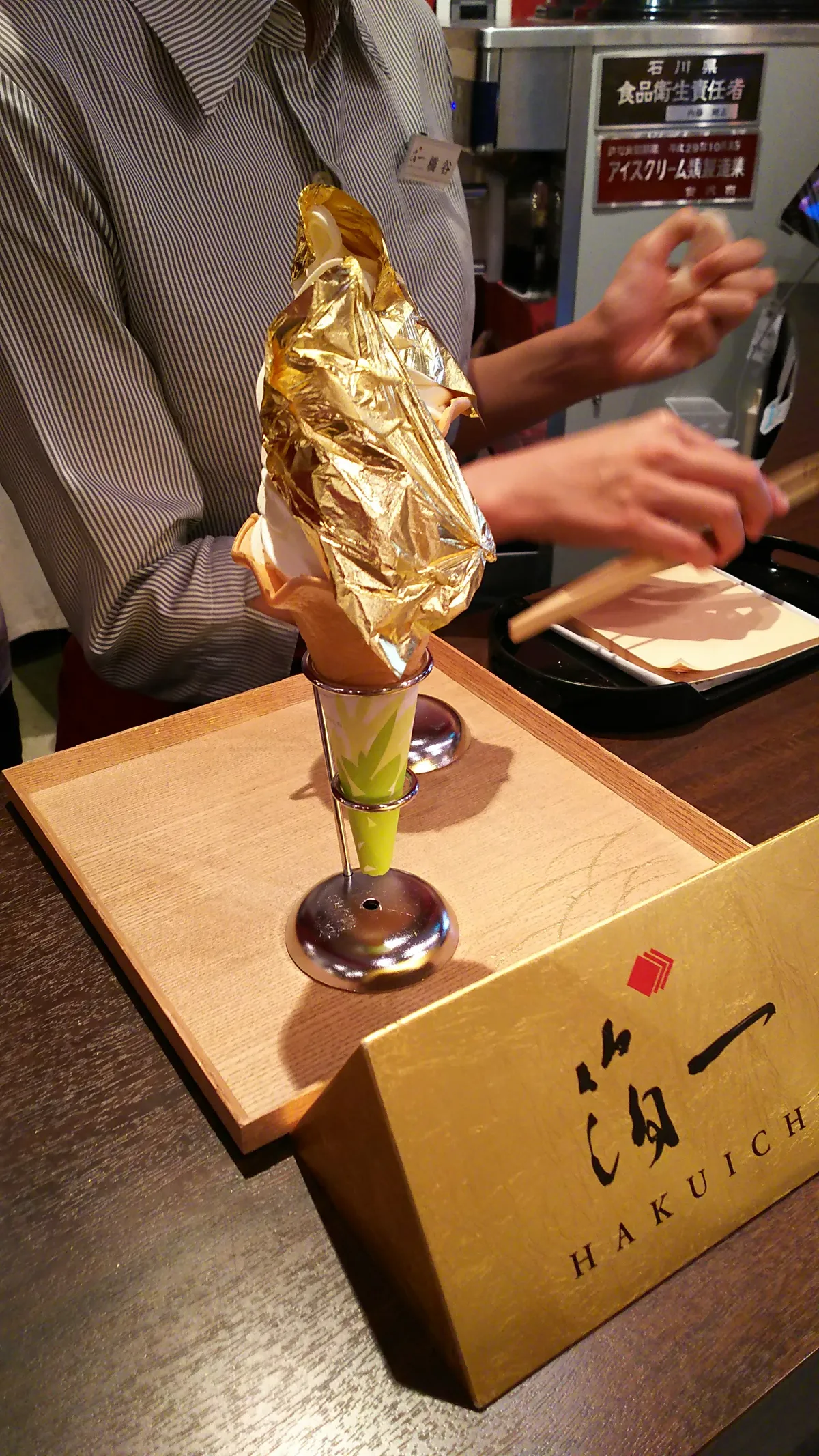
This is exactly what I had at Hakuichi. Eating it while trying to keep the gold leaf from fluttering away in the breeze is an experience in itself, and the soft-serve underneath is rich and genuinely delicious. It looks like a tourist gimmick, but it actually tastes great — that’s Kanazawa for you.
- Japanese sweets (wagashi) — Kanazawa is one of Japan’s top three wagashi cities alongside Kyoto and Matsue. Try Morihachi or Murakami for centuries-old confections originally created for the tea ceremony.
- Matcha and sweets sets — Several tea houses offer matcha paired with seasonal wagashi for ¥800–1,200. Kaikaro is the most famous (it’s an active geisha house that opens part of its ground floor to the public).
Katamachi and Korinbo
This is Kanazawa’s downtown entertainment area — the place locals go for dinner and drinks. Katamachi has the highest density of restaurants, bars, and izakaya in the city. If you want a full evening of eating and drinking, start here.
Tatemachi Street and Prego side streets have the best concentration of quality restaurants. You’ll find everything from high-end sushi to ramen shops to Italian restaurants that use local seafood.
For late night: Ramen Ichigen near Katamachi Scramble serves thick, rich miso ramen until 3 AM — the perfect end to an evening of Kanazawa sake tasting. For more on where to drink in this area, see our Kanazawa nightlife guide.
Kanazawa Station Area
The area around Kanazawa Station (famous for its striking Tsuzumi Gate) has improved dramatically for dining in recent years. The Anto shopping area inside the station has several solid quick-meal options for travelers catching a train:
- Kanazawa Maimon Sushi — excellent kaiten sushi with local fish
- Hachiban Ramen — a local chain that originated in Ishikawa, known for vegetable-loaded yasai ramen
- Forus department store (adjacent to the station) — basement food hall with bento boxes, sweets, and grab-and-go options
Seasonal Eating Calendar
Kanazawa’s food changes dramatically with the seasons. Timing your visit right can make the difference between a great food trip and an extraordinary one.
Spring (March–May)
Spring brings hotaru ika (firefly squid) — tiny, bioluminescent squid harvested from Toyama Bay that are served as sashimi, boiled, or tempura-fried. They appear at restaurants throughout Ishikawa and Toyama prefectures from March to June. The slightly bitter, briny flavor is unique and addictive.
This is also prime season for buri (yellowtail), though the winter catch is considered superior. Fresh bamboo shoots (takenoko) and mountain vegetables (sansai) appear on menus. If you’re visiting during cherry blossom season, the combination of hanami and fresh spring seafood is hard to beat.
Summer (June–August)
Summer means iwagaki — rock oysters that are larger, creamier, and sweeter than the winter magaki oysters most people know. You’ll find them at Omicho Market stalls for around ¥500–800 each, served raw with a squeeze of lemon.
Ayu (sweetfish) from Ishikawa’s rivers also peaks in summer, typically grilled on skewers with salt. And the kaga yasai vegetables are at their most abundant — look for Kanazawa’s distinctive thick cucumbers and Gorojima kintoki sweet potatoes.
My first visit to Kanazawa was in summer, and I remember being struck by how large and sweet the rock oysters were.
Autumn (September–November)
The transition to autumn brings the beginning of kani (crab) season — arguably Kanazawa’s most celebrated food event. The ban on snow crab (zuwaigani) fishing lifts on November 6th each year, and the city goes crab-crazy. Restaurants display their finest specimens, and prices at Omicho Market actually drop compared to buying the same crab in Tokyo or Osaka.
Wild mushrooms (matsutake and others) appear in kaiseki courses, and Pacific saury (sanma) is grilled whole at izakaya across the city.
Winter (December–February)
This is peak season for Kanazawa food. Snow crab (zuwaigani) is in full swing, with the premium Kanouogani (branded male crabs from Ishikawa waters) commanding the highest prices. A full crab course at a restaurant runs ¥8,000–15,000, but it’s an experience worth having at least once.
When I visited in December 2025, it was the peak of this very season. The sheer presence of the crabs on display at the market and the richness of winter fish at the izakaya were a completely different experience from my summer visit.
Kabura-zushi (fermented turnip sushi) appears at shops and on restaurant menus. Buri (winter yellowtail, called kan-buri) is at its fattiest and most flavorful. And jibu-ni stew becomes even more comforting when it’s snowing outside — which it frequently is from December through February. The best time to visit Japan depends on your priorities, but for food lovers, Kanazawa in winter is genuinely hard to beat.
Food Experiences and Tours
If you want to go deeper than just restaurant-hopping, Kanazawa offers some excellent hands-on food experiences. These are particularly worthwhile if you want context and stories behind what you’re eating — things you’d never discover dining solo.
Guided Food Tours
A guided food tour through Omicho Market and Kanazawa’s back streets is one of the best ways to experience the city’s food scene, especially on your first visit. Local guides take you to stalls and restaurants you’d walk right past, explain the seasonal specialties, and handle any language barriers (most market vendors speak limited English).
What to expect: Tours typically last 3–3.5 hours and include 8–12 tastings — enough to constitute a full meal. You’ll usually cover Omicho Market, a local wagashi shop, and one or two restaurants in the Higashi Chaya or Katamachi areas. Prices range from ¥10,000–15,000 per person.
Browse Kanazawa food tours on GetYourGuide to find guided experiences that match your schedule. Morning tours tend to hit the market at its liveliest.
Cooking Classes
Several cooking schools in Kanazawa offer classes focused on local cuisine. You’ll typically learn to make 3–4 dishes — often including jibu-ni and a seafood dish — using ingredients purchased that morning from Omicho Market.
Kanazawa Cooking Class by Yukari is one of the most popular options for English-speaking visitors, offering small-group sessions (4–6 people) in a home kitchen setting. Classes run about 3 hours and cost around ¥8,000 per person, including the market shopping trip.
Sake Tasting
Ishikawa Prefecture is home to over 30 sake breweries, many using rice grown in the Kaga Plains and soft water from the Hakusan mountain range. Kanazawa itself has several spots for tasting:
- Fukumitsuya — Kanazawa’s oldest sake brewery (founded 1625) offers free tastings and tours at their Higashiyama location
- Sake Shop Nomura — Near Omicho Market, this shop stocks an enormous selection of Ishikawa sakes and offers paid tasting flights (¥500–1,000 for 3 varieties)
- Kanazawa Sake Bar — In Katamachi, this bar serves flights paired with small dishes, with staff who can guide you through the local brewing styles
Combining a Kanazawa food tour with a sake tasting makes for one of the best single days of eating you can have in Japan.
Check availability for Kanazawa food and sake experiences on GetYourGuide — several options combine market visits with sake tastings for a full half-day experience.
Practical Tips for Eating in Kanazawa
Budget Planning
Here’s what a realistic daily food budget looks like in Kanazawa:
| Meal | Budget Range | What You’ll Get |
|---|---|---|
| Breakfast | ¥500–1,500 | Convenience store onigiri to market seafood |
| Lunch | ¥1,000–3,000 | Curry, ramen, or kaisendon |
| Dinner | ¥3,000–8,000 | Izakaya, sushi counter, or seafood restaurant |
| Splurge dinner | ¥10,000–25,000 | Kaiseki, crab course, or high-end omakase |
Total daily food budget: ¥5,000–12,000 is comfortable for most travelers. You can eat extremely well for ¥8,000/day.
Language Tips
English menus are increasingly common at tourist-friendly restaurants and throughout Omicho Market, but smaller neighborhood spots may only have Japanese menus. A few useful phrases:
- Osusume wa nan desu ka? — “What do you recommend?”
- Kyou no osashimi — “Today’s sashimi” (a good way to get the freshest selection)
- Kanpai! — “Cheers!” (essential at any izakaya dinner)
Google Translate’s camera feature works well for reading Japanese menus in real time. Point your phone at the menu and it will overlay English translations.
Dietary Restrictions
Kanazawa is a seafood-centric city, which can be challenging for vegetarians. Some tips:
- Vegetarian: Jibu-ni can be made with fu (wheat gluten) instead of duck — ask for “fu no jibu-ni.” Many shojin ryori (Buddhist temple cuisine) concepts apply to Kanazawa’s cooking
- Gluten-free: Sashimi and grilled fish are naturally gluten-free, but soy sauce contains wheat. Bring tamari soy sauce packets if this is a concern
- Allergies: Most restaurants can accommodate if informed in advance. The phrase “[ingredient] arerugi ga arimasu” (“I have a [ingredient] allergy”) is understood at most places
Reservations
For high-end restaurants like Zeniya or Shinnei, reservations are essential — ideally 2–4 weeks ahead. Your hotel concierge can often help with Japanese-language bookings. For mid-range izakaya like Itaru, try to book at least a day ahead for dinner, especially on weekends.
Omicho Market restaurants and casual spots are walk-in only. There’s no reservation system — just arrive, queue if needed, and wait your turn.
Getting Around
Kanazawa’s main food areas are all walkable from each other:
- Kanazawa Station to Omicho Market: 15 minutes on foot or 5 minutes by bus
- Omicho Market to Higashi Chaya: 10 minutes on foot
- Higashi Chaya to Katamachi: 20 minutes on foot (or take the Kanazawa Loop Bus)
The Kanazawa Loop Bus (¥200 per ride, ¥600 day pass) circles all major attractions and food districts. But honestly, walking is often faster and more pleasant — you’ll stumble on restaurants and shops you’d miss from the bus window.
Planning Your Kanazawa Food Trip
Kanazawa rewards even a single day of focused eating, but two or three days lets you really explore without rushing. Here’s a suggested itinerary structure:
Day 1: Omicho Market in the morning (arrive by 9:00), seafood lunch at the market, explore Kanazawa’s cultural sights in the afternoon, izakaya dinner in Katamachi.
Day 2: Cooking class or food tour in the morning, gold-leaf ice cream and wagashi tasting in Higashi Chaya, kaiseki or crab dinner for a splurge evening.
Day 3 (optional): Sake brewery visit, revisit Omicho Market for souvenirs, Kanazawa curry for lunch before catching the train.
Getting to Kanazawa
The Hokuriku Shinkansen connects Tokyo to Kanazawa in about 2.5 hours (¥14,380 one-way, covered by Japan Rail Pass). From Kyoto or Osaka, the Thunderbird limited express takes about 2 hours 10 minutes (¥7,260 one-way).
The best time to visit Japan overall depends on your interests, but for Kanazawa specifically, November through February delivers peak food experiences (crab season, winter yellowtail, fermented specialties) despite the cold and frequent rain. Spring and autumn are the most pleasant weather-wise, with plenty of seasonal ingredients to discover. If your trip includes Kyoto, don’t miss the summer kawadoko river dining at Kifune Shrine — it’s one of the most memorable seasonal food experiences in Japan.
Whether you’re here for a day trip or a dedicated food pilgrimage, Kanazawa delivers. This is a city where centuries of culinary tradition meet the freshest possible ingredients — and where you can eat like royalty without the royal price tag. Pack your appetite and an umbrella, and let the Sea of Japan do the rest.
Frequently Asked Questions
- What is Kanazawa's most famous dish?
- Kaisendon (seafood rice bowl) is Kanazawa's signature dish — fresh raw seafood like sweet shrimp, yellowtail, and sea urchin over sushi rice. A mixed kaisendon costs 1,800-2,800 yen at Omicho Market, which is significantly cheaper than equivalent quality in Tokyo.
- When is the best time to visit Kanazawa for food?
- November through February is peak food season, with snow crab (zuwaigani), winter yellowtail (kan-buri), and fermented specialties like kabura-zushi. However, every season has highlights — firefly squid in spring, rock oysters in summer, and wild mushrooms in autumn.
- What is Omicho Market and when should I go?
- Omicho Market is Kanazawa's 300-year-old central food market with about 170 shops. Visit on a weekday morning (8:30-10:00 AM) for the freshest catches and smallest crowds. Most stalls close by 5 PM, and the market is closed on Sundays.
- What is nodoguro and why is it special?
- Nodoguro (blackthroat seaperch) is Kanazawa's prized fish, known for its extremely high fat content and rich, buttery flavor comparable to toro (fatty tuna). Try a single piece of nodoguro sushi at Omicho Market for 500-800 yen to experience it affordably.
- How much should I budget for food in Kanazawa per day?
- Budget 5,000-12,000 yen per day for food. You can eat very well for 8,000 yen — a convenience store breakfast, kaisendon or curry for lunch (1,000-3,000 yen), and an izakaya dinner with drinks (3,000-8,000 yen).