Beppu Onsen Guide: Sand, Mud & Hell Baths
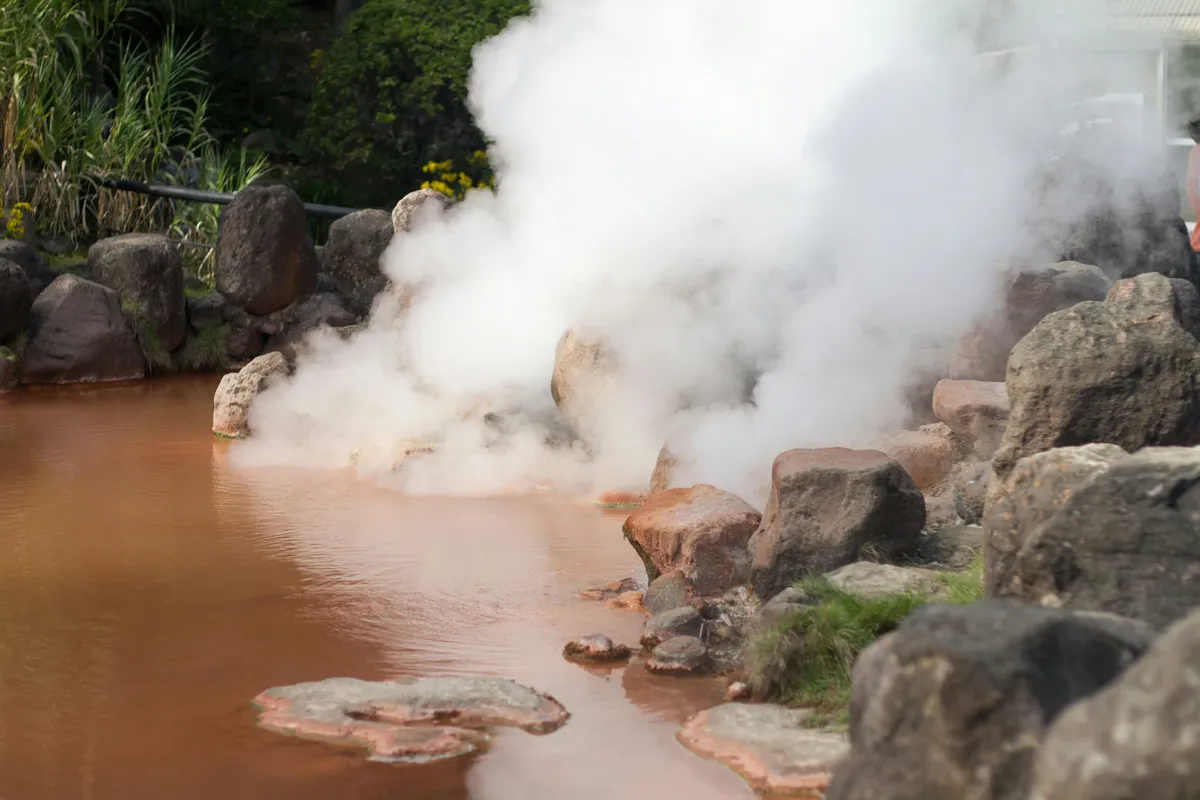
Beppu has over 2,300 hot spring sources — more than any other city on Earth — and you can feel it the moment you arrive. Steam pours from pavement cracks, drainage grates, and hillside vents across town, and the air carries a faint sulfur edge that never quite fades.
What makes Beppu different from every other onsen town in Japan is the sheer variety packed into one place. In a single day you can get buried in volcanically heated sand, soak in a mineral-rich mud bath, tour boiling blue pools at the famous Hells, and eat a meal cooked entirely by geothermal steam — all within a 20-minute bus ride of each other. On my last visit in early March 2025, I tried to fit four bath types into one day and gave up after the third — your skin can only take so much sulfur and silica before it starts to file a complaint.
Planning a trip around hot springs? Our best onsen towns in Japan guide ranks the 10 destinations worth building an itinerary around.
This guide covers the eight onsen districts, the must-visit baths, the Hell Tour, unique bathing experiences that only exist here, where to eat, how to get around, and practical costs that will help you plan 2–3 days in Beppu.
If you’re new to Japanese bathing culture, start with our complete onsen etiquette guide — it covers the washing ritual, tattoo policies, and everything you need to feel comfortable walking into any bath in the country.
Beppu’s Eight Onsen Districts (Beppu Hatto)
Most onsen towns have one or two hot spring areas. Beppu has eight distinct districts, collectively known as Beppu Hatto (別府八湯). Each has its own character, water chemistry, and atmosphere. Understanding this geography is the key to planning your visit efficiently.
Kannawa (Kannawa Onsen)
Kannawa is the heart of Beppu’s hot spring culture and the district most visitors should prioritize. Located on the hillside about 30 minutes by bus from Beppu Station, this neighborhood is defined by its visible steam — it pours from vents, pipes, and grates throughout the narrow streets, creating an otherworldly atmosphere that earned it designation as a national Important Cultural Landscape.
This is where you’ll find the famous Hells (Jigoku), several of Beppu’s best public baths, the herbal steam bath at Kannawa Mushiyu, and the geothermal steam cooking experience at Jigoku Mushi Kobo. If you only have one day in Beppu, spend most of it here.
Water characteristics: Sodium chloride springs, generally around 80-98°C at the source (cooled for bathing). Good for muscle fatigue, joint pain, and skin conditions.
Beppu Onsen (Downtown)
The area immediately surrounding Beppu Station and the waterfront. This is where you’ll find Takegawara Onsen — the city’s most iconic bathhouse — along with numerous machiya (public neighborhood baths) that charge just ¥100-300. It’s the most convenient district for travelers since you can walk to baths directly from the station.
Water characteristics: Simple thermal springs with relatively mild mineral content. Temperatures are comfortable and the water is gentle on sensitive skin.
Myoban (Myoban Onsen)
Perched on the upper slopes of the mountain overlooking Beppu, Myoban is famous for its strong sulfur content — you’ll smell it before you see it. The distinctive thatched-roof yunohana-goya (mineral flower huts) that dot the hillside have been used for centuries to harvest crystallized bath minerals from the steam. Myoban Yunosato is the main facility here, with indoor and outdoor baths offering panoramic views of the city and Beppu Bay.
Water characteristics: Strongly sulfuric, milky-white water. Known for skin-beautifying properties. The acidic water can irritate sensitive skin, so limit your soak to 15-20 minutes.
Hamawaki (Hamawaki Onsen)
A quiet seaside district south of the main station area. Less touristic than Kannawa or downtown Beppu, Hamawaki is where locals go for an everyday soak. The water here is some of the mildest in Beppu.
Water characteristics: Simple thermal springs. Very gentle, making it a good choice for onsen newcomers or those with sensitive skin.
Horita, Kamegawa, Shibaseki, and Kankaiji
The remaining four districts — Horita, Kamegawa, Shibaseki, and Kankaiji — are primarily residential neighborhoods with small local baths (jiyu onsen) that welcome visitors. They’re not must-visits on a short trip, but if you have several days in Beppu and want to experience the way locals actually use hot springs in their daily routine, seek out one of the neighborhood baths in these areas. Many charge just ¥100-200 and have a timeless, no-frills character that’s disappearing from more touristic onsen towns.
Kankaiji, located on the hilltop above the city, deserves a special mention for its sweeping views of Beppu Bay. The large resort hotels here have observation-deck-style outdoor baths that are worth visiting for the scenery alone.
The Hells of Beppu (Jigoku Meguri): What to Expect
The Jigoku Meguri (Hell Tour) is Beppu’s most famous attraction, and for good reason — these are hot springs so extreme that nobody can bathe in them. With temperatures exceeding 80-98°C, these boiling, churning, vividly colored pools are strictly for viewing.
There are seven Hells included in the official circuit (an eighth, Yama Jigoku, operates independently). Five are clustered together in the Kannawa district, and two — Chinoike Jigoku and Tatsumaki Jigoku — are located about 3 km away in the Shibaseki area.
The Kannawa Cluster (5 Hells)
Umi Jigoku (Sea Hell) — The most visually stunning of the group. A vast pool of brilliant cobalt-blue water, heated to 98°C, with thick steam rolling across the surface. The blue color comes from dissolved ferrous sulfate. The surrounding garden is beautifully landscaped with tropical plants that thrive in the geothermally heated soil. In summer, giant lotus flowers bloom on a smaller adjacent pond that is heated by the spring. There is also a foot bath (ashiyu) where you can soak your feet in a cooled portion of the same mineral water.
Oniishibozu Jigoku (Shaven Monk Hell) — Thick gray mud bubbles up in smooth, dome-shaped forms that resemble the shaved heads of Buddhist monks. The rhythmic popping and gurgling is strangely meditative. This Hell also has an attached onsen facility where you can actually bathe (one of the few Hells with a real bathing option).
Kamado Jigoku (Cooking Pot Hell) — The most varied and interactive of the Hells, with several different-colored pools, steam vents, and a section where staff demonstrate how the steam changes appearance when you breathe on it. There is also a drinking fountain with mineral water and a foot bath. This is probably the most family-friendly of the Hells.
Oniyama Jigoku (Devil Mountain Hell) — Known for its crocodile farm, which has been raising crocodiles using geothermal heat since 1923. Over 80 crocodiles of various species live here. The hot spring itself is a churning, misty pool, but most visitors come for the reptiles.
Shiraike Jigoku (White Pond Hell) — A large, milky-white pool in a tranquil Japanese garden setting. The white color comes from dissolved calcium. Less dramatic than Umi Jigoku, but the quiet atmosphere makes it a pleasant stop. A small tropical fish aquarium on-site houses fish kept warm by the spring water.
The Shibaseki Pair (2 Hells)
Chinoike Jigoku (Blood Pond Hell) — Japan’s oldest natural Hell, referenced in texts over 1,300 years old. The water is a deep, rusty red — the color comes from iron oxide and magnesium oxide dissolved in the clay. It looks genuinely otherworldly. A skin ointment made from the red clay is sold at the gift shop and is said to be effective for skin conditions (it has been used in traditional medicine for centuries).
Tatsumaki Jigoku (Tornado Hell) — A geyser that erupts roughly every 30-40 minutes, shooting boiling water up to 50 meters high (a stone slab above restricts the visible height to about 10 meters). Each eruption lasts 6-10 minutes. Arrive, check the estimated time of the next eruption posted at the entrance, and plan accordingly. I miscalculated my visit and ended up with 35 minutes to kill — the small souvenir shop nearby has surprisingly good jigoku-mushi eggs that occupied me until the geyser blew.
Practical Information for the Hell Tour
- Combined ticket: ¥2,400 for all seven Hells (covers the Kannawa five plus Chinoike and Tatsumaki). Individual entry is ¥400 per Hell.
- Hours: 8:00-17:00 daily
- Time needed: 2-3 hours for all seven. The five Kannawa Hells take about 90 minutes on foot. You’ll need a bus or taxi (about 10 minutes) to reach Chinoike and Tatsumaki.
- Guided bus tour: Kamenoi Bus operates a Jigoku Meguri tour bus with two daily departures (9:10 and 13:50 from Kitahama Bus Center; 9:20 and 14:00 from Beppu Station East Exit). The tour costs ¥4,500 per adult and includes admission to all seven Hells plus transportation. Commentary is in Japanese, but the convenience of not having to navigate bus routes makes it worthwhile.
- Best strategy for independent visitors: Start at Umi Jigoku and walk through the five Kannawa Hells. Then take Kamenoi Bus No. 16 to Chinoike Jigoku (about 10 minutes, ¥200). Walk from Chinoike to Tatsumaki (5 minutes on foot). Return to Kannawa or Beppu Station by bus.
If you’d rather have a local guide handle the logistics and give you the stories behind each Hell, our Beppu Onsen & Hell Hot Springs tour is a stress-free way to cover the circuit — small groups, hotel pickup, and no bus schedules to worry about. You can also browse Beppu tours on GetYourGuide for additional options.
Must-Visit Baths and Bathing Experiences
The Hells are for looking. These are for soaking.
Takegawara Onsen — The Icon
Built in 1879 and housed in a striking Meiji-era building since 1938, Takegawara is the single most recognizable bathhouse in Beppu. The wooden architecture, with its dramatic tiled roof, looks like something from a Ghibli film.
The main draw is the sunayu (sand bath). You change into a thin cotton yukata, lie down in a shallow pit, and an attendant shovels volcanically heated sand over your body until you’re buried up to your neck. The weight and heat of the sand create a gentle, enveloping pressure — like being wrapped in a warm blanket made of earth. You stay buried for about 10-15 minutes while the heat draws out tension and the minerals absorb through your skin. The first time the attendant buried me, I lasted about 7 minutes before tapping out — by my fifth visit I make it the full 15 and could probably nap through 20.
- Sand bath: ¥1,500 (includes yukata rental)
- Regular onsen: ¥400
- Hours: Sand bath 8:00-17:30 (last entry 16:30), regular bath 6:30-22:30
- Access: 10-minute walk from Beppu Station
Beppu Beach Sand Bath (Beppu Kaihin Sunayu)
If Takegawara’s sand bath is the classic indoor experience, the Beach Sand Bath is its outdoor counterpart. Located right on the shore of Beppu Bay in the Kamegawa district, you lie in sand that is heated by underground hot springs while listening to the waves. The combination of ocean air, warm sand, and a view of the bay makes this one of the most memorable bathing experiences in all of Japan.
- Admission: ¥1,500
- Hours: 8:30-17:00 (March-November), 9:00-16:00 (December-February). Closed during heavy rain.
- Access: 10-minute walk from Kamegawa Station (one stop from Beppu Station on the JR Nippo Line, ¥200)
Beppu Onsen Hoyoland — Mud Bathing
Mud baths are rare even in Japan, and Hoyoland has some of the best. The facility draws from a natural mud spring — the thick, creamy gray mud is rich in minerals that act as both an exfoliant and a skin treatment. You sink into the warm mud pool (mixed bathing, cotton shorts provided), feel the dense minerals coat your skin, then rinse off and soak in the regular onsen.
It’s a genuinely unusual sensation — the mud is heavier and silkier than water, and your skin feels remarkably smooth afterward. The facility itself is basic and old-fashioned (think tiled rooms, not luxury spa), which is part of its charm.
- Admission: ¥1,100
- Hours: 9:00-20:00 (last entry 19:00)
- Note: Hoyoland has both gender-separated and mixed sections. The mixed mud bath requires wearing shorts (available for purchase on-site).
- Access: 15-minute bus ride from Beppu Station
Kannawa Mushiyu — The Herbal Steam Bath
This centuries-old steam bath in the heart of Kannawa offers an experience unique to Beppu. You lie on a stone floor covered with freshly laid sekisho (stone iris) herbs inside a chamber filled with natural geothermal steam. The combination of the steam heat, the fragrance of the herbs, and the hard stone surface creates a detoxifying sweat session that lasts about 8-10 minutes.
After the steam, you shower off and soak in the attached onsen. The whole process — undress, steam, rinse, soak, dress — takes about 45 minutes and leaves you feeling profoundly relaxed.
- Admission: ¥700
- Hours: 6:30-20:00 (closed first Wednesday of each month)
- Access: In the center of the Kannawa district, a 3-minute walk from the Kannawa bus stop
Myoban Yunosato — Mountain Views and Sulfur Springs
For a bathing experience with a view, head uphill to Myoban. This facility sits on the slopes above Beppu with open-air baths overlooking the city and the bay beyond. The water is distinctly different from downtown Beppu — milky white and strongly sulfuric, with a mineral content that makes your skin feel silky.
The property also includes the traditional yunohana-goya huts where crystallized bath minerals have been harvested since the Edo period. You can watch the process and buy the mineral powder as a souvenir to recreate a Beppu-style bath at home.
- Admission: ¥600
- Hours: 10:00-22:00
- Access: 30-minute bus ride from Beppu Station (Kamenoi Bus No. 24 or AP Line to Myoban stop)
Hyotan Onsen — The All-Rounder
If you want to experience multiple bath types in a single facility, Hyotan Onsen in Kannawa is your best bet. This expansive complex includes regular indoor and outdoor baths, a waterfall bath (utaseyu), a sand bath, a steam bath, a family bath (private rooms for groups), and even a steam cooking station where you can prepare your own geothermal meal.
Hyotan was recognized by Michelin Green Guide Japan with three stars — a rarity for a bathing facility. The quality of the water is exceptional; the facility uses a unique bamboo-lattice cooling system (yumetake) that lowers the temperature of the near-boiling source water without diluting it.
- Admission: ¥900
- Hours: 9:00-1:00 AM
- Access: 5-minute walk from the Kannawa bus stop
Geothermal Steam Cooking (Jigoku Mushi)
One of the most distinctive food experiences in Japan exists only in Beppu: jigoku mushi, or “hell steaming.” This traditional cooking method, which dates back to the Edo period (over 300 years), uses 98°C geothermal steam to naturally cook food. The results are extraordinary — the minerals in the steam enhance the natural flavors of the ingredients while keeping everything incredibly moist and tender.
Jigoku Mushi Kobo Kannawa
This public steam cooking facility in the Kannawa district lets you prepare your own geothermal meal. Here’s how it works:
- Purchase your ingredients — The facility sells prepared sets of seafood, vegetables, meat, and eggs at the counter. A seafood set (prawns, scallops, clams, corn, potatoes) typically costs ¥1,500-2,500. You can also bring your own ingredients.
- Load the steamer — Staff provide you with a metal basket. Arrange your ingredients, place the basket in one of the stone-lined steaming pits, and close the heavy lid.
- Wait — Most items steam for 15-30 minutes. The facility provides a timer and a chart showing recommended cooking times for different ingredients.
- Eat — Pull out your basket, bring it to the eating area, and enjoy. No seasoning needed — the natural salt content in the geothermal steam provides all the flavor.
The whole experience — purchasing, steaming, and eating — takes about 60-90 minutes. It’s genuinely fun and the food is excellent: the prawns come out perfectly pink, the eggs have a faintly sulfuric tang, and everything tastes cleaner and more intense than you’d expect. The clams I steamed there in March 2025 were the best I’ve ever had in Japan — and I’ve been chasing that flavor at every steamer kitchen since.
- Steamer rental: ¥600 per pit (20-minute sessions, can renew)
- Ingredient sets: ¥1,000-3,000
- Hours: 9:00-19:00 (last pit rental 18:00). Closed third Wednesday of each month.
- Access: Central Kannawa, 2-minute walk from the Kannawa bus stop
Tip: Arrive before 11:00 or after 14:00 to avoid peak lunch crowds. Weekends can have 30-60 minute waits for a steamer pit during lunchtime.
Where to Eat in Beppu
Beyond steam cooking, Beppu has a strong local food scene. Here’s what to prioritize:
Toriten — Beppu’s Signature Dish
Toriten (chicken tempura) is to Beppu what tonkatsu is to Tokyo — the local comfort food that everyone grows up eating. Pieces of marinated chicken thigh are coated in a light tempura batter and deep-fried until crispy, then served with a dipping sauce and a side of kabosu citrus (another Oita specialty). It sounds simple, but the combination of the juicy, well-seasoned chicken with the delicate crunch of the batter is addictive.
Where to try it: Toyoken (東洋軒), a long-established restaurant near Beppu Station, is considered the originator of toriten. A set meal with rice, miso soup, and sides costs around ¥1,000-1,300. I went on a Wednesday at 12:30 and waited about 25 minutes for a counter seat — the line moves fast because most people order the same set and finish in twenty minutes flat.
Reimen — Beppu Cold Noodles
Another Beppu original. Reimen (cold noodles) were introduced by Korean immigrants in the 1950s and have since become a local obsession. Chewy, translucent noodles are served in a cold, tangy beef broth with kimchi, boiled egg, cucumber, and sometimes fruit. It’s refreshing, spicy, and perfect after a long hot bath.
Where to try it: Ikkyu no Namida (一休の涙) near Beppu Station is a local favorite, with portions around ¥900.
Seafood and Local Produce
Beppu faces the Seto Inland Sea and has access to excellent seafood. The fish market near Beppu Tower has several small restaurants serving kaisen-don (seafood rice bowls) for ¥1,200-2,000. For a more elevated experience, the ryokan restaurants in Kannawa serve multi-course kaiseki meals that incorporate locally steamed dishes alongside fresh sashimi.
Kabosu citrus — a yuzu-like fruit grown abundantly in Oita Prefecture — appears everywhere in Beppu cuisine: squeezed over fish, mixed into ponzu sauce, and even incorporated into craft beer and cocktails. If you see it on a menu, order it.
How to Get to Beppu
From Major Cities
From Fukuoka (Hakata): Take the JR Sonic limited express from Hakata Station to Beppu Station. Check the operator’s current timetable for your travel date and return train. For regular tickets, JR Kyushu distinguishes the base fare from the limited-express charge; compare the total for your chosen train and seat type rather than relying on a single undated fare.
From Osaka: Take the Shinkansen to Kokura Station (about 2.5 hours), then transfer to the JR Sonic limited express to Beppu (about 1.5 hours). Total travel time is roughly 4 hours. Alternatively, the overnight Sunflower Ferry from Osaka Nanko Port arrives at Beppu Port the following morning — around 12 hours but saves a night’s accommodation (from ¥9,990 for a standard cabin).
From Tokyo: Fly to Oita Airport (about 1 hour 40 minutes from Haneda or Narita) and take the airport shuttle bus to Beppu Station (about 50 minutes, ¥1,600). Direct flights operate on JAL, ANA, Solaseed Air, and Jetstar.
From Kumamoto: Highway bus from Kumamoto Station to Beppu (about 3.5 hours, ¥3,500). A good option if you’re combining Beppu with other Kyushu destinations.
Getting Around Beppu
Beppu is not a walking city — the onsen districts are spread across the mountainside and coastal plain, so you’ll need transportation between them.
Kamenoi Bus is the primary transit system. Key routes for tourists:
- Route 2, 5, 24, 41: Beppu Station → Kannawa (about 20 minutes, ¥350)
- Route 24 (AP Line): Beppu Station → Myoban (about 30 minutes, ¥420)
- Route 16: Kannawa → Chinoike/Tatsumaki Jigoku area (about 10 minutes, ¥200)
Day passes: The Kamenoi Bus “My Beppu Free” pass offers unlimited rides for ¥1,000 (1-day) or ¥1,700 (2-day). If you plan to visit both Kannawa and downtown baths in one day, the pass pays for itself easily.
Taxis: Available at Beppu Station and can be useful for the Kannawa-to-Shibaseki Jigoku connection. Expect about ¥1,500-2,000 between the Kannawa Hells cluster and Chinoike Jigoku.
Rental bicycles: Available near the station, but the hills leading up to Kannawa and Myoban are steep. Only recommended if you’re staying in the flat downtown and waterfront areas.
How Many Days Do You Need?
One Day (Minimum)
Focus on Kannawa: do the Hell Tour in the morning (2-3 hours), have a steam-cooked lunch at Jigoku Mushi Kobo, then visit Kannawa Mushiyu for the herbal steam bath and/or Hyotan Onsen in the afternoon. End with Takegawara Onsen’s sand bath downtown before dinner.
Two Days (Recommended)
Day 1: Kannawa — Hells, steam cooking, Mushiyu steam bath, Hyotan Onsen. Day 2: Start with the Beach Sand Bath in Kamegawa, visit Hoyoland for the mud bath, head to Myoban for the sulfur springs and mountain views, then explore the small neighborhood baths (jiyu onsen) in the downtown area.
Three Days (Full Experience)
If adding Yufuin, check both outbound and return connections before deciding how much of the day to set aside; see the transfer notes below. Alternatively, explore the smaller onsen districts at a relaxed pace and dedicate an evening to a ryokan kaiseki dinner. Three days lets you experience the full range of Beppu’s water without rushing.
If you want a curated experience that hits the highlights without the planning overhead, a guided Beppu onsen and food tour pairs well with one or two days of independent exploration. Having a local guide for the first half-day orients you to the bus system, the bathing customs, and the food scene, making the rest of your stay much smoother.
Practical Tips for Visiting Beppu
Tattoo policy: Beppu is more tattoo-friendly than many Japanese onsen towns, but policies still vary by facility. Takegawara Onsen, the Beach Sand Bath, and Hyotan Onsen generally allow tattoos (or provide cover-up options). Larger resort hotels tend to be stricter. When in doubt, call ahead or ask at the front desk — the phrase irezumi wa daijōbu desu ka? (入れ墨は大丈夫ですか?) works. For a full breakdown of tattoo policies and workarounds, see our onsen etiquette guide.
What to bring: A small towel (many baths sell or rent them for ¥100-200, but having your own saves time), a plastic bag for wet items, and coins (¥100 and ¥500 coins for lockers and small baths). Soap and shampoo are provided at most larger facilities but not at the small neighborhood baths.
Hydration: Soaking in multiple hot baths in one day will dehydrate you faster than you expect. Carry a water bottle and drink between baths. Many baths have free cold water dispensers. I once skipped a third bath of the day because I felt lightheaded standing up after the second; check in with your body, especially if you’re combining sulfur and acidic waters.
Skin sensitivity: If you’re visiting multiple baths in one day, be aware that the strongly acidic water at Myoban and some Kannawa baths can dry out or irritate sensitive skin. Apply moisturizer between baths, and if your skin starts to feel tight or itchy, skip the sulfur springs and stick to the milder downtown baths.
Best time to visit: Beppu is a year-round destination. Winter (December-February) offers the most dramatic steam scenery and the best contrast between cold air and hot water. Spring brings cherry blossoms to the Hell gardens (late March to early April). Summer is hot and humid — plan baths for early morning and evening. Autumn offers pleasant weather and fall foliage on the surrounding mountains. For broader seasonal planning, our best time to visit Japan guide covers the whole country.
Accommodation: For the full experience, stay at a ryokan (traditional inn) in Kannawa — many have their own private onsen fed by natural springs. Budget travelers can find guesthouses near Beppu Station from ¥3,000-5,000 per night. Mid-range hotels with onsen facilities run ¥8,000-15,000.
Language: English signage is improving in Beppu but still limited at smaller baths. Download Google Translate offline Japanese before you arrive. The Beppu tourism office at Beppu Station has English-speaking staff and free English maps.
Combine with other Kyushu destinations: Beppu pairs well with Yufuin (a small onsen town with galleries and cafes), Kumamoto (gateway to Mount Aso, Japan’s largest active volcano), and Fukuoka (Kyushu’s biggest city, famous for its food scene). If you’re comparing Japan’s top hot spring destinations, our best onsen towns guide ranks the 10 most rewarding options. If you’re exploring regional cities, our Kanazawa guide covers another excellent off-the-beaten-path destination on the opposite coast.
Plan the Beppu–Yufuin transfer separately: It is not a universal 30-minute train hop. The JR Kyushu Yufuin no Mori timetable, checked October 7, 2026, lists one direct service from Beppu at 14:36 reaching Yufuin at 15:56 — 80 minutes. That is one published departure, not the duration of every rail option; check the operating calendar and your return connection. Yufuin no Mori is reserved-seat only. For a bus alternative, Kamenoi’s official stop guide lists route 36 to Yufuin from Beppu Station’s west exit, bay 1. Check the current bus timetable and fare before choosing; neither a seat nor a 30-minute arrival is promised.
Beyond the Baths: Other Things to Do
While hot springs are the main event, Beppu has more to offer if you have extra time.
Beppu Tower — A 100-meter observation tower near the waterfront with 360-degree views of the city, the bay, and the mountains. Most impressive at dusk when the city lights come on and the steam from the onsen districts glows against the darkening sky. Admission ¥300.
Beppu Ropeway — A cable car ride up Mount Tsurumi (1,375 m) for panoramic views of Beppu, the Kuju mountain range, and on clear days, the distant coast of Shikoku across the Seto Inland Sea. The ride takes about 10 minutes and the summit has walking trails through alpine meadows. Round-trip ¥1,800.
Local art scene — The Beppu area hosts the Kunisaki Art Festival and has an active community of artists and craftspeople drawn by the affordable living and unique landscape. Several small galleries and artist residencies have sprung up in converted machiya townhouses in the downtown area.
Day trip to Usuki — About 40 minutes south of Beppu by JR train, the town of Usuki is home to a collection of over 60 stone Buddhist statues carved into cliff faces during the 12th century. They are designated as National Treasures and are remarkably well-preserved. A peaceful half-day side trip.
Planning Your Beppu Trip
Beppu rewards the traveler who slows down. The temptation is to rush through the Hells, check off the famous baths, and move on — but the real magic of this city reveals itself when you linger. Sit in a steam-filled neighborhood bath with elderly locals who have been coming every morning for decades. Watch the steam shift and curl through the Kannawa streets at sunset. Let the heat soak into your muscles in a different mineral composition each time.
This is not a city that performs its hot spring culture for tourists. It simply lives it, every day, and invites you to participate.
For your first visit, two days centered on Kannawa and downtown Beppu will give you the essential experience. Come back for a third day to explore Myoban and the neighborhood baths at your own pace.
And if onsen culture is a priority for your Japan trip, consider building an itinerary that connects several hot spring regions — Beppu in Kyushu, Kinosaki or Arima near Kansai, and Hakone or Kusatsu near Tokyo each offer a completely different character. Your Japan trip timing will shape which regions are most rewarding. Check our best time to visit Japan guide to align your onsen itinerary with the best seasonal conditions.
Choosing Your Next Onsen Destination
If this guide has you thinking about a wider hot-spring itinerary, the best onsen towns in Japan overview is the place to start — it compares the country’s headline destinations on water type, access, cost, and what makes each town distinct. From there it’s easy to slot in the specific facilities and policies covered above.
For a longer trip, mixing two contrasting onsen towns from that ranking — say, a coastal sodium-bicarbonate town with a sulfur-rich mountain resort — is the most reliable way to feel the range of Japan’s hot spring landscape in one visit.
Frequently Asked Questions
- How many days do I need in Beppu?
- Two to three days is ideal. One day covers the Hell Tour and Kannawa district, a second day for unique bathing experiences (sand bath, mud bath, steam bath), and a third for exploring quieter districts and geothermal steam cooking.
- What is the Beppu Hell Tour and can you bathe there?
- The Hell Tour (Jigoku Meguri) visits seven spectacular hot springs too hot for bathing (80-98 degrees Celsius). A combined ticket costs 2,400 yen. You cannot soak in them, but Oniishibozu Jigoku has an attached onsen facility for bathing.
- What does the Beppu sand bath feel like?
- You lie in a cotton yukata while an attendant buries you in volcanically heated sand up to your neck for 10-15 minutes. The warm weight creates a gentle, enveloping pressure. Takegawara Onsen offers the classic indoor experience for 1,500 yen, or try the beachside version at Beppu Kaihin Sunayu.
- How do I get to Beppu from major cities?
- From Fukuoka (Hakata), take the Sonic limited express train for about 2 hours. Oita Airport has domestic flights from Tokyo (1.5 hours). Beppu is also accessible by ferry from Osaka and Kobe.
- Are Beppu's onsen tattoo-friendly?
- Policies vary. Large resort hotels and tourist-oriented facilities tend to be more accepting. Small neighborhood baths (100-200 yen) may have stricter rules. Check our onsen etiquette guide for details on navigating tattoo policies.
More on Onsen & Hot Springs
Continue exploring this cluster.
Best Onsen Towns in Japan: 10 Hot Spring Picks
Compare 10 Japan onsen towns by access, bath style, tattoo fit, season, and trip length before choosing where to soak on your itinerary.
Kinosaki Onsen Tattoo Rules: Yes at All 7 Baths
All 7 of Kinosaki Onsen's public bathhouses welcome tattoos of any size, no cover-up. Which baths to pick first, tattoo-friendly ryokan, and planning tips.
Tattoo-Friendly Onsen in Japan
Find onsen that allow tattoos in Japan. Covers policies, best picks by region, private baths, and how to avoid awkward surprises at the bath.
Tokyo Sento Guide: Baths, Etiquette & Tips
A first-timer's guide to Tokyo sento: what they are, how to use them, etiquette, and the local bathhouse experience for visitors.