Kanazawa Nightlife: The Best Bars, Izakaya, and Late-Night Spots
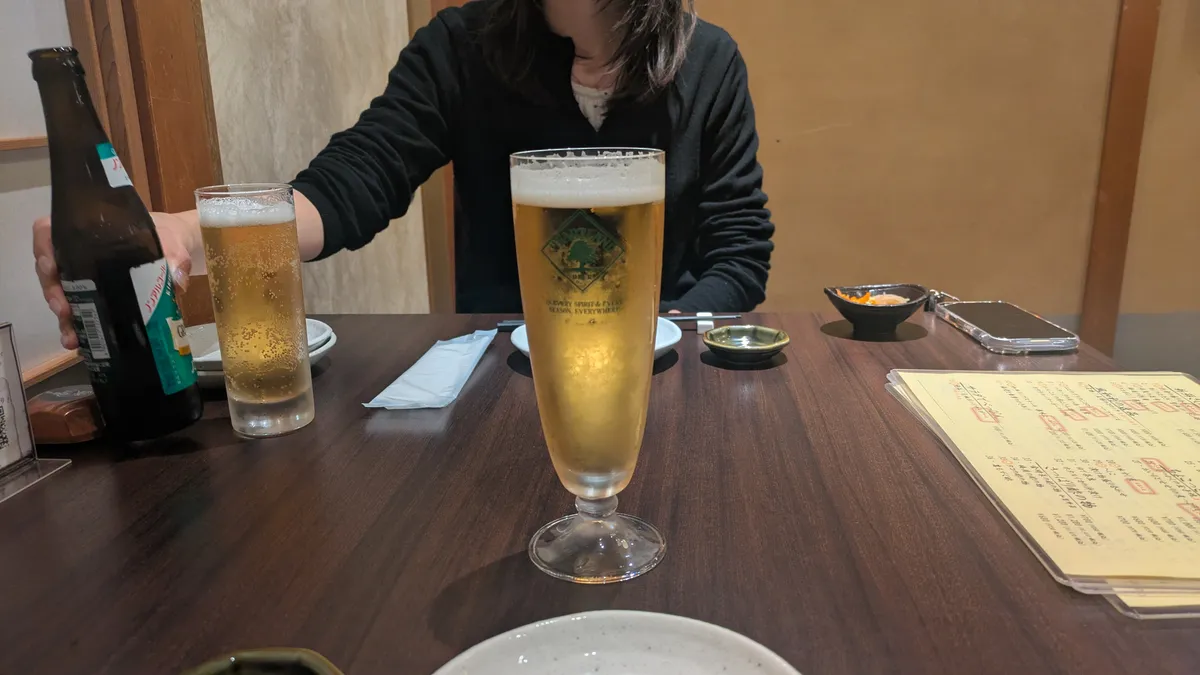
In December 2025, I was on a business trip to Kanazawa and planned to grab a quick drink in Katamachi. I ended up hopping through three bars and closing the night with a bowl of Hachiban Ramen. That unplanned izakaya crawl taught me more about the city’s nightlife than any guidebook could.
Kanazawa after dark becomes an entirely different city. The tourist crowds recede. Warm lamplight spills through the lattice doors of Higashi Chaya. In the backstreets of Katamachi, regulars claim their counter seats at izakaya, sipping jizake over fish that was in the Sea of Japan that morning.
What makes Kanazawa’s nightlife special: food and drink quality that rivals Tokyo or Osaka, at local prices with no tourist markup. Hit three or four spots and you’ll spend 5,000 to 8,000 yen per person. The bartenders remember your face. The sashimi was swimming in the Sea of Japan hours ago. And Kanazawa is compact — everything is within a 15-minute walk, so you never worry about taxi fares between stops.
If you’ve already checked out things to do in Kanazawa or the Kanazawa food guide, this is what comes next. The guide for after the museums close and the sun goes down.
Kanazawa’s Nightlife Landscape: What to Expect
Before diving into specific neighborhoods and recommendations, here’s what sets Kanazawa’s drinking culture apart — because it works differently from Tokyo.
It’s concentrated. Nearly everything worth visiting after dark falls within a compact zone between Katamachi, Korinbo, and Kakinokibatake. You can walk from one end to the other in ten minutes. No need to ride trains between sprawling districts the way you would in Tokyo. During my December visit, I walked between all three stops through lightly falling snow.
It’s local. There is no Roppongi here — no tourist-oriented bars with English menus on every table. The clientele is almost entirely Japanese: local business owners, university students, office workers. This is a feature, not a bug. Every establishment survives on repeat customers, so the quality stays consistently high.
It peaks early and ends early. The busiest hours are 7:00 to 10:00 PM. By midnight, most izakaya have closed. Late-night options exist (more on that below), but this isn’t a 2 AM city by Tokyo standards.
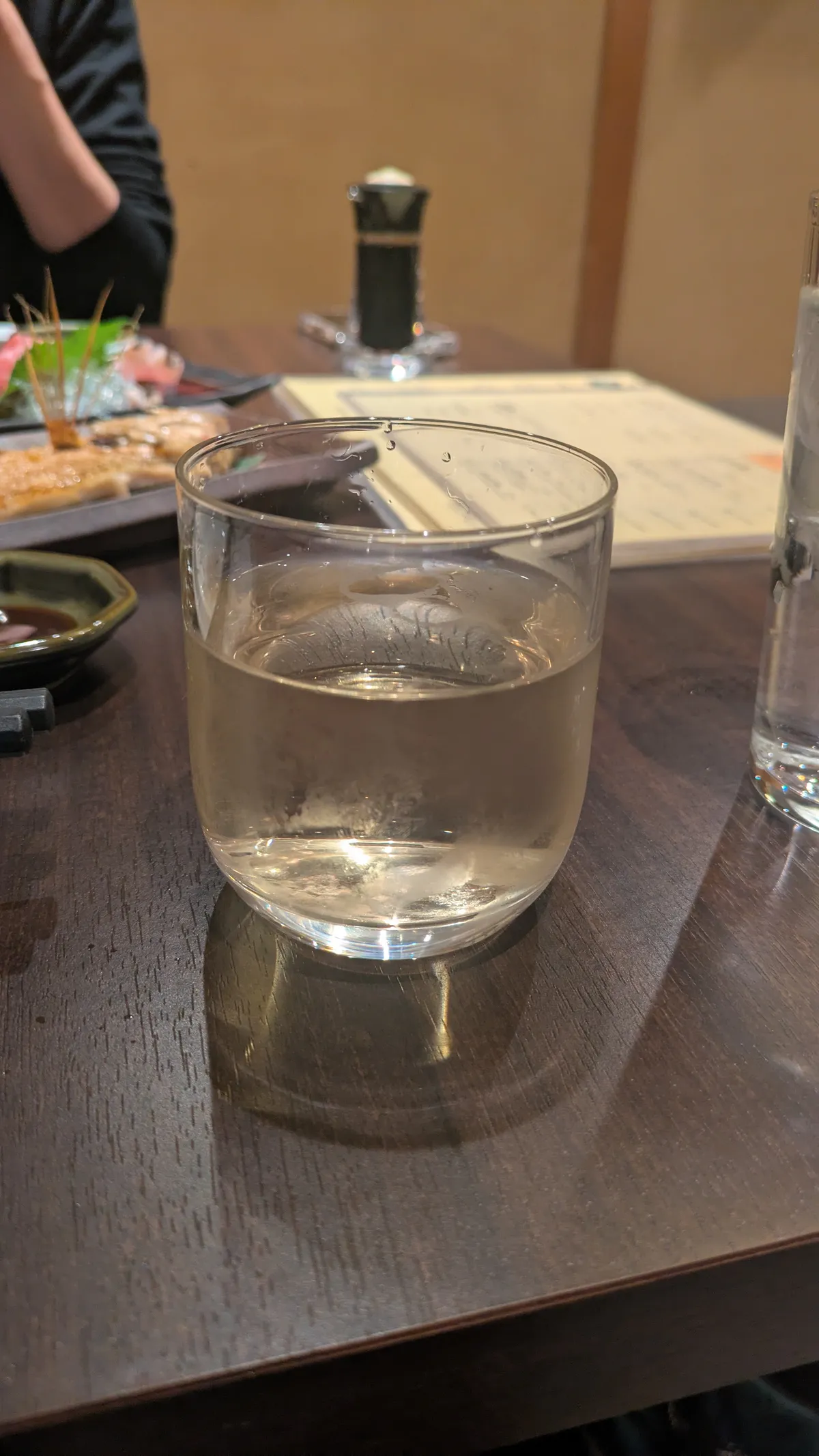
Sake is king. Ishikawa Prefecture is one of Japan’s premier sake regions, with over 30 active breweries. You’ll find jizake (local brews) here that never leave the prefecture, poured fresh into small cups at neighborhood bars. One December night, I asked a local next to me at the counter where a particular sake was from. He recommended Tedorigawa — and that single glass got me hooked on Ishikawa sake.
Our sake brewery tour guide covers sake fundamentals in detail.
Cash is essential. Japan’s cashless transition is well underway, but many of Kanazawa’s smaller bars and izakaya are still cash-only. Carry at least 10,000 yen in cash for a night out.
Katamachi and Korinbo: The Heart of Kanazawa Nightlife
If Kanazawa has a nightlife district, this is it. Katamachi and adjacent Korinbo form a grid of streets packed with restaurants, bars, izakaya, snack bars, and clubs. During the day, it’s a normal commercial area with department stores and chain restaurants. At night, the backstreets and upper floors of mixed-use buildings transform into a different world.
The Geography
The Katamachi scramble intersection is your anchor point. From here:
- Katamachi 1-chome (south of the intersection) — the densest concentration of bars and izakaya, packed into multi-story buildings where each floor is a different establishment
- Korinbo (north, toward Kenrokuen) — slightly more upscale, with cocktail bars, wine bars, and hotel bars
- Tatemachi Street (connecting the two) — a mix of both, including restaurants that transition into drinking spots as the evening progresses
- The backstreets (between Katamachi and the Saigawa River) — the real discovery zone, with narrow alleys of standing bars, sake shops, and izakaya that seat eight people
What to Drink in Katamachi
Sake flights. Several bars in Katamachi specialize in curated tastings of Ishikawa Prefecture sake. You’ll typically get three to five small pours (60ml each) for 1,000–1,800 yen. Look for labels like Tedorigawa, Kikuhime, Sogensha, and Tengumai — all Ishikawa breweries producing sake you likely won’t find outside the region.
Highballs. The whisky-and-soda highball is as popular in Kanazawa as anywhere in Japan. Hand-carved ice, quality Japanese whisky, precise ratios — a good highball runs 600–900 yen.
Local craft beer. Kanazawa has a small but real craft beer scene. Kanazawa Beer produces a wheat ale and an IPA, both available at several Katamachi bars. Orient Express near Kanazawa Station is worth a stop if you’re a dedicated beer drinker.
Chuhai. The staple of izakaya drinking. Ishikawa is also a yuzu-growing region, so yuzu chuhai makes for a distinctly local pour.
Recommended Route Through Katamachi
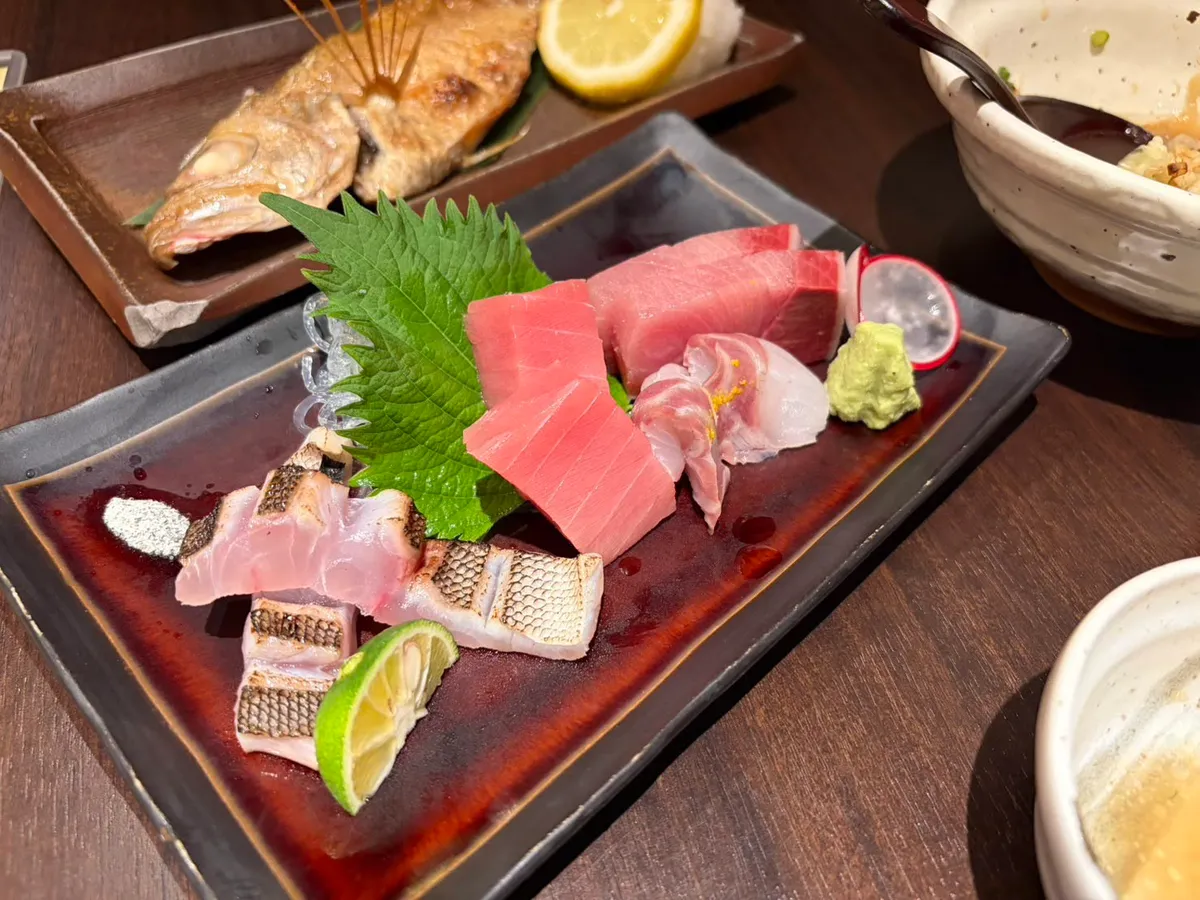
First stop: a seafood izakaya. Start at a seafood-focused izakaya near the Katamachi intersection. They run on the same supply chain as Omicho Market — fish from the Sea of Japan, landed that morning. Order the osashimi moriawase (sashimi platter) and whatever the handwritten daily specials board lists. The sashimi platter I ordered in December came loaded with amaebi (sweet shrimp), buri (yellowtail), and nodoguro (blackthroat seaperch) — at less than half what I’d pay in Tokyo.
Second stop: a sake bar. A small counter with 8 to 12 seats, where the owner knows every bottle on the shelf and pours based on your preferences. Say “Ishikawa no jizake” and they’ll curate a progression from light and fruity to rich and dry. Budget 1,500–2,500 yen for a proper tasting session.
Third stop: a cocktail bar. Katamachi has a surprisingly sophisticated cocktail scene. These bars hide behind small signs on the second or third floor of mixed-use buildings. Classic cocktails with Japanese spirits run 800–1,200 yen — far less than equivalent bars in Tokyo or Osaka.
Navigating the Multi-Story Buildings
A point of confusion for first-time visitors to Katamachi: the best bars are not at street level. A single narrow building might house an izakaya on the first floor, a sake bar on the second, a cocktail bar on the third, and a snack bar on the fourth — each a completely separate establishment.
Look for the signboards outside the building entrance listing each floor’s tenant. Even if you can’t read Japanese, the layout is easy to follow — floor number on the left, establishment name on the right. When in doubt, just walk up the stairs and peek in. Nobody minds a curious visitor checking the vibe before committing.
Higashi Chaya District After Dark
During the day, Higashi Chaya-gai is Kanazawa’s most photogenic historic district — wooden teahouses, gold-leaf shops, and streams of tourists. After 5 PM the tourist shops close, and the district reveals its original purpose: this was a geiko (geisha) entertainment quarter.
The Atmosphere
Walking Higashi Chaya at night is one of Kanazawa’s most beautiful experiences. Even if you explored the district during the day, returning after dark reveals a completely different side.
The crowds vanish. Warm lamplight glows through the lattice-fronted teahouses. You might hear the faint sound of shamisen from behind closed doors — active geiko (Kanazawa’s word for geisha) still perform here for private parties. The narrow lanes along the Asano River are hauntingly beautiful, whether framed by autumn foliage or blanketed in winter snow.
Even without entering a single bar, an evening walk through Higashi Chaya is worth the trip from Katamachi — about 15 minutes on foot, or 5 minutes by taxi.
Where to Drink in Higashi Chaya
The bar scene in Higashi Chaya is small and refined — the opposite of Katamachi’s density. A handful of establishments operate inside renovated teahouses or traditional townhouses (machiya). The atmosphere in these places is extraordinary: low ceilings, dark wood, shoji screens, and a sense that the building has been hosting drinkers for generations.
Teahouse bars. Former geisha teahouses converted into atmospheric bars where you can drink surrounded by Edo-period architecture. Sake runs 800–1,000 yen, cocktails 1,000–1,500 yen — slightly higher, but worth every yen for the setting. The bartenders tend to be knowledgeable about local sake and the district’s history.
Riverside spots. A few bars along the Asano River offer window or terrace seating overlooking the water. From May through September, sipping chilled sake while watching the river is one of Kanazawa’s great simple pleasures.
Note: Higashi Chaya’s bars close early — by 10 PM or 11 PM. Start your evening here for a first drink, then head to Katamachi for the later part of the night.
Kazuemachi: The Quieter Teahouse District
Across the Asano River from Higashi Chaya, Kazuemachi is an even more intimate former geisha quarter. A single narrow lane runs along the riverbank, lined with traditional wooden buildings. The bars here are fewer and smaller than Higashi Chaya, and the clientele is almost entirely local regulars. If you find your way into one, you’ll likely be the only foreign visitor. Quiet, atmospheric, and the kind of experience that doesn’t appear in guidebooks.
Izakaya Guide: Eating and Drinking Like a Local
If you’ve read our Tokyo bar hopping guide, the fundamentals apply here too — the otoshi table charge, communal ordering, calling sumimasen for service. But Kanazawa izakaya have their own character, shaped by extraordinary seafood access and a deep kaga ryori (local cuisine) tradition.
What Makes Kanazawa Izakaya Different
Seafood is the star. While Tokyo izakaya lean toward yakitori and fried dishes, Kanazawa swings dramatically toward sashimi and grilled fish. Every serious izakaya has a display case of the day’s catch near the entrance. Amaebi (sweet shrimp), buri (yellowtail), ika (squid), and the seasonal king nodoguro (blackthroat seaperch) — all sourced from the Sea of Japan, landed that morning.
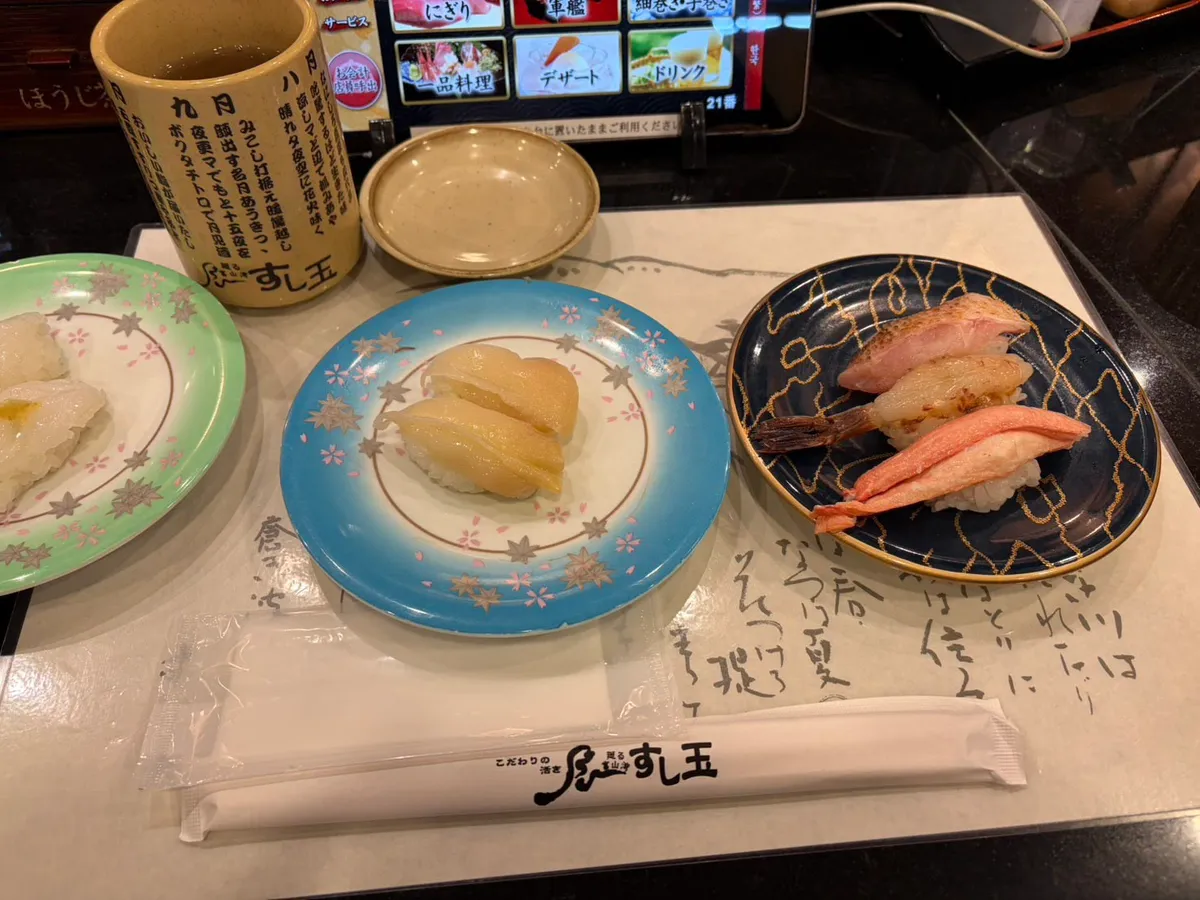
During my December visit, I also stopped at a kaiten-zushi (conveyor belt sushi) spot. Kanazawa’s kaiten-zushi is on a completely different level from Tokyo. You can enjoy crab nigiri from a single piece, and the freshness rivals high-end sushi restaurants even though the plates are still going around.
Kaga ryori influences. Many izakaya serve refined local dishes alongside the casual staples. You’ll find jibu-ni (Kanazawa’s signature duck stew) on the menu next to standard karaage (fried chicken). This blend of elegance and everyday fare is distinctly Kanazawa.
Smaller portions, more variety. Kanazawa izakaya tend to serve slightly smaller, more carefully plated portions than their Tokyo counterparts. This is ideal for bar-hopping — sample three or four dishes at each stop without filling up, then move to the next place.
Essential Izakaya Orders in Kanazawa
| Japanese | English | Why You Should Order It |
|---|---|---|
| Osashimi moriawase (お刺身盛り合わせ) | Assorted sashimi platter | The kitchen’s best showcase. Let the chef choose (omakase) — they know what’s freshest today. ¥1,200–2,000 |
| Nodoguro shioyaki (のどぐろ塩焼き) | Salt-grilled blackthroat seaperch | Kanazawa’s signature fish. Rich, fatty, unforgettable. ¥1,500–3,000 depending on size |
| Buri kamaage (ぶりカマ揚げ) | Deep-fried yellowtail collar | Massive, crispy, meaty. Perfect shared drinking food. ¥800–1,200 |
| Amaebi karaage (甘えび唐揚げ) | Fried sweet shrimp | After eating the raw shrimp as sashimi, the heads are deep-fried. Crunchy, savory, addictive. Often complimentary |
| Jibu-ni (治部煮) | Kanazawa-style duck stew | Delicate, warming, the essence of Kanazawa’s refined culinary heritage. ¥800–1,200 |
| Dojodon (どじょう丼) | Freshwater loach on rice | Adventurous pick. Tiny river fish simmered in soy and served over rice. A genuine Ishikawa specialty |
| Kabura-zushi (かぶら寿し) | Fermented turnip sushi | Winter only (Nov–Feb). Yellowtail sandwiched in pickled turnip, fermented with koji. Complex, funky, worth trying |
Izakaya Budget Guide
For two people sharing dishes at a single izakaya in Kanazawa:
- Budget night (2 drinks each, 3 shared dishes): ¥3,000–4,000 total
- Standard night (3 drinks each, 5 shared dishes including sashimi): ¥5,000–7,000 total
- Splurge night (sake tasting, nodoguro, premium sashimi): ¥8,000–12,000 total
These prices are roughly 30–40% lower than equivalent quality in Tokyo. Kanazawa is one of the best value-for-quality drinking cities in Japan.
Sake Bars: Ishikawa’s Liquid Gold
Ishikawa Prefecture is one of Japan’s most respected sake-producing regions. Centuries of brewing tradition, clean water from Mount Hakusan, and high-quality local rice create ideal conditions. Kanazawa, as the prefectural capital, is where the best of this output converges.
If you’re new to sake, start with our sake brewery tour guide for the fundamentals. The section below focuses specifically on drinking Ishikawa sake in Kanazawa’s bars.
Key Ishikawa Breweries to Look For
Tedorigawa (手取川) — Based in Hakusan City. Clean, precise, beautifully balanced sake. Their junmai daiginjo is one of the finest produced in Japan. If a bar has it, order it without hesitation. This was the sake a local recommended to me that December night — and the glass that started everything.
Kikuhime (菊姫) — Also from Hakusan. Rich, full-bodied sake with depth. Their aged koshu has an amber color and a flavor profile that shatters the assumption that sake tastes light and clean.
Sogensha (宗玄) — From the Noto Peninsula. Earthy, robust, with a distinct mineral character from the local water. Pairs beautifully with grilled fish.
Tengumai (天狗舞) — Known for their yamahai style, a traditional brewing method that creates a wilder, more acidic flavor. Not for beginners, but essential for anyone exploring the full range of what sake can be.
Fukumitsuya (福光屋) — Kanazawa’s own brewery, operating since 1625. They have a tasting room near Kanazawa Station. In the city’s bars, look for their Kagatobi brand.
How Sake Bars Work in Kanazawa
Most dedicated sake bars follow the same model: counter seating for 6 to 12 people, a glass-fronted refrigerator displaying the current selection, and an owner who could talk about sake for hours.
Ordering: Individual glasses (90ml pours, 400–800 yen) or a tasting set (nomikurabe, usually three pours for 1,000–1,800 yen). If you’re not sure what to order, say karakuchi (dry), amakuchi (sweet), fruity (they know the English word), or Ishikawa no jizake (local Ishikawa sake) — and they’ll guide you.
Temperature: Sake in Kanazawa is often served chilled (reishu) or at room temperature (hiya), but warming (atsukan or nurukan) is traditional in colder months and draws out different flavors. A good bar will recommend the right temperature for each brew.
Snacks: Most sake bars serve light otsumami — pickled vegetables, dried fish, tofu, small plates of sashimi. Not full meals, but designed to complement the sake. Budget 500–1,000 yen on top of your drinks.
Late-Night Options: After the Izakaya Close
Kanazawa isn’t a late-night city by Tokyo standards, but it doesn’t shut down completely. If you’re still going past 11 PM, here’s where to find life.
Late-Night Bars (Open Until 1–3 AM)
Upper-floor cocktail bars and small standing bars in Katamachi’s mixed-use buildings stay open well past midnight, especially on Friday and Saturday nights. These tend to be intimate — four or five stools at a counter, a bartender who takes their craft seriously, a quiet atmosphere for conversation and slow drinking.
If the sign on the building is lit, they’re open.
Shot Bars and Music Bars
Kanazawa has a small but passionate scene of shot bars (Western-style bars with individual spirit pours) and music bars (where the owner curates the playlist — usually jazz or vinyl records). They’re scattered through Katamachi’s backstreets, typically on the second or third floor. The rhythm is different from izakaya: arrive at 10 PM, stay until 1 AM nursing two or three whiskies while the bartender plays Charlie Parker.
Cover charges range from free to 500 yen. Drinks run 700–1,200 yen. The atmosphere is worth more than whatever you’re paying.
Late-Night Ramen
No Japanese night out is complete without shime no ramen — the closing ramen. In Kanazawa, late-night ramen clusters around Katamachi and Kanazawa Station.
What makes Kanazawa ramen distinctive: rich miso-based or soy sauce-based broths with a slightly sweet edge. And then there’s Hachiban Ramen — a local chain born in Ishikawa that’s deeply beloved by locals. My December night ended at Hachiban too. For a more artisanal experience, look for the independent shops with lines out the door at midnight.
A bowl runs 800–1,100 yen. Most late-night shops stay open until 2 or 3 AM.
Kanazawa Station Area
If you’re staying near the station, you don’t have to trek to Katamachi. The Anto complex inside the station and the streets around the east exit have a solid cluster of izakaya. The quality is a step below the best of Katamachi, but the convenience is unbeatable — and some station-area places are genuinely excellent.
The Forus department store near the station also has restaurant floors with izakaya-style options open until 10–11 PM.
Practical Tips for Kanazawa Nightlife
Getting Around at Night
Walk. Kanazawa’s nightlife is compact. From Kanazawa Station to Katamachi is about 20 minutes on foot, or take the Kanazawa Loop Bus (runs until about 9 PM). From Katamachi to Higashi Chaya is about 15 minutes along the river. In December I walked it through lightly falling snow — that was part of the charm.
Taxis. After the buses stop, taxis are your option. A ride between the station and Katamachi costs about 1,000–1,200 yen. Friday and Saturday nights near Katamachi may involve a short wait.
No last-train stress. Unlike Tokyo, a taxi from anywhere to anywhere in Kanazawa rarely exceeds 2,000 yen. This changes the whole dynamic — you can stay as late as you want without watching the clock.
Language Tips
Most Kanazawa bars and izakaya don’t have English menus. This is part of the charm, and it’s less of a barrier than you’d think.
Useful phrases:
- Osusume wa nan desu ka? — “What do you recommend?” (Works everywhere. Staff love this question.)
- Jizake arimasu ka? — “Do you have local sake?”
- Kanpai! — “Cheers!” (Essential. Use liberally.)
- Okaikei onegaishimasu — “Check, please.”
- Oishii! — “Delicious!” (Say it after trying something good. It means the world to the kitchen.)
Translation apps. Google Translate’s camera function works reasonably well on handwritten menus. Not perfect, but it reduces the guesswork significantly.
Weather Considerations
Kanazawa is one of Japan’s rainiest cities, with significant precipitation year-round. In winter, expect cold rain or snow. In summer, evenings are warm and humid.
- Always carry a compact umbrella. You’ll walk between bars, and sudden rain is a fact of life
- Winter (December–February): The cold makes izakaya culture even better. Stepping from a snowy backstreet into a warm, steamy izakaya is one of life’s great pleasures. Order atsukan (hot sake) and oden. The snowy streets of Higashi Chaya in December were unforgettable
- Summer (June–August): Beer gardens appear on rooftops and in outdoor spaces. Start your bar crawl with a riverside walk at sunset during the long evenings
- Rainy season (June): Kanazawa’s rain is atmospheric, not depressing. Wet streets reflecting lantern light make Higashi Chaya even more photogenic
Best Nights to Go Out
Friday night — the busiest and most energetic. Popular spots fill up fast.
Saturday night — slightly more relaxed. Many locals go out Friday, so Saturday has a mellower crowd.
Weeknights (Tuesday through Thursday) — ideal for a more local, unhurried experience. Bars are less crowded, bartenders have more time to talk, and you’re more likely to end up in conversation with regulars.
Monday — the quietest night. Some smaller bars close on Mondays. Check before making the trip.
Safety
Kanazawa is extremely safe, even late at night. Walking through quiet residential streets at 1 AM carries essentially zero risk. Standard precautions apply — don’t leave belongings unattended, keep your wallet secure — but crime targeting tourists is virtually nonexistent.
One thing to watch: if you’re walking along the Saigawa or Asano rivers after drinking, stay on the paved paths. The riverbanks can be steep and poorly lit.
A Suggested Kanazawa Night Out Itinerary
Here’s how to structure a solid evening that hits the highlights:
Early Evening (6:00–7:30 PM): Higashi Chaya Walk and First Drink
Stroll through Higashi Chaya around dusk — the district at its most atmospheric. Stop at a teahouse bar for your first drink: a glass of chilled Ishikawa sake, or a cocktail in an Edo-period setting.
Dinner (7:30–9:00 PM): Izakaya in Katamachi
Walk or taxi to Katamachi and settle into a seafood izakaya. Order the sashimi platter, grilled nodoguro, and whatever seasonal specials are on the board. Two or three drinks — sake, beer, or both.
Second Stop (9:00–10:30 PM): Sake Bar
Move to a dedicated sake bar for a curated tasting of Ishikawa brews. Three to five pours with light snacks. This is where you’ll discover bottles you’ll want to buy at the airport on your way home.
Nightcap (10:30–11:30 PM): Cocktail Bar or Standing Bar
End at a cocktail bar for something different, or duck into one of Katamachi’s tiny standing bars for a final beer. One drink is perfectly acceptable.
Closing Ritual (11:30 PM): Late-Night Ramen
Walk to the nearest ramen shop and join the locals doing exactly the same thing. A steaming bowl of miso ramen is the perfect ending to a Kanazawa night.
Go With a Local: Nightlife and Food Tour Options
Kanazawa’s bar scene rewards local knowledge. The best places often lack English signage, don’t show up on Google Maps, and hide on upper floors of ordinary-looking buildings. Going with someone who knows the city turns a good night into an unforgettable one.
Guided food and nightlife tours take the uncertainty out of navigating the izakaya scene. A local guide handles the ordering, takes you to places you’d never find on your own, and explains what you’re eating, why that sake tastes the way it does, and what that handwritten sign on the wall actually says. After one guided evening, you’ll have the confidence to explore independently for the rest of your trip.
This is particularly valuable in Kanazawa, where fewer staff speak English than in Tokyo or Osaka, menus are overwhelmingly in Japanese, and the unwritten rules at smaller bars aren’t obvious to newcomers. A guide collapses that learning curve to zero.
Kanazawa’s nightlife isn’t flashy. There are no neon-drenched entertainment districts or massive clubs. What you get instead is something better — genuine, local, and deeply rooted in a city that has been eating well and drinking well for centuries. Find a counter seat at a good izakaya, order the sashimi, pour the sake, and settle in. The rest of the night will take care of itself. If you’re also visiting Kyoto, Fushimi Inari at night offers a completely different kind of after-dark experience — sacred rather than social, but equally unforgettable. For a broader perspective on Japan’s after-dark scene, see our Japan nightlife guide.
Frequently Asked Questions
- Where is the main nightlife area in Kanazawa?
- Katamachi and adjacent Korinbo form the main nightlife district, with hundreds of bars, izakaya, and sake spots packed into a compact, walkable area. Everything is within a 15-minute walk, so you never need taxis between stops.
- How much does a night out in Kanazawa cost?
- A full evening hitting 3-4 spots costs about 5,000-8,000 yen per person. That's roughly 30-40% less than equivalent quality in Tokyo. A standard izakaya dinner with drinks runs 2,500-3,500 yen, and sake bar tastings are 1,500-2,500 yen.
- What time does nightlife end in Kanazawa?
- Most izakaya close by midnight. Some upper-floor cocktail bars and standing bars in Katamachi stay open until 1-3 AM on weekends. This is not a late-night city by Tokyo standards — plan your evening to peak between 7:00-10:00 PM.
- Do I need to speak Japanese for Kanazawa bars?
- Most Kanazawa bars don't have English menus, but you can manage with a few phrases and Google Translate's camera function. Useful phrases include osusume wa nan desu ka (what do you recommend?) and jizake arimasu ka (do you have local sake?).
- What sake should I try in Kanazawa?
- Look for Ishikawa Prefecture breweries like Tedorigawa (clean, balanced), Kikuhime (rich, full-bodied), Sogensha (earthy, mineral), and Tengumai (wild, acidic yamahai style). Ask for Ishikawa no jizake at any sake bar and the staff will guide you.