Tokyo Autumn Leaves: Where to Go by Date
Choose your autumn outing by date first, then by how much walking and return-time uncertainty you can accept. October mountain colour and late-November Tokyo garden colour are different trips. A place can be beautiful yet unsuitable for the only afternoon you have free.
This guide compares three choices: Nikko, Mt. Takao and Shinjuku Gyoen National Garden. It is for visitors staying in Tokyo, with fixed travel dates and perhaps an evening reservation. The recommendations are planning judgments based on the linked official conditions, not promises of peak leaves or an on-time journey.
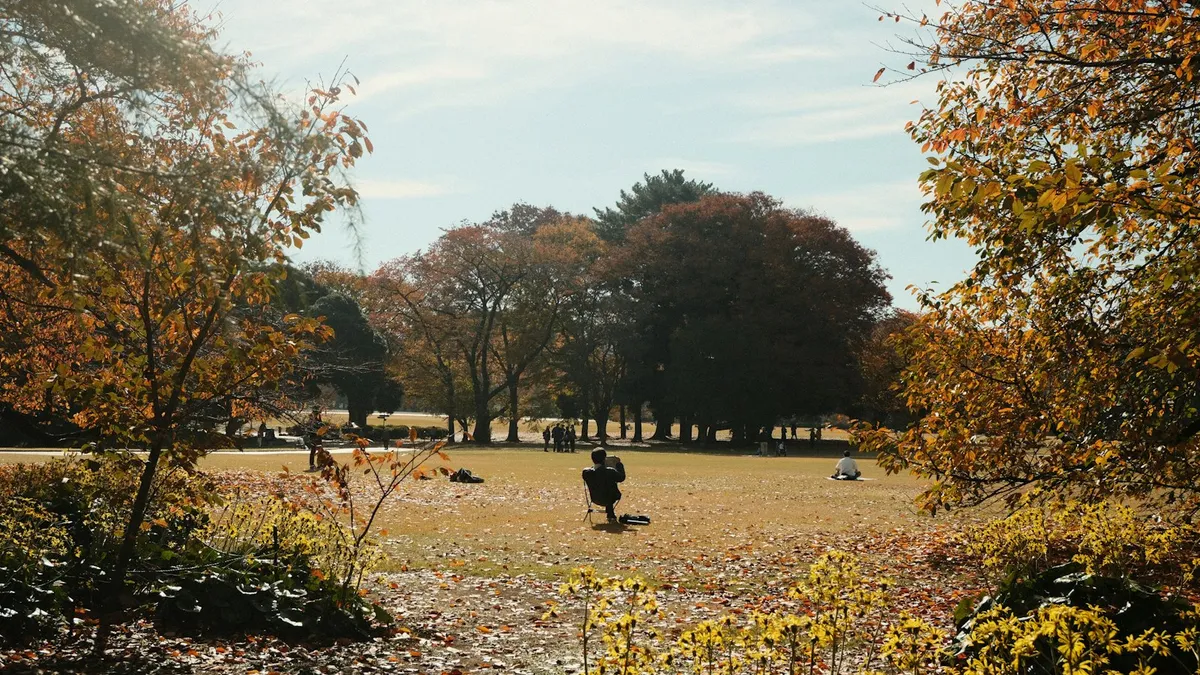
Photo: Putra Wijaya / Unsplash. This is an archive photograph, not a live foliage report.
Start with your date and limits
The official Tokyo foliage guide gives Shinjuku Gyoen a usual mid-November to early-December viewing window. The Takao visitor centre describes a similar broad season for its mountain. Nikko’s official guide instead follows colour down through different elevations from late September into mid-November. Weather can move all these windows.
| Your situation | First option to investigate | Condition that changes the choice |
|---|---|---|
| Late October, leaves are the main goal, and you can devote a full day | Nikko, choosing one elevation zone | Do not add the mountain bus journey if a fixed Tokyo return cannot absorb major road delays |
| Late November, comfortable with mountain walking and a flexible return | Mt. Takao | Cable-car queues, weather, stairs and descent time can make a shorter outing preferable |
| Late November, no mountain hike and an evening commitment | Shinjuku Gyoen | Check the exact opening date, last entry and paths before planning the afternoon |
| Late October, no long journey and no mountain walking | A city-garden day for its own sake | Accept that peak red leaves are not established; avoid replacing one unsupported colour promise with another |
“First option” means a place to check, not a booking instruction. If your chosen area’s current report shows green trees or fallen leaves, change the plan before spending the day in transit. For the wider season choice, our month-by-month Japan guide provides broader trip context.
Late October: separate Nikko’s scenery from its bus risk
Do not treat Nikko as one foliage date. The official guide distinguishes its higher mountain areas from the lower shrine area, whose usual colour comes later. Choose the zone whose current report matches your date; do not combine every elevation into a single day.
For a Tokyo-based day trip, the important question is whether you will travel up the Irohazaka road to Lake Chuzenji. Autumn congestion can substantially extend that bus leg. Our planning recommendation is to avoid making this mountain excursion depend on an inflexible Tokyo dinner, flight or onward connection. Leaving early helps your schedule, but cannot remove the road risk.
Open the Tobu Bus Nikko information page before committing. Its linked English timetable covers April 1–November 30, 2026, and warns about delays. Read both directions and the current notices, rather than taking a timetable journey time as a guarantee. The operator also announced changed boarding locations at Chuzenji from September 24; check the revised map when using that terminal.
If Nikko is attractive for its culture regardless of leaf colour, a lower-area day may still be worthwhile. That is a different reason to go. An enjoyable temple trip does not prove that the mountain foliage was accessible within your time budget.
Late November: Takao is less climbing, not zero walking
Rail access and a cable car make Takao tempting when you want a mountain setting. Start with the operator’s access information for Takaosanguchi Station, then check the cable-car timetable.
The ride reaches the mountain’s middle slopes. The summit remains a walking destination. The visitor centre’s route estimate is about 30 minutes from the upper cable-car station to Yakuo-in, followed by about 20 minutes with stairs to the summit. Queues and your walking pace add time. A shortened upper-station visit is a possible choice if the summit walk exceeds your comfort; it is not a guarantee of step-free access or equally good colour.
Plan the downhill journey before extending the walk. The visitor centre advises leaving the summit by 3pm at the latest and descending before dark. Do not use the cable car’s later closing time as a reason to stay on a trail too late. If crowds build or the group tires, turn back instead of adding another viewpoint.
For 2026, a Trail 6 restriction makes the section from Biwataki to the Trail 5 junction uphill-only, all day, October 31–December 6. Do not descend that section during the restriction. Read the centre’s current trail notices before choosing any walking route.
A shorter city outing: check Shinjuku Gyoen’s actual day
Shinjuku Gyoen is our first choice among these three when avoiding mountain walking and keeping the rest of the day flexible matter most. Choose a limited part of the garden, leave time for breaks, and finish before the gate closes. A short visit can stand on its own without another destination attached.
The official access page lists a five-minute walk from Exit 1 of Shinjuku-gyoemmae Station to Shinjuku Gate. The admission guide gives ordinary October–March hours of 9am–4:30pm, with last entry at 4pm, and adult admission of ¥500. Enter well before last entry if you want time to look around.
The usual Monday rule has exceptions. The November 2026 calendar shows opening throughout November 1–15 and on November 23, but closure on November 16, 24 and 30. The October calendar lists October 26 as closed. A “late-November garden afternoon” therefore needs a real date, not just a month label.
No mountain hike does not mean every path is easy. Use the garden’s universal-design map and station-route guidance to choose paths for your needs. It identifies slopes, steps and other barriers, and notes gravel in the formal and Japanese gardens. Avoid making an accessibility decision from a photograph of a flat lawn.
There is also an official construction notice for the area around Okido Gate, scheduled from October 6 through late November 2026. Paths there will be narrower; check the notice and use the gate that fits your route. It does not announce a closure of the entire garden.
Work backwards from your Tokyo commitment
If you need to be somewhere at 6pm, write down that destination rather than simply “back in Tokyo.” Your hotel, airport and restaurant require different final transfers. Check the route from the actual garden gate or mountain station, include waiting and the final walk, and choose an earlier return connection you can miss without losing the commitment.
Treat this as a choice rule rather than an exact departure calculation:
- A hard deadline: favour the city-garden option when it is open and the date suits your interests. Keep the visit compact; local transport can still be disrupted.
- A flexible evening: Takao may fit if the walking route, weather and queues are acceptable.
- A full, flexible day focused on mountain colour: investigate Nikko’s relevant zone and road conditions before deciding.
If the leaves are not worth chasing on your dates, keep another kind of outing. Our Kamakura and Enoshima route guide offers a temple-and-coast decision with its own walking and weather constraints; it is not a guaranteed foliage substitute. If your itinerary also includes Kyoto, the Kifune guide is separate destination reading, not evidence for Tokyo’s leaf timing.
Recheck conditions before leaving
Save the current local colour report, the day’s weather, the operator’s notices and your return route together. Check again shortly before the outing. Do not confuse a festival’s operating dates with a forecast of red leaves, or a city forecast with every mountain slope.
In wet or deteriorating weather, shorten or abandon the outdoor plan rather than treating a paved path or cable car as protection from all conditions. If the group needs a rest, an ordinary city day can be the better choice. The goal is a feasible trip on the days you actually have.
Official operating information checked October 6, 2026 (Japan time). Conditions and temporary restrictions can change; use the linked operator pages for your travel day.
Frequently Asked Questions
- Where should I see autumn leaves in Tokyo without hiking?
- Shinjuku Gyoen is the city-garden option in this comparison. Choose a short loop using its official map, check the opening calendar and enter before the autumn last-entry time of 4pm. It still involves walking; gravel, slopes and steps mean that not every path suits every mobility need.
- Should I choose Nikko or Mt. Takao for autumn leaves?
- For October dates, check Nikko's exact elevation zone and current conditions first. Mt. Takao's usual viewing season is mid-November to early December. If you must return to Tokyo at a fixed time, account for Nikko's road delays or Takao's walking and cable-car queues before choosing either mountain outing.
- Does the Mt. Takao cable car take me to the summit?
- No. It takes you partway up the mountain. The visitor centre estimates roughly 30 minutes on foot from the upper cable-car station to Yakuo-in, then another 20 minutes with stairs to the summit. These are walking estimates, not guarantees, and do not include queues.
- Is Shinjuku Gyoen open on Mondays in November 2026?
- Check the specific date. The published November 2026 calendar shows daily opening during the November 1–15 Chrysanthemum Exhibition, including Mondays, and opening on November 23. It lists November 16, 24 and 30 as closed. Recheck the official calendar before travelling.
- Can a foliage forecast guarantee colour on my travel date?
- No. A usual viewing window is a starting point, not a daily promise. Check a dated report for the exact garden or mountain area shortly before travel. A city forecast or festival date cannot establish the condition of every tree along your chosen route.