Nagasaki 1-Day Itinerary: Port to Peace
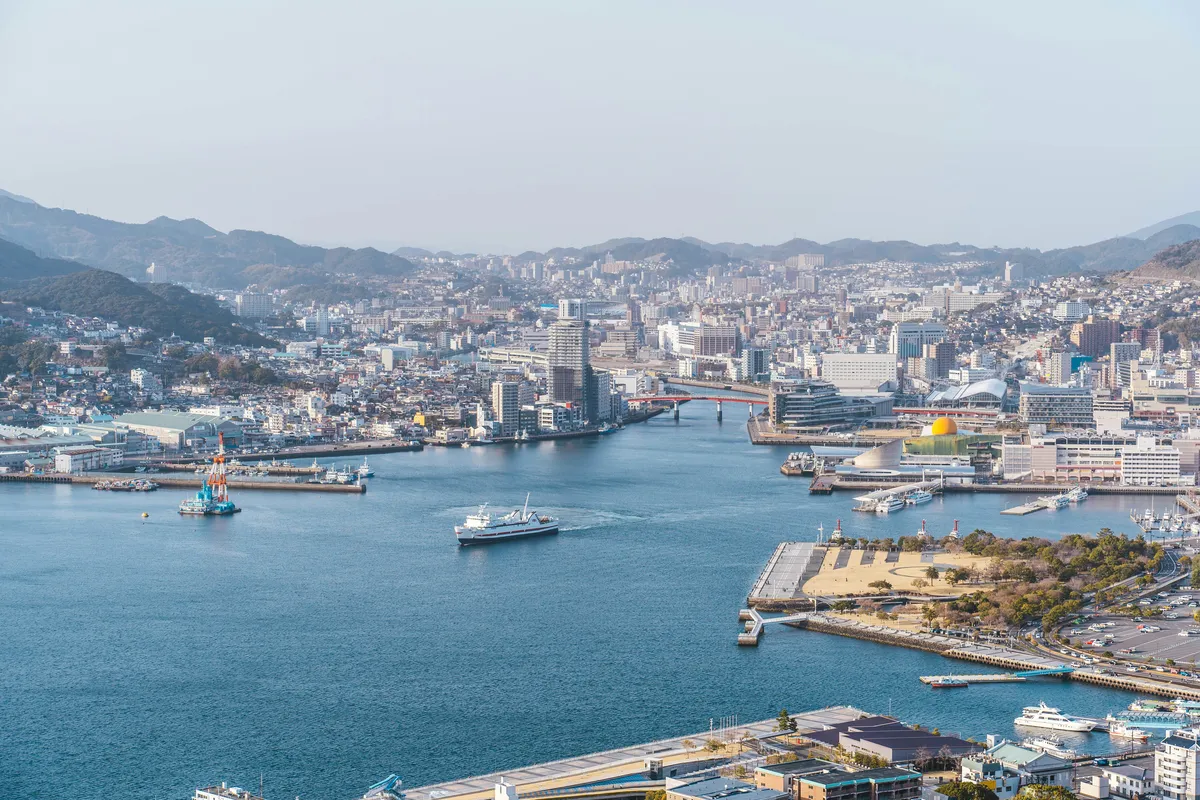
Tucked into the hills of northwestern Kyushu, Nagasaki spent centuries as Japan’s window to overseas trade, and that layered history is still visible in its streets, slopes, and bowls of champon noodles.
Looking for a slower regional stop? Our things to do in Kanazawa guide covers the samurai districts, geisha quarters, and gardens that make it a strong pairing destination on a wider Japan trip.
Most visitors skip Nagasaki entirely, racing from Fukuoka to Kumamoto or straight to Okinawa’s beaches. That’s a mistake. In a single day, you can walk through Nagasaki’s layered past — from its atomic history to centuries of Dutch and Chinese trade — and close the evening at a mountaintop night view that is widely counted among Japan’s most celebrated. This guide sets out a core route built around a realistic time budget, an optional extension for travelers with more energy, a rain fallback, a separate decision on the night view, and honest notes on when to skip a stop rather than force it into the day.
Getting to Nagasaki and Getting Around
Before the itinerary itself, it helps to understand how Nagasaki’s transport works, since that logic shapes every stop below.
Arriving in Nagasaki
From Fukuoka (Hakata Station): JR Kyushu’s Kamome limited express connects to the Nishi-Kyushu Shinkansen at Takeo-Onsen. Journey time, fares, transfer patterns, and rail-pass conditions are set by JR Kyushu’s current timetable and rules, so check the operator’s latest information before you travel rather than relying on a fixed figure.
From Kumamoto: A transfer via Shin-Tosu adds enough time that Nagasaki generally works better as a day trip from Fukuoka than from Kumamoto.
From Nagasaki Airport: An airport limousine bus runs to Nagasaki Station; check current schedules and fares with the operator when you land, since both can change seasonally.
Nagasaki’s Tram System
Nagasaki is one of the easiest Japanese cities to navigate because a compact streetcar network run by the Nagasaki Electric Tramway covers nearly every stop in this itinerary. The tramway’s official site publishes the current flat fare, the one-day pass price, service frequency, and the last-departure times for each line — check it before you go rather than treating any number here as fixed, since fares and schedules are revised periodically. As a rule of thumb, if you expect several rides across the day, it’s worth comparing the day pass against single fares at the ticket machine before committing.
Tram stops are signposted in English and announcements are bilingual. IC cards (Suica, ICOCA, and similar) also work for individual rides if you’d rather not commit to a pass.
Core Route: Five Stops for a Full Day
This is the sequence to build your day around. Each stop links to its official site for current hours, admission, and any closure notices — check the link rather than an old printed number, since these details change.
Morning: Peace Park and the Atomic Bomb Museum
Start early. Reaching this area before tour groups arrive makes a meaningful difference given how the sites are meant to be experienced. From Nagasaki Station, take a tram toward Akasako and get off at the Matsuyamamachi stop; the Nagasaki Atomic Bomb Museum is a short uphill walk from there.
The museum is the emotional anchor of a Nagasaki visit. On August 9, 1945, an atomic bomb detonated above the Urakami district, killing a large share of the city’s population by the end of that year. The exhibition moves chronologically from Nagasaki’s pre-war history as a trading port, through the moment of detonation, to a closing appeal for nuclear disarmament. Exhibits include personal belongings, photographs, and physical remnants recovered from the blast zone. Budget at least an hour; travelers for whom the subject resonates often stay longer. Check the museum’s official site for current hours, admission, and any closure dates before you go.
From the museum, a short uphill walk brings you to Peace Park (Heiwa Koen), built above the hypocenter of the blast. The park’s Peace Statue and the adjacent Hypocenter Park, marked by a simple black monolith, are worth twenty to thirty minutes together. If your schedule is tight, this pairing is easier to compress than the museum itself — you can walk through Peace Park in ten minutes and still take in its meaning.
Urakami Cathedral, just north of Peace Park, is optional on a tight morning: it’s a reconstructed 1959 building on the site of a cathedral destroyed by the bomb, and the exterior alone conveys the history if you don’t have time to linger.
Late Morning: Dejima
From Matsuyamamachi, take the tram south toward the Dejima stop. For over two centuries during Japan’s sakoku (closed country) period, the small fan-shaped island of Dejima was the only place in Japan where Europeans were permitted to live and trade, and it has since been reconstructed as an open-air museum with restored Edo-era buildings, period furnishings, and exhibits on the trade goods that once passed between Japan and the West. Budget roughly forty-five minutes to an hour. Check Dejima’s official site for current admission and hours.
If you’re planning your visit around Japan’s seasons more broadly, our best time to visit Japan guide is a useful companion — Nagasaki is particularly pleasant in spring and autumn.
Lunch: Shinchi Chinatown
A short walk from Dejima brings you to Nagasaki Shinchi Chukagai, one of Japan’s oldest Chinese settlements and the best place in the city for lunch. Champon — thick noodles in a rich pork-and-seafood broth — is the dish to order, alongside sara-udon (crispy noodles under the same style of topping). Menu prices vary by restaurant and shift over time, so treat any figure you see quoted elsewhere as a rough guide rather than a current price. Budget about forty-five minutes, and expect a queue at the most well-known restaurants during peak lunch hours.
Afternoon: Oura Cathedral and Glover Garden
From Chinatown, head south along the waterfront or take the tram toward Oura Tenshudo. Oura Cathedral — officially the Basilica of the Twenty-Six Holy Martyrs of Japan — is the oldest standing church in Japan and a National Treasure, built by French missionaries and later the site where a group of local Christians revealed that their community had secretly kept its faith for generations under Japan’s ban on Christianity. This history is now part of the UNESCO World Heritage “Hidden Christian Sites in the Nagasaki Region.” Fifteen to twenty minutes is enough for most visitors; check the cathedral’s official site for current admission and hours.
From there, Glover Garden sits a short climb uphill — reachable by hillside escalators or on foot — and gathers restored Meiji-era Western-style residences on a hillside overlooking the harbor. The centerpiece is Glover House, built in 1863 for Scottish merchant Thomas Blake Glover and believed to be the oldest Western-style building in Japan; Glover played a documented role in supplying Japan’s modernization era and in establishing the Mitsubishi shipyard. Budget sixty to ninety minutes to walk the grounds at an unhurried pace, and check Glover Garden’s official site for current admission, hours, and any seasonal notices. Entering from the top and walking downhill is generally easier on the legs and front-loads the best harbor views.
Optional Extension: Meganebashi and Temple Row
If your pace has been comfortable and you have an extra hour, continue north by tram toward Nigiwaibashi for Meganebashi and Teramachi. Meganebashi (Spectacles Bridge) is one of Japan’s oldest stone arch bridges, and on calm water its double arches form the reflection that gives the bridge its name; fifteen to twenty minutes covers a stroll and photos. Uphill from the bridge, Teramachi (Temple Street) is lined with Buddhist temples, the most distinctive of which is Kofukuji, Japan’s first Obaku Zen temple, built with a visibly Chinese architectural style rather than a Japanese one. Check the temple’s posted hours locally, since they are not centrally published.
Treat this extension as genuinely optional. It adds real value if you’re moving efficiently and want more of Nagasaki’s layered history, but it is the first thing to cut if the afternoon has run long — nothing later in the day depends on having seen it.
Night-View Choice: Mount Inasa
This is the most commonly cited highlight of a Nagasaki day, but it’s worth treating as a deliberate choice rather than an automatic finale.
Mount Inasa’s night view is frequently named alongside Hakodate and Kobe as one of Japan’s most celebrated, though “best” is a matter of opinion rather than a verifiable ranking. The observatory looks out over Nagasaki’s harbor and hillside neighborhoods, with city lights reflecting off the water. To reach it, take the tram to Takaramachi and follow signs to the Nagasaki Ropeway station at Fuchi Shrine. Check the ropeway’s official page for current access, operating hours, the last ascent time, and round-trip fare before you plan your evening around it, since those details are subject to change.
Go if: the sky is clear, you have energy left, and your return transport isn’t time-pressured. Arriving before sunset — check the season’s sunset time locally — gives you the transition from daylight to city lights that makes the visit worthwhile.
Skip or shorten if: it’s raining or overcast (the view is the entire point, and cloud cover removes it), you’re already tired from a full day of walking and slopes, or your train or onward connection is tight. An observation deck exists at the summit with an enclosed floor as an alternative to the open-air rooftop in windy conditions.
Rain Fallback
Nagasaki sees meaningful rainfall across the year, so it’s worth having a wet-weather plan rather than pushing through. The Atomic Bomb Museum, Dejima, and Glover Garden’s buildings are all substantially covered or indoor, so the core route mostly holds up in light rain. Mount Inasa is the exception: in poor weather the view disappears, so it’s not worth the ropeway fare or the trip up. On a rainy evening, the covered Hamanomachi shopping arcade and its surrounding streets are a reasonable substitute for the night-view finale, and you can plan a return visit for Mount Inasa on a clearer trip.
When to Skip or Extend
If you arrive late (mid-morning or after): drop Urakami Cathedral and shorten your Dejima visit; the core route still fits into an afternoon and evening.
If you want more time at Peace Park: the nearby Nagasaki Museum of History and Culture is a reasonable substitute if you decide to skip the Meganebashi/Temple Row extension.
If you’re chasing a headline sight rather than a full day: Glover Garden and the Mount Inasa night view are the two stops most travelers remember most; if time is genuinely short, prioritize those two over the historical morning route, though this comes at the cost of the museum and Peace Park’s context.
In cherry blossom season: Peace Park and Glover Garden are both worth extra time when the trees are in bloom. For a wider view of sakura timing across the country, see our cherry blossom Japan complete guide.
Food Beyond Champon
Nagasaki’s food scene extends well past its signature noodle dish. Shippoku ryori is a shared banquet-style meal blending Japanese, Chinese, and Portuguese influences, typically served at a small number of long-established restaurants and usually priced as a splurge relative to a casual meal — check current menus locally rather than an old quoted figure. Turkish Rice (Toruko Raisu) — a single plate combining spaghetti, pilaf rice, and a fried pork cutlet — is a beloved local comfort food found at retro cafes around the city. Nagasaki also sits on rich fishing waters, and restaurants near the station serve the day’s catch, including sea bream and local horse mackerel.
Practical Notes
What to bring: Nagasaki is built on hills, with real climbing at Glover Garden, Peace Park, and between some tram stops, so comfortable walking shoes matter more here than in flatter cities. Nagasaki also sees more rain than many Japanese cities, so a compact umbrella is a reasonable year-round addition, and a light layer helps for the harbor breeze and the Mount Inasa summit, which can be cooler than street level even on a warm day.
Coin lockers are available at Nagasaki Station if you want to drop bags before tackling the day’s slopes on foot.
Beyond one day, Hashima Island (Gunkanjima), the Goto Islands, Unzen Onsen, and Huis Ten Bosch are all reachable extensions if you want more time in the region. If onsen culture interests you, our Beppu onsen guide covers another Kyushu hot-spring city with a wide range of bathing experiences.
Should You Swap City Stops for Gunkanjima?
With only one day, make the boat trip your main commitment and shorten the city route. Before reserving, decide whether seeing the island from the boat would still make the trip worthwhile. A landing-tour reservation does not guarantee that you will step ashore; the captain can refuse landing when local conditions are unsafe. If a boat-only visit would disappoint you, the city itinerary above gives you a plan that does not depend on landing.
Keep these three situations separate when comparing tickets:
| What happens? | What to check before choosing |
|---|---|
| You decide to cancel or change plans | Read the cancellation deadline for your booking channel. A forecast that worries you does not automatically make your cancellation free. |
| The boat sails but cannot land | Check what happens to the passage fare and the separate landing/facility fee. These can have different refund rules. |
| The operator cancels the entire sailing | Read that operator’s cancellation notice and your seller’s refund process. Do not assume transport or hotel costs will also be reimbursed. |
Operator examples, checked October 12, 2026: Takashima’s direct-booking notes say the boarding fare is not refunded when weather or sea conditions prevent landing. If the whole sailing is canceled, no fare is payable, but other travel and accommodation costs are not compensated. Its Japanese cancellation table allows free cancellation through the day before the reserved boarding date and charges 100% on that date; travel-agency bookings follow the seller’s rules. Yamasa’s Landing & Cruise conditions instead state a refund of the landing fee and 10% of the passage fee when landing is impossible. These examples are specific to the linked products, not a rule for every Gunkanjima ticket.
Before booking, write down your operator, actual meeting point, check-in deadline, cancellation cutoff and onward departure. Use your provider’s current return estimate and leave room for delays; a timetable does not guarantee a train or flight connection. Keep city stops flexible until you are back in Nagasaki, and return to the city itinerary above if the sailing is canceled.
Planning the Day
The route above is deliberately sequenced so that each stop is a short tram ride or walk from the last: Peace Park and the museum in the morning, Dejima and lunch at midday, Oura Cathedral and Glover Garden in the afternoon, an optional historical extension if time allows, and Mount Inasa as a separate evening decision rather than an assumed finale. Treat the extension and the night view as genuinely optional pieces you add back in if the day is going well, not as fixed obligations — a shorter, well-paced version of this route beats a rushed version that tries to fit in everything.
Planning the wider trip? For broader logistics on trains, money, and customs before you build out a Kyushu itinerary, our Japan travel tips guide is a useful starting point.
Frequently Asked Questions
- How do I get to Nagasaki from Fukuoka?
- JR Kyushu's Kamome limited express connects to the Nishi-Kyushu Shinkansen at Takeo-Onsen. Journey time, fares, transfer patterns, and rail-pass conditions can change with the timetable, so check JR Kyushu's current schedule and pass rules before you travel.
- Is one day enough to see Nagasaki?
- Yes, for the core route: the Atomic Bomb Museum and Peace Park, Dejima, Chinatown for lunch, Oura Cathedral, and Glover Garden. Meganebashi and Temple Row are a worthwhile optional extension if your pace allows, and the Mount Inasa night view is a separate evening decision. If you want the extension and the night view without rushing, two days is more comfortable.
- Should I buy the Nagasaki tram day pass?
- It depends on how many rides you take. This itinerary uses the tram several times, so compare the current single fare with the day-pass price on the Nagasaki Electric Tramway's official site before deciding; both can be revised.
- What is the best time to visit Mount Inasa?
- Arriving before sunset lets you see the view shift from daylight to city lights, which is the main reason travelers go up in the evening rather than the afternoon. Ropeway operating hours and the last ascent time change, so check the Nagasaki Ropeway's official page the day you plan to go, and treat any crowd pattern as a general tendency rather than a guarantee.
- What should I eat in Nagasaki?
- Champon, a thick noodle dish in a rich seafood-and-pork broth, is the signature order and is easiest to find in Shinchi Chinatown. Sara-udon, Turkish Rice, and castella sponge cake are the other local staples worth seeking out. Menu prices vary by restaurant and change over time, so treat any specific figure as a rough guide rather than a current quote.
More on Regional Travel
Continue exploring this cluster.
Best Things to Do in Kanazawa: 2026 Guide
Plan the best things to do in Kanazawa: Kenrokuen Garden, samurai and geisha districts, and Sea of Japan seafood — from someone who visited twice.
Sawara First-Time Guide: Merchant Town Walks
Plan a first visit to Sawara around its historic merchant-town streets, flexible culture stops, and current official planning sources.
Fukuoka First-Time Guide: Hakata and Canal Days
Plan a first Fukuoka stay around Hakata, a flexible city day, and an optional Dazaifu side trip using current official sources.
Miyazaki Travel Guide: Aoshima and City Days
Plan a first Miyazaki trip by choosing a city base or an Aoshima coastal day, then check official sources before you travel.
Hakodate and Hirosaki: A Cross-Strait Route
Plan a Hakodate and Hirosaki cross-strait route by choosing a night-view city base, a castle-town day, and when the transfer is worth it.