Fukuoka First-Time Guide: Hakata and Canal Days
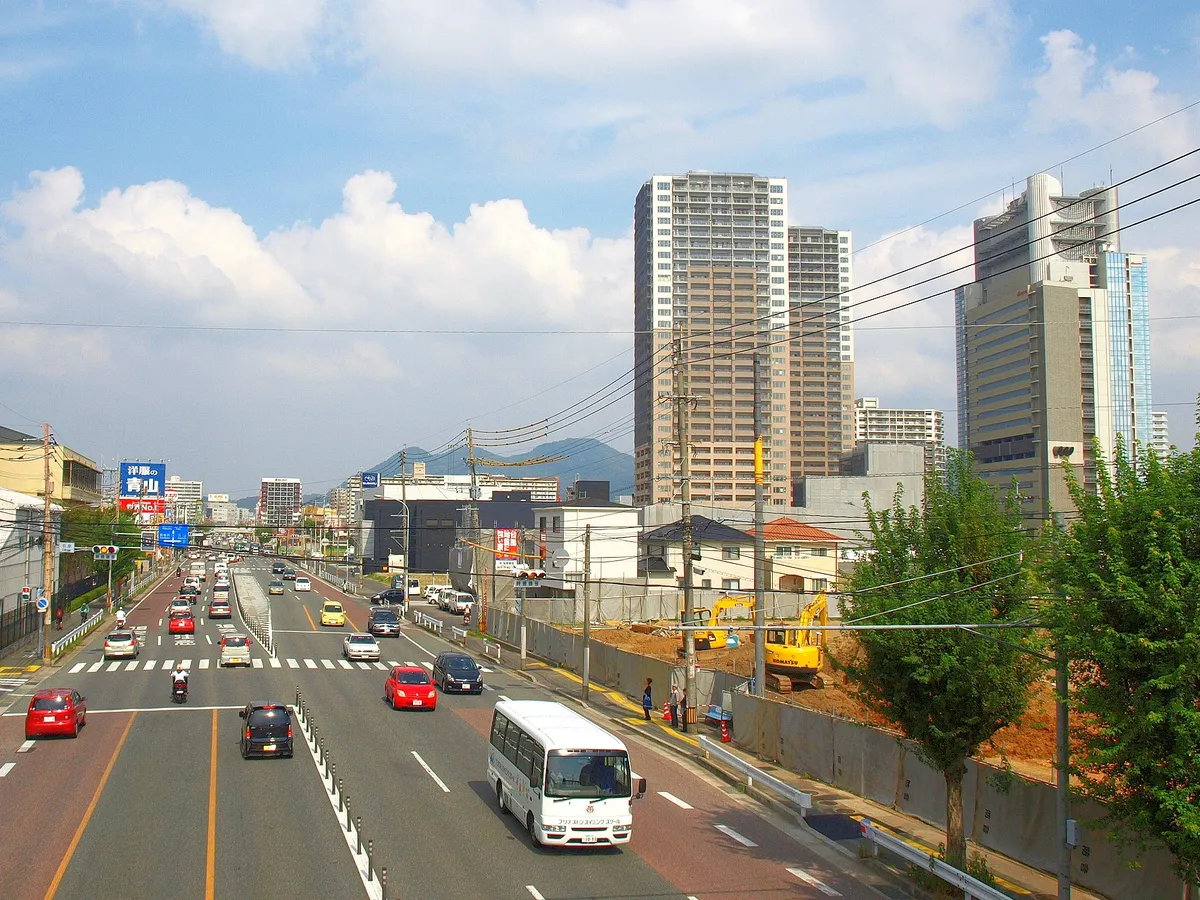
Fukuoka works best when you treat it as a useful beginning, middle, or reset point in a Kyushu itinerary rather than as a city you must exhaust in a single checklist. The Japan National Tourism Organization’s Fukuoka overview provides a broad official introduction to the region. For a first visit, the practical question is not how many districts you can fit in, but what job Fukuoka has in your trip: an arrival base, a city day between longer rail legs, or a place where you slow down before moving on.
That choice shapes everything else. A traveler arriving with luggage, recovering from a long journey, or preparing for another Kyushu destination needs a flexible city plan. Someone with two unhurried days can separate a Hakata-focused walk from a cultural side trip. Trying to combine every possible neighborhood, a side trip, and an onward connection in one day usually creates a route that feels busy without becoming memorable.
Start with Hakata as the planning anchor
For many first-time visitors, Hakata is the most useful mental anchor because it keeps the city part of the trip connected to the wider route. It is not necessary to decide every café, shop, or attraction before you arrive. Instead, decide what you want the first half of the day to feel like: a gentle orientation walk, food and street-life exploration, a riverfront pause, or simply a reliable base between travel days.
The Fukuoka City Official Tourist Guide is the right place to check current visitor-facing information as you turn that broad choice into a route. Use it to identify what is actually open or relevant on your travel date, rather than treating this draft as a substitute for live details. The city has more options than most short stays can accommodate, so the aim is to choose a coherent area and leave time for the ordinary parts of travel: checking in, eating, finding your bearings, and changing plans when weather or energy levels make that sensible.
A Hakata-centered day is especially useful if you are building a trip around more than one Japanese city. Our Japan travel tips guide uses the same basic principle: give each stop a purpose. In Fukuoka, that purpose might be a city day with room to wander, not a miniature version of every Kyushu destination at once.
Choose a city day before adding a side trip
Fukuoka is also the gateway to a wider prefecture, which is why a first-time plan needs a clear boundary. The VISIT FUKUOKA official travel guide is a useful planning surface for looking beyond the immediate city. That does not mean every visitor should leave the city on the first day. It means you can make the choice consciously: stay local when a relaxed city rhythm is what you need, or reserve a separate block of time for a destination outside the center.
A good rule is to set one main anchor for each day. If Hakata streets, food, and the riverfront are the reason you are interested in Fukuoka, let that be the main event and make any other stop optional. If a cultural destination outside the center is the reason for your visit, build the day around that first and do not expect the city portion to carry the same weight. This is less about reducing ambition and more about protecting the decision that made Fukuoka worth adding to your itinerary.
For an optional cultural side trip, Dazaifu Tenmangu’s official English site is the appropriate current source. The site should be checked again near your travel date for any visit-specific details. In a first-time itinerary, Dazaifu works best as a separate choice rather than something appended to a packed arrival or departure day. If you only have a short stay, it is perfectly reasonable to keep the whole day in Fukuoka and save the side trip for a return visit.
Arrival and onward travel: keep the first day flexible
Fukuoka is a practical point of entry for many Kyushu routes, but practical does not mean predictable down to the minute. The Fukuoka Airport official website is the source for current airport information, and the JR Kyushu English site is the source for current onward rail planning. Start with your actual arrival terminal before choosing a city transfer.
Domestic or international: choose the airport-to-city route
The subway station is at the Domestic Terminal, not the International Terminal. The airport’s subway access guide explains both routes. The city tourism board lists about five minutes from Fukuoka Airport Station to Hakata and eleven to Tenjin on its getting-around page. Those are train-ride times, not landing-to-hotel or landing-to-JR-connection times.
| Where you arrive and where you are going | Route to compare | What changes the choice |
|---|---|---|
| Domestic Terminal → Hakata or Tenjin | Follow signs to the subway in the south-side B2F Access Hall | Include the terminal walk, train wait and destination exit; use the airport’s elevator-route guidance if needed |
| International Terminal → Hakata | Free terminal shuttle + subway, or the Nishitetsu direct Hakata bus | The direct bus avoids the terminal change and arrives at Hakata Station’s Chikushi Exit; check which side of the station suits your hotel or onward journey |
| International Terminal → Tenjin | Free terminal shuttle + subway, or Nishitetsu Airport Express | Compare the actual next departure and final walk; the express serves Nishitetsu Tenjin Expressway Bus Terminal, a different arrival point from the subway |
For the international-to-subway route: after exiting arrivals, use the free shuttle at international stop 5, alight at the Domestic Terminal’s South Bus Boarding Area, then follow signs down to the subway. The airport describes the terminal ride as approximately ten minutes, with possible traffic delays, on its flight-connections page. Add the wait and walks separately. Check the current shuttle timetable, especially early or late; departure times are estimates. A listed bus does not guarantee space or an onward connection.
The airport’s bus directory lists international stops 6 and 7 for the Nishitetsu Hakata service and 8 for its Tenjin service. Confirm the destination display and the specific operator’s current timetable and payment rules before joining a queue. Services from the same terminal can have different stops, payment methods and operating hours.
Before committing to a fixed onward train:
- Start your transfer plan when you expect to be ready to leave arrivals, allowing for immigration, baggage and customs as applicable. A flight’s landing time is not your bus-stop arrival time.
- Count every leg: terminal walk → shuttle wait and ride if needed → subway or direct-bus wait and ride → walk to the correct station area and platform.
- Check the actual day’s services and your rail ticket’s change/missed-train conditions. Leave room for delays rather than treating the short subway ride as the whole connection.
For an international departure, reverse the terminal logic: the subway brings you to the Domestic Terminal, so you still need the free shuttle to the International Terminal. Follow the airport’s subway-to-international instructions for domestic stop 1; travelers using a wheelchair or stroller are directed via the Domestic Terminal ticket gate and South Elevator. Work backward from your airline’s check-in and baggage deadlines, with terminal travel and waiting included. These directions are not a minimum safe connection time or a promise of an accessible journey at every destination exit.
Airport terminal and city-transfer guidance checked October 13, 2026. Recheck the linked airport/operator pages before travel; other sections retain their earlier source dates.
For the rest of your arrival day, plan in layers:
- Decide whether your arrival day should be a light city day or only a recovery and orientation period.
- Check current airport, rail, and accommodation information shortly before travel.
- Keep the first activity after a connection easy to shorten without losing the purpose of the day.
- Do not schedule a separate side trip immediately after a tight arrival or before an important onward journey.
- If a delay changes the plan, keep the city anchor and remove optional stops rather than trying to recover every item.
This approach is particularly useful on a multi-city trip. A neat route on a map can still feel uncomfortable after a delayed flight, rain, heat, a missed connection, or simply a day when the group is moving more slowly than expected. A Fukuoka plan that has room to breathe is more valuable than a dense itinerary that relies on every transfer going perfectly.
Build a first Fukuoka day around a decision, not a list
A simple first-day structure can be enough. Start with Hakata as the base. Pick one priority: food-focused exploration, a neighborhood walk, a riverfront pause, or an indoor reset after travel. Then decide whether a second anchor genuinely adds value. If it does not, preserve the time instead of filling it with another named stop.
This is the same distinction that helps elsewhere in Japan. Our best time to visit Japan guide is useful for choosing a travel window, while the day itself still needs one clear city area and a traveler decision rather than a list of landmarks. Fukuoka deserves the same treatment. You may see less on paper, but you are more likely to understand the city as a place rather than as a sequence of hurried arrivals.
If you have a second day, you can make the contrast clearer. Use one day for Fukuoka itself and reserve the other for a purposeful wider-prefecture option, such as Dazaifu if it fits your interests. Alternatively, keep both days local and allow more time for neighborhoods, meals, and an unplanned detour. Neither choice is universally better; the important thing is to avoid making a second day feel like an obligation to compensate for a rushed first day.
Travelers continuing through Kyushu can also compare Fukuoka’s role with a more destination-led stop. Our Nagasaki one-day itinerary shows how a city can reward a focused plan around historic areas and a clear walking route. In Fukuoka, the equivalent is often a flexible base and a clear preference about whether the city or a side trip is the main experience.
Rain, heat, and late-arrival fallbacks
A flexible plan matters even more when conditions change. If rain, heat, a late arrival, or travel fatigue affects the route, protect the part of the day that still feels worthwhile. A city-based plan is easier to shorten than a tightly timed sequence across multiple destinations. Keep an indoor or lower-effort option in mind, confirm live information through the official sources linked above, and leave any separate side trip for a day when it can have the time it deserves.
Do not assume that a large city automatically makes every plan easy, or that an airport or rail connection will always behave like an old itinerary says it will. The reliable approach is to confirm current information, choose one main area, and allow the rest of the day to remain adjustable. This is especially important for families, travelers carrying luggage, and groups with mixed energy levels.
The same strategy helps on departure day. If you have a late onward journey, you may have enough room for a focused city walk. If timing is uncertain, keep the day local and save a side trip for another visit. A plan that leaves you calm for the next connection is better than one that adds one more sight at the cost of the whole travel day.
Make the city fit the trip you actually have
Fukuoka can be a rich destination in its own right, but a first visit does not need to prove that by doing everything. Use Hakata as the city anchor when you need flexibility around arrival, departure, or a broader Kyushu route. Use a separate day for an optional cultural side trip when it is central to why you chose the region. Keep official airport, rail, city, prefectural, and destination information open as you finalize the route, because those sources are better suited than a static article to current details.
The result should be a route with a clear purpose: a relaxed city day, a deliberate side trip, or a well-paced transition into the rest of Kyushu. Once you know which of those you want, Fukuoka becomes easier to plan and much easier to enjoy.
Planning a guided Fukuoka day?
Browse current Roam Japan options before you lock in a Hakata-or-side-trip route.
Browse Roam Japan tours →FAQ
Should I stay in Hakata or plan Fukuoka as a day trip?
Use Hakata as the practical anchor when Fukuoka is part of a longer Kyushu route or when you want flexibility around arrival and departure. A day trip can work when your wider itinerary already has a clear base, but it leaves less room to adapt if travel or weather changes.
Is Dazaifu worth adding to a first Fukuoka visit?
Treat Dazaifu as an optional cultural side trip when it matches your interests and the pace of your itinerary. It is better to choose it deliberately than to squeeze it into a day that is already built around arrival, departure, or a focused Hakata walk.
How should I plan transport in Fukuoka?
Check current official airport and rail information close to your travel date, then choose one main area for each part of the day. Avoid relying on fixed transfer times, fares, or service patterns from an older guide.
What is the best fallback if rain or a late arrival changes the plan?
Protect the one experience that made you include Fukuoka, keep the rest optional, and move any separate side trip to another day if the route starts to feel rushed. A shorter city-based day is usually more useful than trying to preserve every stop.
Frequently Asked Questions
- Should I stay in Hakata or plan Fukuoka as a day trip?
- Use Hakata as the practical anchor when Fukuoka is part of a longer Kyushu route or when you want flexibility around arrival and departure. A day trip can work when your wider itinerary already has a clear base, but it leaves less room to adapt if travel or weather changes.
- Is Dazaifu worth adding to a first Fukuoka visit?
- Treat Dazaifu as an optional cultural side trip when it matches your interests and the pace of your itinerary. It is better to choose it deliberately than to squeeze it into a day that is already built around arrival, departure, or a focused Hakata walk.
- How should I plan transport in Fukuoka?
- Check current official airport and rail information close to your travel date, then choose one main area for each part of the day. Avoid relying on fixed transfer times, fares, or service patterns from an older guide.
- What is the best fallback if rain or a late arrival changes the plan?
- Protect the one experience that made you include Fukuoka, keep the rest optional, and move any separate side trip to another day if the route starts to feel rushed. A shorter city-based day is usually more useful than trying to preserve every stop.
More on Regional Travel
Continue exploring this cluster.
Best Things to Do in Kanazawa: 2026 Guide
Plan the best things to do in Kanazawa: Kenrokuen Garden, samurai and geisha districts, and Sea of Japan seafood — from someone who visited twice.
Sawara First-Time Guide: Merchant Town Walks
Plan a first visit to Sawara around its historic merchant-town streets, flexible culture stops, and current official planning sources.
Miyazaki Travel Guide: Aoshima and City Days
Plan a first Miyazaki trip by choosing a city base or an Aoshima coastal day, then check official sources before you travel.
Hakodate and Hirosaki: A Cross-Strait Route
Plan a Hakodate and Hirosaki cross-strait route by choosing a night-view city base, a castle-town day, and when the transfer is worth it.
Nagoya and Gifu: A 2-Day Central Japan Route
Plan a first-time Nagoya and Gifu route by choosing a city base, a riverside day, and a pace that leaves room for changes.