Takayama Old Town and Morning Market Route
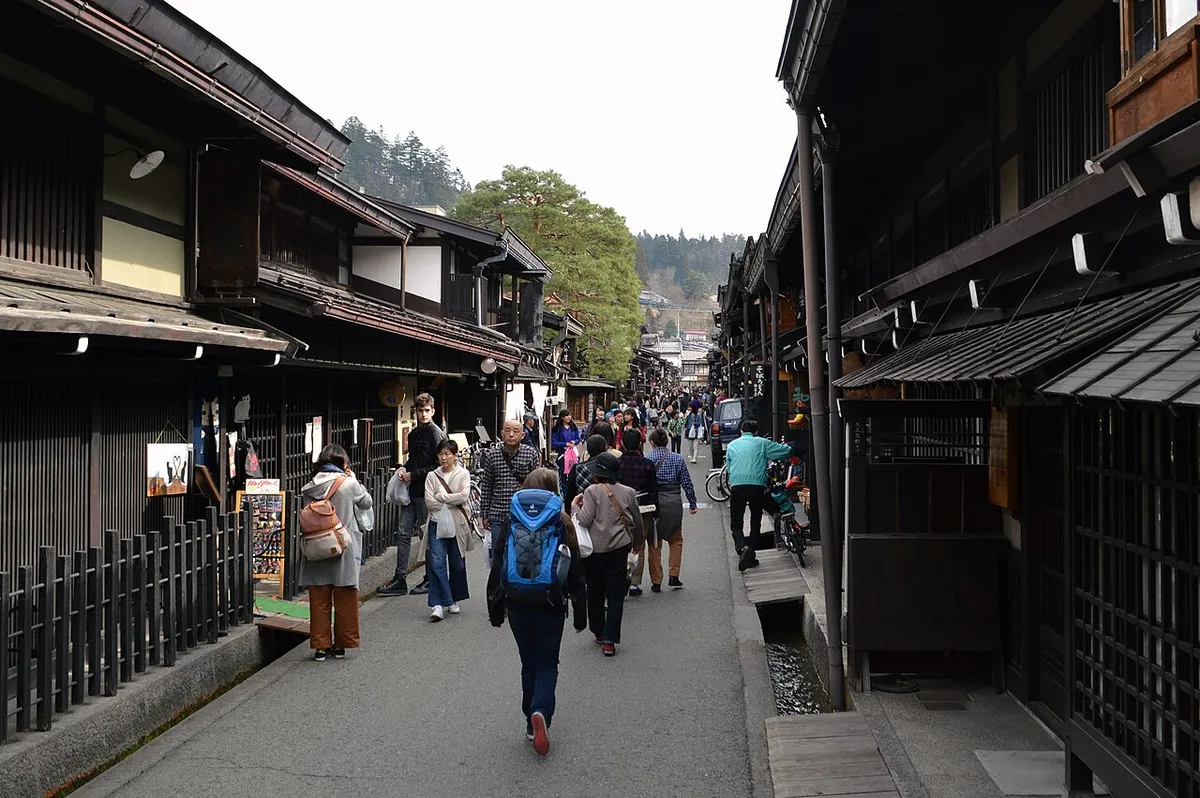
Takayama rewards an early start more than almost any other stop on a Chubu itinerary. Its two defining experiences — the morning markets and the Edo-period merchant streets of Sanmachi Suji — both work best before the day gets busy, which makes the route planning fairly simple: start early, stay compact, and treat anything beyond the old town core as an optional extension.
If Takayama is part of a wider Chubu or Hida route, pair this guide with our Japan travel tips and best time to visit Japan guides before locking transport between cities.
Quick route: market first, streets second
From JR Takayama Station, walk toward Takayama Jinya and the Jinya-mae Morning Market right outside it, then continue into the Sanmachi Suji streets a few minutes further on. This sequencing puts the most time-sensitive stop — the market — first, and lets the old town streets, which stay atmospheric later into the morning, absorb whatever time you have left.
The walk from the station to Takayama Jinya and Sanmachi is roughly ten to fifteen minutes, so the whole core route does not require local transit.
The morning market: Jinya-mae and Miyagawa
Takayama runs two daily morning markets: the Jinya-mae Market directly outside Takayama Jinya, and the Miyagawa Morning Market along the river a short walk further into the old town. Jinya-mae is smaller and more traditional, with stalls historically limited to local farmers selling produce, pickles, flowers, and crafts. Miyagawa is larger and riverside, with a similar mix of local goods alongside souvenir stalls.
If you can only visit one, Jinya-mae pairs naturally with Takayama Jinya since they sit side by side. If you have more time, walk both — the two markets are close enough that seeing them back to back does not require a separate trip. Either way, treat the market as a walk-and-browse stop rather than a seated meal, and expect it to wind down toward midday rather than running a full day.
Takayama Jinya: the Edo government house
Takayama Jinya is described as the only surviving Edo-period government office building of its kind in Japan, a reminder that Takayama was governed directly by the shogunate because of the region’s valuable timber resources. Give it thirty to forty-five minutes if you want to walk through the preserved rooms and the large adjoining storehouse, which now holds historical documents and maps related to the Hida region.
This is also your best rain-day anchor in central Takayama: unlike the markets and the Sanmachi streets, Takayama Jinya is an indoor, roofed site.
Sanmachi Suji: the old merchant streets
Sanmachi Suji is Takayama’s best-known old town district, three narrow parallel streets lined with dark-wood merchant houses, several sake breweries, and shops set inside buildings that in some cases are centuries old. Unlike a single-attraction stop, Sanmachi rewards unhurried walking — pausing at a brewery entrance, a craft shop, or a quiet side lane rather than treating it as a route to complete quickly.
Budget an hour at minimum, and more if you want to visit a brewery or linger over food stalls. Sanmachi’s covered shop eaves also make it more resilient to light rain than the open-air markets, which makes it a reasonable place to spend extra time if the weather turns after your market visit.
This old-town stretch is also where Takayama’s independent-travel route overlaps most with guided photo walks in the city: the narrow lanes, timber facades, and morning market activity are exactly the kind of scene that local photo-walk tours are built around, whether you are shooting with a guide or simply exploring with a camera on your own.
When to extend: Hida Folk Village
If you have a half-day or more beyond the old town core, Hida Folk Village is an open-air museum of more than thirty relocated traditional houses from the wider Hida region, including steep-roofed gassho-zukuri farmhouses, reachable by a short bus ride from the Takayama Nohi Bus Center. It works well as an afternoon extension after the old town, especially on a day with mixed weather, since many of its houses can be entered.
Skip this extension if your schedule is tight or if Takayama is a single stop within a longer day of travel — the market-Jinya-Sanmachi core gives you a complete, satisfying visit on its own.
Weather and timing fallback
On a rainy morning, keep the market visit brief and shift your main time to Takayama Jinya and Sanmachi’s covered eaves rather than lingering in the open-air stalls. On a hot day, an early start matters even more, since both markets and the old town streets have little shade before midday.
If you are visiting as a day trip from Nagoya, Toyama, or Kanazawa, build in a buffer for the return train and treat Hida Folk Village as the first thing to cut if the day is running long.
Making the call
Takayama’s core route is simple and forgiving: arrive early for the Jinya-mae market, walk through Takayama Jinya, and spend the rest of your morning in Sanmachi Suji. Extend into Hida Folk Village only if the day allows it. For general orientation, current hours, and seasonal notices, check the official Hida Takayama tourism site before you go.
For other old-town and market-focused routes with similar timing logic, see our Kanazawa city guide, Kanazawa food guide, and Hiroshima and Miyajima guides.
Ready to compare guided experiences elsewhere in Japan? Browse Roam Japan tours for guided Japan experiences while a dedicated Takayama comparison route is still pending.
Frequently Asked Questions
- What time should I start in Takayama to catch the morning market?
- Arrive as early as your schedule allows. The Jinya-mae and Miyagawa morning markets run roughly from early morning to around noon, and stalls thin out as the morning goes on, so earlier is more reliable than later.
- Is Takayama's old town walkable from the station?
- Yes. Sanmachi Suji and Takayama Jinya sit roughly a ten to fifteen minute walk from JR Takayama Station, so the whole route can be done on foot without local transit.
- What should I do in Takayama if it rains?
- Move indoors: Takayama Jinya's preserved rooms and storehouse, and Hida Folk Village's relocated farmhouses, both work as rain fallbacks, while Sanmachi's covered shop eaves make browsing possible in light rain.
- Is half a day enough for Takayama's old town?
- A focused half-day covers the morning market, Takayama Jinya, and a walk through Sanmachi Suji. Add Hida Folk Village only if you have a half-day or more to spare, since it sits outside the walkable core.
More on Regional Travel
Continue exploring this cluster.
Best Things to Do in Kanazawa: 2026 Guide
Plan the best things to do in Kanazawa: Kenrokuen Garden, samurai and geisha districts, and Sea of Japan seafood — from someone who visited twice.
Sawara First-Time Guide: Merchant Town Walks
Plan a first visit to Sawara around its historic merchant-town streets, flexible culture stops, and current official planning sources.
Fukuoka First-Time Guide: Hakata and Canal Days
Plan a first Fukuoka stay around Hakata, a flexible city day, and an optional Dazaifu side trip using current official sources.
Miyazaki Travel Guide: Aoshima and City Days
Plan a first Miyazaki trip by choosing a city base or an Aoshima coastal day, then check official sources before you travel.
Hakodate and Hirosaki: A Cross-Strait Route
Plan a Hakodate and Hirosaki cross-strait route by choosing a night-view city base, a castle-town day, and when the transfer is worth it.