Aomori Nebuta 2026: Best Night & Haneto Guide
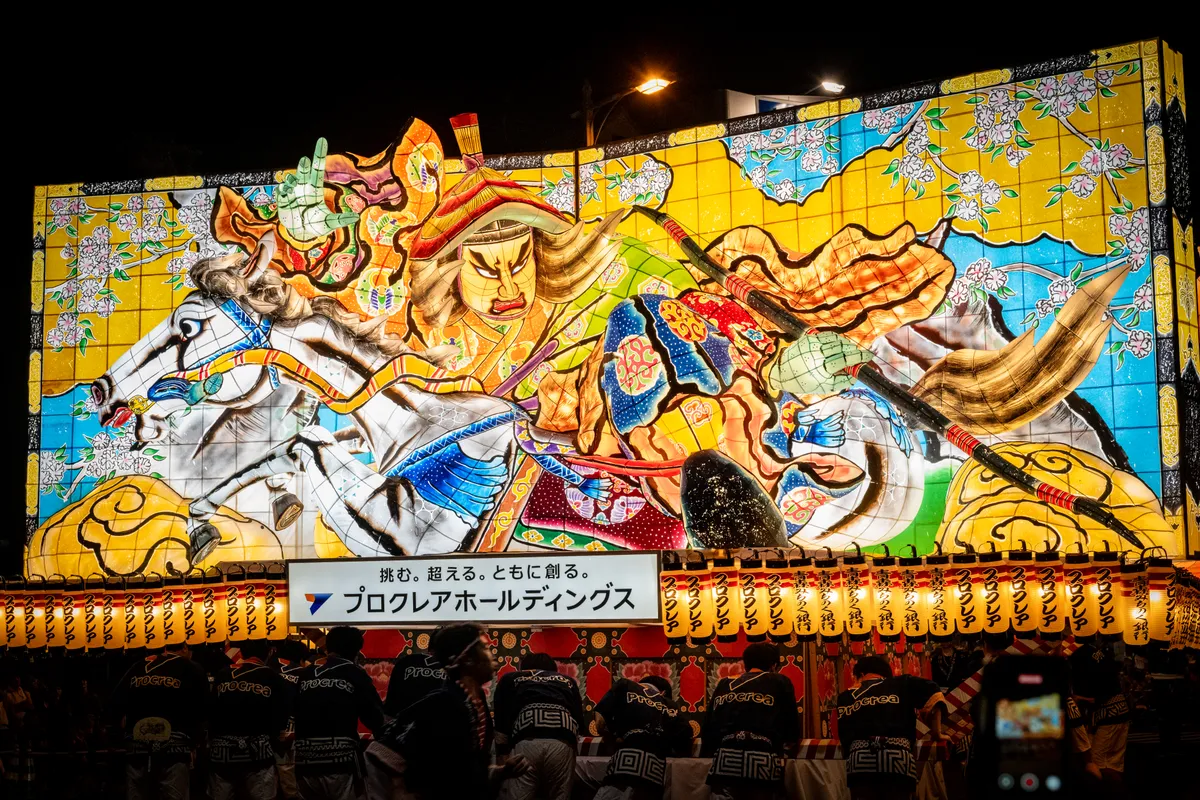
Every August, one of the most remote prefectural capitals in Japan becomes the country’s loudest, most physical festival. From August 2 to 7, 2026, enormous illuminated warrior floats — some 9 meters wide and weighing 4 tons — glide through downtown Aomori for six nights while thousands of costumed dancers leap around them chanting “Rassera, rassera.” This is Nebuta Matsuri, and it pulls over three million visitors to a city of 270,000 people. This guide gets you straight to the decisions that matter: which night is best (August 6 for most first-timers), how tourists can join the haneto dance, when reserved seats are worth booking, and the order to lock in hotels and Shinkansen trains.
Aomori Nebuta 2026: Quick Answer for First-Timers
- 2026 dates: August 2–7. Evening parades run 19:10–21:00 on August 2–6; August 7 adds a daytime parade (13:00–15:00) and the ocean parade with roughly 11,000 fireworks (19:15–21:00).
- Where to stand: Free curbside viewing works for most nights. Aim for Shinmachi-dori between Aomori Station and the bay for the widest street and best float visibility, and arrive by 17:30 for a 19:10 parade. Reserved seats (from ~2,600 yen, on sale late June) are worth it only for the peak August 6–7 crowds.
- Should tourists join the haneto dance? Yes — this is the point of Nebuta. Anyone in proper haneto costume can join any team, with no registration and no Japanese required. Rent a full set for around 4,000 yen near Aomori Station and be dressed by 17:00.
- What to book first: Accommodation, then trains. Aomori’s ~4,000 central rooms sell out months ahead — book by April. Reserve the Tohoku Shinkansen seat the moment it opens one month before travel.
- Simple first-timer route: Reserve an Aomori-area hotel → take the Hayabusa Shinkansen to Shin-Aomori (~3h10m from Tokyo) → target the August 6 evening parade → rent a haneto costume and jump in, or watch free on Shinmachi-dori → visit Nebuta Museum Wa Rasse the next morning.
Planning the wider trip? Start from our Japan tours hub for Tohoku rail logistics and English-guided festival options, and treat any booking as a logistics quote rather than a festival-ticket guarantee.
Plan a Tohoku festival route with English guidance →
Picking your travel month? Our best time to visit Japan breakdown compares weather, crowds, and seasonal events across all twelve months.
Which Nebuta Night Should You Pick?
Match the night to what matters most for your trip — every option below uses the same 2026 schedule facts covered later in this guide.
| Your priority | Best choice | Trade-off |
|---|---|---|
| One best all-round evening | August 6 | Peak crowds (300,000+), but judging is finished and all large floats parade in peak condition |
| Lower-pressure early nights | August 2–3 | Calmer, breathable route and easy photos, but child nebuta plus only about half the large floats and quieter haneto energy |
| Fireworks finale | August 7 | ~11,000 fireworks and the ocean parade, but the tightest logistics of the week |
| Any time of year | Nebuta Museum Wa Rasse | Winning floats up close year-round for 620 yen — no live parade or haneto dancing |
Here is the thing most travel guides will not tell you about Nebuta: it is the only major Japanese festival designed for tourists to actively join. Gion Matsuri in Kyoto wants you to watch. Nebuta wants you to dance. Put on the right costume and you become part of the parade — no registration, no Japanese required, no fee beyond the costume rental. That single difference is why locals call Nebuta “the most democratic festival in Japan” and why anyone planning a summer trip should think seriously about making the trip north.
This guide covers the 2026 schedule night by night, how to join as a haneto dancer, which evenings dodge the worst crowds, when reserved seats are worth booking, where to watch if you would rather not dance, the fireworks finale that almost no Western guide describes properly, and how to actually get to Aomori without blowing your budget.
What Is the Nebuta Festival? A Quick History
Nebuta Matsuri is a Tanabata-adjacent summer festival with roots going back centuries, possibly over a thousand years. The earliest clear records of Nebuta floats in Aomori appear in the late Edo period, around 1722. The ritual itself — floating illuminated figures down rivers or through villages to carry away summer sleepiness (nemuri-nagashi) and evil spirits before the rice harvest — is older and occurs in variations across northern Japan.
The word nebuta is thought to derive from nemuta (sleepy). The festival was originally about staying alert for the critical late-summer harvest season. Somewhere along the way, the small candle-lit lanterns grew into three-story warrior figures. By the Meiji era, Aomori’s neighborhood teams were competing to build the most elaborate nebuta floats, and the festival had taken the shape it holds today.
In 1980, the Japanese government designated Nebuta Matsuri an Important Intangible Folk Cultural Property, placing it alongside Gion Matsuri and Chichibu Yomatsuri as one of the country’s most significant living festivals. Today, more than 20 large nebuta floats parade each year, each built over roughly 18 months by a dedicated nebuta-shi (nebuta master) and a team of apprentices.
The figures on the floats depict historical warriors (Minamoto no Yoshitsune, Benkei), kabuki characters, and scenes from Chinese mythology. Each float has a title, a story, and — increasingly — a social media presence. Judging happens on the final day, and the winning float is selected for display at the Nebuta Museum Wa Rasse (more on that below).
If you are still deciding when to visit Japan, the first week of August is the single densest week of summer festivals — Nebuta in Aomori overlaps with Kanto Matsuri in Akita and Tanabata in Sendai. A well-planned Tohoku tour can hit all three in five days.
For the broader July-August matsuri calendar, use our Japan summer festivals guide as the hub. If your route continues into mid-August, also read the Obon Japan 2026 guide because the national holiday rush changes train and hotel availability immediately after Nebuta.
Aomori Nebuta Festival 2026 Schedule
The festival runs August 2-7, 2026. Here is exactly what happens each day.
Key Dates at a Glance
| Date | Event | Time | Why It Matters |
|---|---|---|---|
| Aug 1 | Eve Festival & Fireworks | 18:00-21:00 | Warm-up fireworks at Aomori Port, no parade |
| Aug 2 | Evening Parade (children + large nebuta) | 19:10-21:00 | First full parade — smaller crowds |
| Aug 3 | Evening Parade (children + large nebuta) | 19:10-21:00 | Second night, atmosphere building |
| Aug 4 | Evening Parade (large nebuta + haneto) | 19:10-21:00 | Full haneto dance begins |
| Aug 5 | Evening Parade (large nebuta + haneto) | 19:10-21:00 | Peak-form floats, energetic crowd |
| Aug 6 | Evening Parade (large nebuta + haneto) | 19:10-21:00 | Final evening, winning floats announced |
| Aug 7 | Daytime Parade | 13:00-15:00 | Award-winning floats under sunlight |
| Aug 7 | Ocean Parade + Fireworks | 19:15-21:00 | Floats on boats + ~11,000 fireworks |
Days 1-2: Children’s Nebuta & First Large Floats (Aug 2-3)
The first two evenings feature smaller child nebuta floats built by local schools and community groups, alongside about half of the main large nebuta. Haneto dance participation is technically allowed on these nights but is calmer — many visitors watch rather than dance.
This is actually the best pair of nights if you want to photograph the floats without wall-to-wall crowds. The parade route feels breathable. Reserved seats are rarely necessary. I shot most of my favorite Nebuta photos on August 3 — the floats were already at full strength but I could actually move along the curb without elbowing through six rows of phones.
Days 3-5: Peak Nights (Aug 4-6)
These three evenings are what most people mean when they say “Nebuta.” All large nebuta parade, all haneto teams are active, and the energy on the street is unmistakable. Expect crowds of 300,000+ on August 5 and 6.
August 6 is the standard recommendation if you can only attend one night. The judging finishes before this parade, all floats are in peak condition, and the atmosphere carries the weight of a final evening without the logistics crunch of August 7.
Day 6: The Grand Finale (Aug 7)
August 7 is structurally different from the other days and has two distinct events:
- Daytime Parade (13:00-15:00): The winning floats parade under sunlight. You can see details — paintwork, wire frames, gold leaf — that lantern light hides. This is the best photographic opportunity of the entire festival.
- Ocean Parade + Fireworks (19:15-21:00): The winning floats are loaded onto boats and sailed around Aomori Bay while approximately 11,000 fireworks light the sky. This is the moment almost no English guide describes properly. It is genuinely one of the most spectacular evening scenes in Japan.
Ocean parade viewing is free from Aomori Bay Bridge and the waterfront parks. Reserved seating at Aspam Square and A-FACTORY areas gives better angles but sells out by early July.
How to Watch: Viewing Spots & Reserved Seats
The parade route forms a rectangle of about 3.1 km through central Aomori, running along Shinmachi-dori, Yanagi-machi-dori, Shin-cho-dori, and returning via parallel streets. Floats make a full circuit over the 110-minute parade window.
Free Viewing (No Reservation Needed)
Most visitors watch for free. Arrive 60-90 minutes before start time (by 17:30 for a 19:10 parade) to claim a curbside spot. Bring a small cushion or folding stool — you will likely sit on the asphalt.
Best free viewing areas:
- Shinmachi-dori (between Aomori Station and the Bay) — Widest street, best float visibility, largest crowds
- Yanagi-machi-dori corners — Floats pivot here; good for dramatic photos
- Near the parade turn-around points — Floats spin in place, giving you multiple viewing angles
Reserved Seats
From late June 2026, reserved seats go on sale via Omatsuri Japan and the official Nebuta site. Prices start around 2,600 yen per person for bench seats and rise to around 6,000-10,000 yen for VIP seats with better sightlines.
Book reserved seats if:
- You are attending August 6 or 7 (peak crowds)
- You have mobility or standing-time concerns
- You want to photograph without crowd interference
Otherwise, free viewing is perfectly good.
Becoming a Haneto Dancer — Join the Parade
This is the part of Nebuta that changes the trip from “watching a festival” to “being in one.”
Haneto are the costumed dancers who jump around the floats shouting “Rassera, rassera, rassera-rassera-rasse-ra.” There are tens of thousands of them on peak nights. Anyone wearing proper haneto costume can join any team — no registration, no Japanese required, no membership.
What You Need
The haneto costume is specific and non-negotiable — you cannot join in regular clothes, even T-shirt and shorts will get you turned away politely.
Full costume includes:
- Yukata (lightweight cotton robe) with traditional patterns
- Hanagasa (flower-decorated straw hat with bells)
- Tasuki (sash) and koshimino (rope skirt over the yukata)
- Tabi (split-toe socks) and zori (sandals) or similar footwear
- Small bells (attached to the costume — loud enough that you will shed several along the route; this is considered good luck for whoever picks them up)
Where to Rent
Multiple shops around JR Aomori Station rent haneto costumes from roughly 4,000 yen for a full set. Some hotels include dressing service. The process typically takes 20-30 minutes. Show up by 17:00 on your chosen night to allow time for dressing and getting to the parade route.
Reliable rental options include:
- Departments near Aomori Station’s waterfront exit
- Several hotels in central Aomori offer same-day rental packages
- Pre-booking online via Aomori Tourism is recommended for August 5-6
How to Join a Team
Once in costume, walk to any parade entry point along the route. Look for a gap between teams, smile, say “issho ni” (together) or just start jumping with the rhythm. You will be welcomed — haneto teams are proud to bring in outsiders, and joining is considered a compliment.
Dance from end to end for approximately 90 minutes. Pace yourself. Drink water before and between — most teams have brief rest points.
Budget 5,000-10,000 yen per person for the full haneto experience including costume rental, water, and food before or after. I burned through three 500ml water bottles during my first haneto run and still ended the night feeling slightly hollowed out — bring more than you think you need.
The Floats — How Nebuta Are Actually Built
The large nebuta floats are among the most elaborate festival props in the world. Each is:
- Up to 9 meters wide, 5 meters tall, 7 meters deep
- 4 tons in weight
- Built over roughly 18 months by a nebuta-shi and apprentices
- Powered internally by hundreds of fluorescent or LED lights
- Constructed from wire frames (harigane) covered with washi paper (washi-bari) painted with sumi ink, then colored with paraffin wax and watercolors
Only a small number of people in Japan can build one. As of 2026, fewer than 20 certified nebuta-shi are actively producing large floats. Each float costs between 20 and 25 million yen (approximately $130,000-$170,000 USD) to produce, funded by neighborhood associations and corporate sponsors.
The themes draw from:
- Japanese history — battles of the Genpei War, Sengoku-era warriors
- Kabuki theater — Benkei at Ataka, Yoshitsune’s exploits
- Chinese classics — Romance of the Three Kingdoms, Journey to the West
- Regional legends — local Tsugaru stories and Ainu-influenced tales
After the festival, the winning floats are preserved and displayed at Nebuta Museum Wa Rasse, beside JR Aomori Station. This is the single best stop if your trip does not line up with the festival dates.
For context on how other Japanese festivals approach float design, see our Gion Matsuri guide — Kyoto’s floats are taller and use no electricity, making the contrast striking.
Festival Food & Aomori Specialties
Aomori eats well, and festival food here goes beyond generic yatai fare.
Must-try Nebuta-period foods:
- Senbei-jiru — Hot soup with chicken, vegetables, and broken rice crackers that absorb broth. Warming, distinctive, perfect after a sweaty haneto run. The first bowl I had after a haneto night did more for me than any sports drink ever has.
- Ichigo-ni — Sea urchin and abalone soup. Luxurious and regional, served at some festival stalls and most Aomori izakaya.
- Aomori apple cider and juice — Aomori produces over half of Japan’s apples. Fresh-pressed juice stands appear throughout the festival route.
- Ringo-ame (candied apples) — Uses local apples instead of the standard small varieties found elsewhere. Bigger, tarter, better.
- Hotate (scallop) skewers — Aomori’s Mutsu Bay is one of Japan’s top scallop regions. Grilled scallop skewers run 500-800 yen each at yatai.
- Miso curry milk ramen — A distinctive Aomori fusion dish. Available year-round but rarely tasted by tourists.
Bring at least 5,000-10,000 yen in cash — many festival stalls and smaller izakaya are cash-only. ATMs inside Aomori Station’s adjacent 7-Eleven accept foreign cards.
For broader context on Japan’s festival food scene and other summer festivals, see our Japan summer festivals guide.
Getting to Aomori & Where to Stay
From Tokyo
The Tohoku Shinkansen (Hayabusa) runs from Tokyo Station to Shin-Aomori in about 3 hours 10 minutes. One-way fare is approximately 17,670 yen in reserved ordinary class. A Japan Rail Pass (7-day pass ~50,000 yen) covers the round trip entirely and is the best deal for most visitors.
From Shin-Aomori, transfer to a 6-minute local train to JR Aomori Station, which is a 10-minute walk from the parade route.
From Kansai / Western Japan
Fly to Aomori Airport (JAL, ANA) from Osaka (Itami) in about 1 hour 35 minutes. Round-trip fares run 25,000-45,000 yen depending on timing. Airport shuttle buses reach central Aomori in 30 minutes.
Where to Stay — Book by April
Aomori has roughly 4,000 hotel rooms in the central area. During Nebuta week, they sell out months in advance. Book by April at the latest. By June, almost everything affordable in Aomori is gone.
If Aomori is fully booked, reasonable alternatives:
- Hirosaki — 40 minutes by JR Ou Line, has its own smaller summer festival culture
- Hachinohe — 30 minutes by Shinkansen to Hachinohe + local train
- Misawa — 90 minutes by train, base city with US Air Force-influenced dining
Budget guidance per night (Nebuta week):
- Budget / business hotel: 10,000-18,000 yen (if booked early)
- Mid-range: 18,000-35,000 yen
- Premium hotels (including Hoshino Resorts Aoniyasa nearby): 40,000+ yen
Outside Nebuta week, the same hotels cost roughly 40% less.
Beyond the Festival: Nebuta Museum & Aomori Sights
If your trip does not line up with August 2-7, you can still experience Nebuta year-round at the Nebuta Museum Wa Rasse. This is the single biggest compliment I can give a museum: I would rather see Wa Rasse than nearly any art museum in Tokyo.
The museum displays the winning floats from the most recent festival, each lit and positioned so you can walk around them. Live taiko and flute performances happen several times a day. Admission is 620 yen.
Other Aomori sights worth pairing with Nebuta:
- Aomori Museum of Art — Contemporary Japanese art including Yoshitomo Nara’s work (Nara is from Hirosaki)
- Hirosaki Castle — 40 minutes by train, famous for spring cherry blossoms but worth visiting year-round
- Hakkoda Mountains — Cable car access, hiking, hot springs; 45 minutes from central Aomori
- Sukayu Onsen — A legendary hot spring inn with 1,000-person mixed-gender cypress bathing hall (sennin-buro). Reserve well ahead. I stayed at Sukayu the morning after a haneto night and the cypress hall worked on my legs better than any massage.
For visitors extending their Tohoku trip, Nebuta pairs naturally with Akita’s Kanto Matsuri (August 3-6) and Sendai Tanabata (August 6-8). This is the tightest cluster of world-class festivals in Japan — hit all three and you have the core of a five-day Tohoku trip.
If you want local tour options that include Nebuta viewing, Japan rail logistics, and English guidance, GetYourGuide lists several Aomori-area experiences. For a custom route that combines Aomori with Akita, Sendai, or a private guide day around Tohoku, start from our Japan tours and treat any booking as a logistics quote rather than a festival ticket guarantee:
A Final Note From Aomori
Most people who describe Nebuta focus on the floats. They should — the floats are extraordinary. But the moment I remember most clearly from my first year was not a float. It was the end of the parade, standing in sweat-soaked haneto costume on a side street while an elderly Aomori woman pressed a cold bottle of water into my hand without a word and walked away.
That is the Nebuta spirit. The floats are magnificent. The food is delicious. The fireworks on August 7 are unforgettable. But the reason people come back year after year — the reason locals will travel from anywhere in Japan to be here — is the feeling of being welcomed into something collectively, as if the whole city is one neighborhood for six nights.
Show up in haneto costume. Shout “Rassera.” You will get it immediately.
Frequently Asked Questions
When is the Aomori Nebuta Festival in 2026? The festival runs August 2-7, 2026. Evening parades take place August 2-6 from 19:10 to 21:00. August 7 features a daytime parade (13:00-15:00) and an evening ocean parade with floats on boats and approximately 11,000 fireworks over Aomori Bay.
Can tourists participate as haneto dancers? Yes. Anyone in proper haneto costume can join the dance procession — no registration, no Japanese required. Rent a full costume set for around 4,000 yen at shops near Aomori Station. Just show up, join a team at the parade route, and shout “Rassera, rassera.” This is the single best way to experience Nebuta.
Do I need to book reserved seats for Nebuta? Free viewing is fine for most nights, but reserved seats (from 2,600 yen) go on sale in late June via Omatsuri Japan and are recommended for August 6-7 when crowds peak. Book hotels by April — Aomori accommodation sells out months in advance.
Which night of Nebuta is best to attend? If you only have one night, pick August 6. All large floats parade, the atmosphere peaks before the final day, and it is slightly less crowded than August 7. August 7 is unmatched for the fireworks finale but requires the tightest logistics.
Which Nebuta night is calmest for avoiding the biggest crowds? Choose August 2 or 3. These early evenings feature child nebuta plus about half of the large floats, so the route stays breathable and photos are easy without wall-to-wall crowds. Reserved seats are rarely needed, and haneto dancing is allowed but quieter than the August 4-6 peak nights.
How do I get to Aomori from Tokyo? Take the Tohoku Shinkansen from Tokyo Station to Shin-Aomori (about 3 hours 10 minutes, 17,670 yen one-way), then transfer to a 6-minute local train to JR Aomori Station. The festival route is a 10-minute walk from Aomori Station. A Japan Rail Pass covers the Shinkansen entirely.
What is the Nebuta Festival celebrating? Nebuta originated as a Tanabata-related ritual to drive away summer sleepiness and evil spirits before the rice harvest. The massive warrior-figure floats represent historical and mythological heroes. The festival was designated an Important Intangible Folk Cultural Property of Japan in 1980.
What is a simple first-time Nebuta plan? Book an Aomori-area hotel by April and reserve the Tohoku Shinkansen seat as soon as it opens one month out. Target the August 6 evening parade, arriving by 17:30 to claim a free curbside spot on Shinmachi-dori. If you want to dance, rent a haneto costume (around 4,000 yen) near Aomori Station by 17:00 and join any team along the route. Staying year-round? Visit Nebuta Museum Wa Rasse beside JR Aomori Station to see the winning floats up close.
Where This Fits in the Travel Calendar
Timing is most of the trip. Our best time to visit Japan guide compares the twelve months on weather, crowds, prices, and the seasonal events worth structuring an itinerary around.
If you’re already locked into specific dates, that month-by-month breakdown helps you decide whether to pair the dates above with cherry blossoms, summer festivals, autumn foliage, or winter onsen.
Frequently Asked Questions
- When is the Aomori Nebuta Festival in 2026?
- The festival runs August 2-7, 2026. Evening parades take place August 2-6 from 19:10 to 21:00. August 7 features a daytime parade (13:00-15:00) and an evening ocean parade with floats on boats and approximately 11,000 fireworks over Aomori Bay.
- Can tourists participate as haneto dancers?
- Yes. Anyone in proper haneto costume can join the dance procession — no registration, no Japanese required. Rent a full costume set for around 4,000 yen at shops near Aomori Station. Just show up, join a team at the parade route, and shout 'Rassera, rassera.' This is the single best way to experience Nebuta.
- Do I need to book reserved seats for Nebuta?
- Free viewing is fine for most nights, but reserved seats (from 2,600 yen) go on sale in late June via Omatsuri Japan and are recommended for August 6-7 when crowds peak. Book hotels by April — Aomori accommodation sells out months in advance.
- Which night of Nebuta is best to attend?
- If you only have one night, pick August 6. All large floats parade, the atmosphere peaks before the final day, and it is slightly less crowded than August 7. August 7 is unmatched for the fireworks finale but requires the tightest logistics.
- Which Nebuta night is calmest for avoiding the biggest crowds?
- Choose August 2 or 3. These early evenings feature child nebuta plus about half of the large floats, so the route stays breathable and photos are easy without wall-to-wall crowds. Reserved seats are rarely needed, and haneto dancing is allowed but quieter than the August 4-6 peak nights.
- How do I get to Aomori from Tokyo?
- Take the Tohoku Shinkansen from Tokyo Station to Shin-Aomori (about 3 hours 10 minutes, 17,670 yen one-way), then transfer to a 6-minute local train to JR Aomori Station. The festival route is a 10-minute walk from Aomori Station. A Japan Rail Pass covers the Shinkansen entirely.
- What is the Nebuta Festival celebrating?
- Nebuta originated as a Tanabata-related ritual to drive away summer sleepiness and evil spirits before the rice harvest. The massive warrior-figure floats represent historical and mythological heroes. The festival was designated an Important Intangible Folk Cultural Property of Japan in 1980.
- What is a simple first-time Nebuta plan?
- Book an Aomori-area hotel by April and reserve the Tohoku Shinkansen seat as soon as it opens one month out. Target the August 6 evening parade, arriving by 17:30 to claim a free curbside spot on Shinmachi-dori. If you want to dance, rent a haneto costume (around 4,000 yen) near Aomori Station by 17:00 and join any team along the route. Stay year-round? Visit the Nebuta museum beside JR Aomori Station to see the winning floats up close.
More on Seasons & Festivals
Continue exploring this cluster.
Best Time to Visit Japan 2026 (Month by Month)
A 24-year resident picks October as the best month. Month-by-month weather, costs, crowds, and the cheap windows most guides skip.
Tanabata Festival: Japan's Star Festival Guide
Plan your Tanabata visit — the legend, dates, tanzaku wish traditions, and the best Japanese star festivals in Sendai, Asagaya, Shonan, and Kyoto.
Gion Matsuri: Kyoto's Greatest Festival Guide
Plan your visit to Gion Matsuri 2026 — schedule, parade tips, best viewing spots, food stalls, and where to stay during Kyoto's legendary month-long festival.
Japan Summer Festivals 2026: Plan Your Trip
Which matsuri fits your dates, how to join the dancing, dodge the crowds, and beat the heat — plan a July-August 2026 Japan summer festival trip.
Obon Japan 2026: Dates & What to Book First
Obon 2026 runs Aug 13–16, with the travel peak Aug 8–16. See what to book first — hotels then Shinkansen seats — plus what stays open and what may close.