Gion Matsuri: Kyoto's Greatest Festival Guide
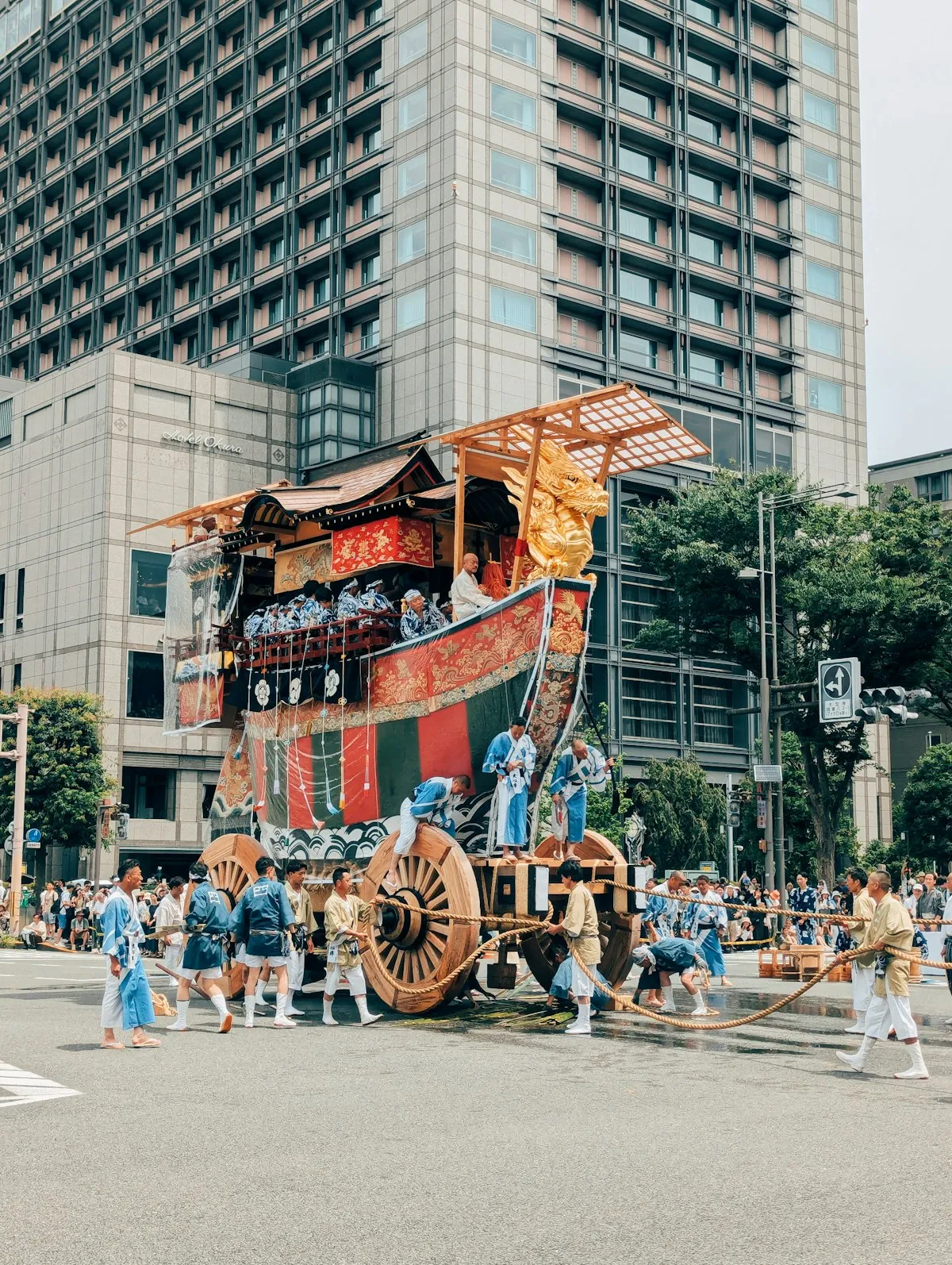
Every July, Kyoto transforms. The city that most visitors know as a place of quiet temples and raked gravel gardens erupts into a month-long celebration of music, massive wooden floats, street food, and traditions that stretch back more than eleven centuries. This is Gion Matsuri — Japan’s most famous festival and, arguably, the single most spectacular event you can witness in the country.
Picking your travel month? Our best time to visit Japan breakdown compares weather, crowds, and seasonal events across all twelve months.
Here’s the thing about Gion Matsuri that surprises most first-time visitors: it is not a one-day event. The festival runs the entire month of July, from the solemn opening rituals on July 1 to the final purification ceremony on July 31. The famous float parades on July 17 and 24 are just the crescendo. If you time your visit right, you can experience everything from the nailless construction of towering floats to late-night street festivals where tens of thousands of people in cotton yukata robes fill the city center under paper lanterns.
This guide covers the full schedule, the events worth prioritizing, where to stand for the best views, what to eat, how to handle the July heat, and where to sleep when every hotel in Kyoto is booked solid.
What Is Gion Matsuri? A Quick History
Gion Matsuri dates back to 869 AD, when a devastating plague swept through Kyoto — then the imperial capital of Japan. The people turned to Yasaka Shrine (originally called Gion Shrine, hence the name) and organized a religious procession to appease the gods and halt the epidemic. Sixty-six halberds, one for each province of Japan at the time, were erected at Shinsen-en Garden as part of the purification ritual.
The plague subsided. The procession became annual. Over the following centuries, it evolved from a purely religious ceremony into a civic celebration, with Kyoto’s wealthy merchant neighborhoods competing to build the most elaborate floats. By the Edo period (1603-1868), the festival had become the extravagant spectacle we know today, with floats draped in tapestries imported from China, Persia, and even Europe along the Silk Road.
The festival was suspended only a handful of times in its 1,100+ year history — during the Onin War (1467-1477), which devastated Kyoto, and briefly during World War II. Each time, the city brought it back. That resilience says everything about what Gion Matsuri means to Kyoto. It is not just a tourist attraction. It is the beating heart of the city’s identity.
If you are planning your first trip to Japan and want to understand when festivals happen and how seasons shape the experience, July is one of the most rewarding months — hot and humid, yes, but packed with cultural events that you simply cannot see at any other time of year.
Gion Matsuri 2026 Complete Schedule
The festival spans all 31 days of July, but you do not need to be there for the whole month. Here is how to identify the dates that matter most for your trip.
Key Dates at a Glance
| Date | Event | Why It Matters |
|---|---|---|
| July 1 | Kippu-iri (Opening Ceremony) | Each neighborhood formally begins festival preparations |
| July 2 | Kuji-torashiki (Float Lottery) | The parade order is determined by lottery at City Hall |
| July 10-14 | Float assembly (Hoko-tate) | Watch artisans build 12-ton floats without a single nail |
| July 14-16 | Yoiyama (Evening Festival) | Street closures, food stalls, float displays, peak atmosphere |
| July 17 | Saki Matsuri Yamaboko Junko | Main parade — 23 floats, 9:00-13:00 |
| July 17 (evening) | Mikoshi Togyo | Portable shrine procession from Yasaka Shrine, starts ~18:00 |
| July 18-21 | Ato Matsuri float assembly | Second round of float construction |
| July 21-23 | Ato Matsuri Yoiyama | Smaller evening festival, fewer crowds, more intimate |
| July 24 | Ato Matsuri Yamaboko Junko | Second parade — 11 floats, 9:30-11:50 |
| July 24 | Hanagasa Junko | Flower umbrella procession with geiko and maiko, from 10:00 |
| July 24 (evening) | Mikoshi return to shrine | The deity is escorted back to Yasaka Shrine |
| July 28 | Mikoshi Arai | Ritual washing of portable shrines |
| July 31 | Nagoshi no Harae | Closing purification ceremony at Eki Shrine |
Saki Matsuri (Front Festival) — July 1-17
The first half of Gion Matsuri builds steadily toward the main parade on July 17. The early days (July 1-9) involve shrine rituals that are meaningful but not particularly accessible to tourists. Things get interesting around July 10, when the massive floats begin to take shape on the streets.
The float assembly process is genuinely fascinating. Teams of craftsmen use nothing but rope and traditional joinery techniques to construct wooden floats that stand up to 25 meters tall and weigh up to 12 tons. No nails, no bolts, no modern fasteners. The slight flexibility of the rope bindings actually helps the floats absorb shock as they are pulled through the streets. You can watch the assembly for free on the streets around Shijo-Karasuma between July 10 and 14.
The atmosphere escalates dramatically from July 14 to 16 during the Yoiyama evenings, which are covered in detail below.
Ato Matsuri (Rear Festival) — July 18-31
The Ato Matsuri was revived in 2014 after a 49-year hiatus, restoring the festival to its traditional two-parade format. It is smaller and calmer than the Saki Matsuri, which makes it a strong choice if you prefer a less overwhelming experience.
The second parade on July 24 features 11 floats, including the iconic Ofune-boko (a massive ship-shaped float) and the newly restored Takayama-yama. The Hanagasa Junko (Flower Umbrella Procession) is a highlight unique to July 24 — roughly 1,000 participants, including geiko and maiko (Kyoto’s geisha and apprentice geisha), walk from Yasaka Shrine through central Kyoto performing traditional dances along the route. For more on the geisha culture that makes this procession special, see our Gion at night guide.
The Yamaboko Junko Parades
The float parades are the main event. If you can only be in Kyoto for one day during the festival, make it July 17.
Twenty-three elaborately decorated floats are pulled through the streets by teams of men in traditional festival clothing. The route covers approximately 3 kilometers along Shijo-dori, Kawaramachi-dori, and Oike-dori. The parade starts at 9:00 and finishes around 13:00.
The floats are divided into two categories:
- Hoko (鉾) — The large ones. These tower up to 25 meters high, weigh up to 12 tons, and carry musicians playing Gion-bayashi festival music on the upper platforms. Each hoko has a massive central pole topped with a distinctive ornament (shingi) that identifies it.
- Yama (山) — Smaller shrine-like floats carried on poles by teams of men. Each yama displays figures depicting scenes from Japanese history, mythology, or Chinese legends.
What makes these floats extraordinary is not just their size but their decoration. Many are draped in tapestries that are centuries old — genuine Gobelin tapestries from 16th-century Belgium, Chinese silk brocades from the Ming Dynasty, Persian rugs, and Indian textiles. These arrived in Kyoto via the Silk Road trade routes and were incorporated into the floats as displays of the merchants’ wealth and cosmopolitan connections. Some individual tapestries are designated Important Cultural Properties.
The Tsujimawashi Turns — The Best Moment to Watch
But here is what most guides will not tell you: the most dramatic moments of the parade happen at the corners. The floats do not have steering mechanisms. Their solid wooden wheels can only roll forward. To turn a corner, the crew must perform a tsujimawashi — they lay wet bamboo strips on the road surface, then use brute force and coordinated pulling to slide the entire multi-ton float sideways around a 90-degree turn. It takes multiple attempts, the crowd roars with each pull, and the sight of a 12-ton float pivoting on bamboo slats is genuinely breathtaking.
The best intersections for watching tsujimawashi are:
- Shijo-Kawaramachi — The first major turn of the parade. Largest crowds but most dramatic atmosphere.
- Kawaramachi-Oike — The second turn. Slightly less crowded, equally spectacular.
- Oike-Shinmachi — The final turn. The smallest crowd and most relaxed viewing.
Arrive at your chosen corner at least 90 minutes before the parade start time (by 7:30 for July 17) to secure a front-row spot. Bring water, sunscreen, and a hat. The year I cut it to 8:15 at Shijo-Kawaramachi I ended up watching the whole parade through other people’s phone screens — earlier is genuinely better.
Yoiyama Evening Festivals
If the parades are the climax of Gion Matsuri, the Yoiyama evenings are the soul of it.
On July 14, 15, and 16 (and to a smaller extent July 21, 22, and 23), Kyoto shuts down its central streets to traffic starting around 18:00. The area around Shijo-dori and Karasuma-dori fills with hundreds of food stalls, paper lanterns strung between buildings, and the hypnotic sound of Gion-bayashi music drifting from the floats.
The floats are stationed on the streets during Yoiyama, lit up with dozens of paper lanterns. You can walk right up to them, examine the centuries-old tapestries at close range, and in some cases even climb aboard (some floats allow visitors on the upper platform for a small fee or with the purchase of a chimaki protective charm).
July 16 (the night before the main parade) draws the biggest crowds — often exceeding 400,000 people in the festival area. If you prefer a more manageable experience, July 14 or 15 offers essentially the same atmosphere with fewer people. My standing recommendation, after attending many Yoiyama nights since I was a kid, is to do July 14 — same lanterns, same music, half the elbows.
What to Do During Yoiyama
- Walk among the floats. Each of the 23 Saki Matsuri floats is stationed on a different street, decorated with lanterns and banners. Wander from float to float and listen to the musicians practicing on the upper decks.
- Buy a chimaki. These cone-shaped bundles of bamboo leaves are Gion Matsuri’s signature souvenir. They are not for eating — you hang them above your front door as a charm to protect your household from illness for the coming year. Each float neighborhood sells its own chimaki, so collect the ones that speak to you. Prices are usually around 800-1,500 yen.
- Visit the Byobu Matsuri. During Yoiyama evenings, wealthy families in the Shinmachi and Muromachi neighborhoods open their machiya townhouses to the public, displaying family heirlooms — folding screens (byobu), kimonos, ceramics, and artwork accumulated over generations. This is one of the only times you can peek inside private Kyoto merchant homes. Free admission.
- Eat everything. More on that below.
Where to Watch the Parade
Free Viewing
The parade route runs along three main streets: Shijo-dori (east-west), Kawaramachi-dori (north-south), and Oike-dori (east-west). You can stand anywhere along this route for free.
Best free spots:
- Corners (for tsujimawashi turns, as described above)
- Oike-dori — Wider street, more space, shade from buildings on the north side in the morning. Less crowded than Shijo.
- North side of Shijo-dori between Karasuma and Kawaramachi — The floats are closest here and the energy is highest, but it gets packed.
Paid Seats
Reserved seats (yuryo kanbanseki) are available along Oike-dori and Shijo-dori. These guarantee a seat and a clear view. Tickets typically cost 4,000-5,000 yen and go on sale in early June through various booking platforms and at convenience stores. They sell out quickly.
Tip: Paid seats on Oike-dori have better shade and slightly fewer crowds than those on Shijo-dori. If you can choose, pick Oike.
Practical Tips for Visiting Gion Matsuri
Getting There and Getting Around
Kyoto is approximately 2 hours and 15 minutes from Tokyo by Shinkansen (bullet train), or 15 minutes from Osaka by express train. If you are planning your first trip to Japan, the Kyoto-Osaka area is one of the most accessible regions for international visitors.
The closest stations to the main festival area are:
- Karasuma Station (Hankyu Railway) — Right in the center of the action
- Shijo Station (Kyoto Municipal Subway) — Connected to Karasuma Station underground
- Gion-Shijo Station (Keihan Railway) — Best for approaching from the east side
During Yoiyama evenings and parade days, expect significant congestion at all these stations. Arrive early and walk. Many of the major Kyoto stations are within 15-20 minutes’ walking distance of the festival area.
Buses are unreliable during festival days due to road closures. Taxis are expensive and stuck in the same traffic. The subway and private railways are your best options.
What to Wear
July in Kyoto is hot. Expect daytime temperatures of 33-37°C (91-99°F) with high humidity. This is not comfortable sightseeing weather.
Essentials:
- Light, breathable clothing (linen or moisture-wicking fabrics)
- Comfortable walking shoes (you will cover 10,000+ steps easily)
- A hat and sunscreen for daytime parade viewing
- A portable fan — the folding sensu or battery-powered handheld varieties sold at every convenience store and drugstore
- A small towel (tenugui) for wiping sweat — a very Japanese solution that works brilliantly
- A refillable water bottle (free water refill stations are set up during the festival)
Optional but recommended: Rent a yukata (cotton summer kimono) for the Yoiyama evenings. Many rental shops in the Gion and Shijo areas offer packages including dressing, hair styling, and accessories for 3,000-6,000 yen. Wearing a yukata to the evening festival is not just for tourists — locals do it too, and it genuinely enhances the experience. The first time I wore my own family yukata to Yoiyama, I genuinely felt the temperature drop a couple of degrees — the loose cotton wicks sweat better than anything technical I’ve tried.
Festival Food You Should Not Miss
The Yoiyama food stalls (yatai) line the streets from Shijo up through the Karasuma and Muromachi areas. Here is what to look for:
| Food | What It Is | Price Range |
|---|---|---|
| Yakitori | Grilled chicken skewers with tare or salt | 200-500 yen |
| Takoyaki | Octopus balls, crispy outside, molten inside | 500-700 yen |
| Okonomiyaki | Savory cabbage pancake with toppings | 500-800 yen |
| Yakisoba | Stir-fried noodles with sauce and vegetables | 500-700 yen |
| Kakigori | Shaved ice with flavored syrup — essential in the heat | 300-500 yen |
| Taiyaki | Fish-shaped pastry with red bean or custard filling | 200-400 yen |
| Chigo Mochi | Special mochi made only during Gion Matsuri | 500 yen |
| Beer and Chuhai | Festival staples, sold everywhere | 400-700 yen |
Do not miss chigo mochi. This is a Gion Matsuri exclusive — sweet white miso-flavored mochi wrapped in bamboo leaf, made only during the festival period. You can buy it from wagashi shops in the festival area and also directly from some of the float neighborhoods. I buy a couple every year and eat them on the train back to Tokyo — the bamboo leaf keeps them surprisingly fresh.
And if the festival inspires you to explore more of Japan’s food and drink culture, a sake brewery tour is one of the most rewarding experiences you can add to a Kyoto or Kansai itinerary. Fushimi, one of Japan’s premier sake brewing districts, is just a 15-minute train ride south of central Kyoto.
Where to Stay During Gion Matsuri
Let’s be direct: accommodation in Kyoto during Gion Matsuri is expensive and sells out early. If you are planning to attend the July 17 parade or the July 14-16 Yoiyama evenings, book your accommodation by April at the latest. By June, affordable options are largely gone.
Best Neighborhoods
- Shijo-Karasuma area — Ground zero of the festival. Walk out of your hotel and you are in the middle of it. Most expensive, but unbeatable for convenience.
- Gion / Higashiyama — A 10-15 minute walk to the festival area. Traditional atmosphere with many ryokan and machiya stays.
- Kyoto Station area — More affordable, with easy subway access to Shijo. A good budget-conscious choice.
- Osaka — If Kyoto is fully booked, stay in Osaka and take the 15-minute express train to Kawaramachi Station. This is a legitimate strategy that many Japan residents use.
Budget Tips
- Book early. Repeat: book by April.
- Consider hostels and guesthouses. Kyoto has excellent hostel options in the 3,000-5,000 yen per night range that book up slower than hotels.
- Try machiya stays. Renovated traditional townhouses available on various booking platforms. Prices vary widely, but you can find reasonable options in quieter neighborhoods.
- The Osaka backup. Hotels in Osaka’s Umeda or Namba districts are significantly cheaper than Kyoto during festival season, and the commute is trivial.
If you want a local guide to show you around Kyoto’s historic Gion district and share the stories behind the geisha culture, the Kyoto: Gion Night Walking Tour is a well-reviewed small-group experience that pairs perfectly with a festival visit.
Beyond the Main Events
Gion Matsuri has layers that most visitors never discover. If you have extra time in Kyoto during July, these are worth seeking out.
The Float Assembly (July 10-14 and 18-21)
Watching the hoko-tate (float construction) is free and genuinely educational. The craftsmen use traditional rope-lashing techniques passed down through generations, assembling massive structures entirely without modern fasteners. The best place to watch is the intersection area around Shijo-Muromachi.
Mikoshi Togyo (July 17 Evening)
After the daytime parade ends, a completely different procession begins. Three portable shrines (mikoshi) are carried from Yasaka Shrine through the streets to their temporary resting place (otabisho) near Shijo-Takakura. This is a raw, physical event — teams of men in white robes hoist the heavy mikoshi onto their shoulders and carry them through the streets, chanting and swaying. The ceremony begins around 18:00 at Yasaka Shrine and the procession reaches the otabisho around 21:00. I genuinely think the Mikoshi Togyo is the best-kept secret of Gion Matsuri — most foreign visitors leave after the daytime parade, missing what is arguably the more emotionally charged event.
Hanagasa Junko (July 24)
The Flower Umbrella Procession starts at 10:00 from Yasaka Shrine and winds through central Kyoto. Roughly 1,000 participants walk under ornate flower-decorated umbrellas, and the procession includes geiko and maiko performing traditional dances at several points along the route. This is one of the few opportunities to see Kyoto’s geisha outside of private engagements.
Chimaki Collecting
Dedicated festival-goers make a project of collecting chimaki from different float neighborhoods. Each float’s chimaki has a different design and is said to offer different protections — some for safe childbirth, others for academic success, others for protection from fire. The chimaki from the first float in the parade (Naginata-boko) is considered the most auspicious and sells out fastest.
For a hassle-free cultural experience during the festival period, consider booking a Gion District Walking Tour with Local Guide — it covers the historical context of the district and its connection to Gion Matsuri, with a knowledgeable English-speaking guide.
Planning Your Gion Matsuri Trip
Here is a suggested priority list depending on how many days you have:
1 day: Attend the July 17 parade (arrive by 7:30). Stay for the Mikoshi Togyo in the evening.
2 days: Add a Yoiyama evening on July 15 or 16. Wander the floats, eat street food, visit the Byobu Matsuri homes.
3+ days: Watch the float assembly (July 12-14). Attend both the Saki Matsuri parade (July 17) and the more intimate Ato Matsuri parade (July 24). Explore Fushimi sake district or Kyoto’s temples during the quieter days between parades.
Gion Matsuri is the kind of event that rewards both the casual drop-in and the deep dive. Even if you only catch one evening of Yoiyama — the lanterns, the music, the press of the crowd, the smell of grilled chicken and sweet mochi in the summer air — you will understand why Kyoto has kept this tradition alive for over a thousand years.
Gion Matsuri is also featured in our Japan summer festivals guide, which covers the best matsuri and seasonal events across the country. If you are visiting Kyoto on or around July 7, our Tanabata Festival guide covers the star festival and the quieter evening tanzaku ceremony at Kifune Shrine in the mountains north of the city. If you are still deciding when to visit Japan, our complete seasonal guide breaks down every month. And for essential tips on navigating Japan as a first-time visitor, including transit passes, etiquette basics, and money-saving strategies, we have you covered.
Gion Matsuri runs July 1-31 annually in Kyoto. The information in this guide reflects the 2026 festival schedule. While the core events remain consistent year to year, specific dates for ceremonies may shift slightly — check the Yasaka Shrine official site for the latest schedule closer to your visit.
Where This Fits in the Travel Calendar
Timing is most of the trip. Our best time to visit Japan guide compares the twelve months on weather, crowds, prices, and the seasonal events worth structuring an itinerary around.
If you’re already locked into specific dates, that month-by-month breakdown helps you decide whether to pair the dates above with cherry blossoms, summer festivals, autumn foliage, or winter onsen.
Frequently Asked Questions
- When is Gion Matsuri and what are the key dates?
- Gion Matsuri runs all of July. The main parade is July 17 (23 floats, 9:00-13:00), with evening street festivals July 14-16 (Yoiyama). A second smaller parade is July 24. Float construction can be watched for free July 10-14.
- Where is the best spot to watch the Gion Matsuri parade?
- The corner intersections are the most dramatic spots, where massive floats perform tsujimawashi turns on wet bamboo strips. Shijo-Kawaramachi is the most popular corner. Oike-dori offers wider viewing with more shade. Arrive by 7:30 AM for front-row positions.
- How hot is Kyoto during Gion Matsuri in July?
- Very hot — expect 33-37 degrees Celsius (91-99 degrees Fahrenheit) with high humidity. Bring water, sunscreen, a hat, and a portable fan. Free water refill stations are available during the festival. Consider renting a lightweight yukata for the evening events.
- How far in advance should I book accommodation for Gion Matsuri?
- Book by April at the latest. By June, affordable options in Kyoto are largely gone. If Kyoto is fully booked, staying in Osaka (15 minutes by express train to Kawaramachi Station) is a practical alternative that many locals also use.
- What is Yoiyama and is it worth attending?
- Yoiyama (July 14-16 evenings) is when central Kyoto closes streets to traffic, food stalls line the roads, and the decorated floats are displayed with paper lanterns. Many visitors consider it the soul of the festival. July 14 or 15 offers the same atmosphere as July 16 but with fewer crowds.
More on Seasons & Festivals
Continue exploring this cluster.
Best Time to Visit Japan 2026 (Month by Month)
A 24-year resident picks October as the best month. Month-by-month weather, costs, crowds, and the cheap windows most guides skip.
Aomori Nebuta 2026: Best Night & Haneto Guide
Choose the best Aomori Nebuta 2026 night, learn when to book seats and hotels, and see how tourists can join the haneto dance safely.
Tanabata Festival: Japan's Star Festival Guide
Plan your Tanabata visit — the legend, dates, tanzaku wish traditions, and the best Japanese star festivals in Sendai, Asagaya, Shonan, and Kyoto.
Japan Summer Festivals 2026: Plan Your Trip
Which matsuri fits your dates, how to join the dancing, dodge the crowds, and beat the heat — plan a July-August 2026 Japan summer festival trip.
Obon Japan 2026: Dates & What to Book First
Obon 2026 runs Aug 13–16, with the travel peak Aug 8–16. See what to book first — hotels then Shinkansen seats — plus what stays open and what may close.