Golden Gai Shinjuku: A First-Timer's Bar Crawl
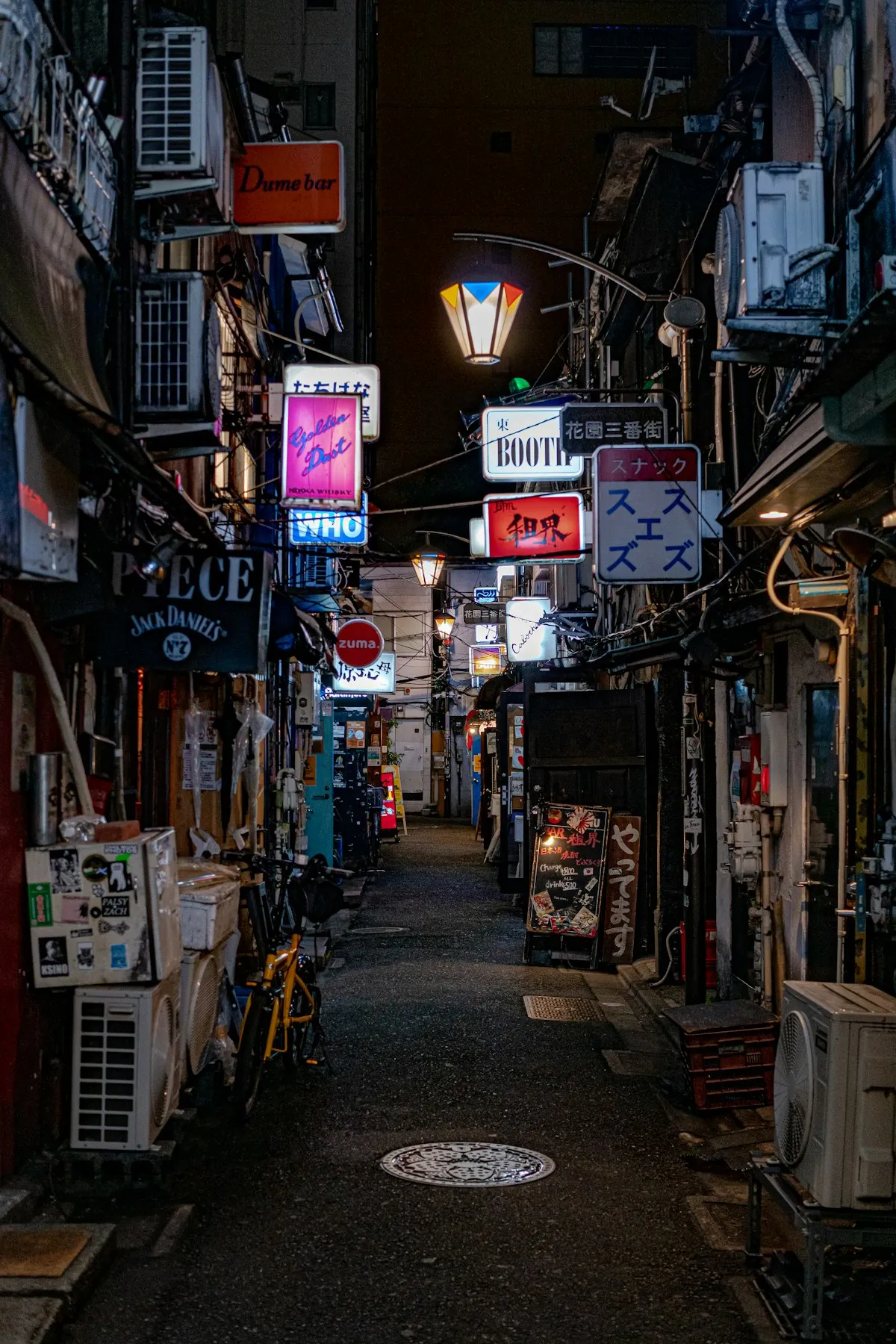
Your first Golden Gai bar crawl comes down to a few nervous decisions: which alley to walk into, whether the bar will welcome a visitor, how much cash to carry, and what to do if a door says regulars only. This guide answers all of them before your first drink. Golden Gai is six narrow alleys packed with over 200 tiny bars, most seating fewer than ten people, and it remains one of Tokyo’s most iconic nightlife experiences when you know the rules.
Heading to multiple cities? Our Japan nightlife guide compares Tokyo, Osaka, Kyoto, and beyond so you can plan which night belongs in which city.
Most guides still sell Golden Gai as a “hidden gem.” It’s not. Thousands of tourists walk through every night. But that does not mean the magic is gone. The difference between a forgettable lap around the alleys and a great four-bar night is knowing which alleys to explore, which bars welcome foreigners, and how to navigate the unwritten etiquette that keeps this neighborhood running.
This guide is my decade of Golden Gai distilled — first nights, regret-purchased drinks at tourist-trap bars, two of my own usual spots, the time I had to walk back to a Family Mart for cash, and the ¥9,800 four-bar route I think is the right benchmark for first-timers.
What Is Golden Gai? (And Why It’s Not What You Expect)
Golden Gai (ゴールデン街) is a tiny district in Kabukicho, Shinjuku, made up of six interconnected alleys lined with roughly 200 small bars. Most bars are the size of a closet — think 5-10 seats squeezed around a counter, one bartender, and walls covered in decades of stickers, posters, and memorabilia.
A Brief History
The area dates back to the post-war black market era of the late 1940s. After World War II, this pocket of Shinjuku became a gathering spot for black market traders and eventually evolved into a drinking quarter. By the 1960s and 70s, Golden Gai had become the hangout of choice for Tokyo’s creative underground — filmmakers, writers, musicians, and artists would crowd into these tiny bars to drink, debate, and collaborate.
Directors like Akira Kurosawa and writers like Haruki Murakami are said to have frequented these alleys. That bohemian DNA still runs through Golden Gai today, even as the neighborhood has changed.
The Gentrification Question
Here’s what most guides won’t tell you: Golden Gai has been through a dramatic transformation over the past decade. What was once an almost exclusively locals-only drinking quarter is now firmly on the tourist trail. Some longtime bar owners have retired. A few bars now have English menus and Instagram-friendly interiors designed to attract international visitors.
But Golden Gai hasn’t lost its soul — you just need to know where to look. The tourist-facing bars tend to cluster in the alleys closest to the main street, while the deeper alleys still harbor bars that feel untouched by time. More on that below.
How to Navigate Golden Gai’s 6 Alleys
Most visitors walk into Golden Gai from the Hanazono Shrine side, wander one alley, and leave thinking they’ve seen it. They haven’t. Golden Gai has six distinct alleys (called yokochō), and each has its own character.
Getting There
From Shinjuku Station East Exit, it’s about a 5-minute walk:
- Exit from the East Exit and head toward Kabukicho
- Walk past the famous Kabukicho entrance gate (Ichibangai)
- Continue north — Golden Gai is just past Hanazono Shrine on your left
- Look for the narrow alleys between Hanazono Shrine and Kabukicho’s main streets
You can also use Shinjuku-sanchome Station (Tokyo Metro), which is even closer — about 2 minutes on foot from Exit E1.
Alley-by-Alley Breakdown
The six alleys run roughly parallel to each other, connecting two slightly wider streets on either end. Here’s what to expect:
Alleys 1-2 (closest to the main street): These are the most tourist-accessible. You’ll find bars with English signs, “Welcome Foreigners” notices on the door, and bartenders who speak some English. Good for first-timers, but the vibe can feel more performative than authentic.
Alleys 3-4 (middle section): The sweet spot. A mix of tourist-friendly and local bars. You’ll find themed bars here — horror bars, cinema bars, music bars — that welcome curious visitors but still attract regulars. This is where most of the recommendations in this guide are located.
Alleys 5-6 (deepest alleys): The most local-feeling. Some bars here have “Members Only” or “Regulars Only” signs (常連のみ). Don’t take it personally — it’s not xenophobia, it’s a capacity issue. When your bar seats six people and four regulars show up every night, there’s genuinely no room. If a door is open and the bartender makes eye contact, it’s usually fine to enter.
What I’ve experienced in Alley 6: I tried a bar in 2017 with a ‘regulars only’ sign. The bartender said “kyō wa chotto…” (today is a little…) politely but firmly. I came back six months later as a guest of an actual regular and the same bartender greeted me warmly, remembered I drink shochu rocks, and ended up giving me a free otōshi. The system works — patience and an introduction matter more than language.
Pro tip: Start your night in the deeper alleys (5-6) when they’re less crowded, then work your way toward the busier alleys later in the evening.
The Best Bars in Golden Gai (By Theme)
Golden Gai’s bars aren’t random — most have a specific theme or personality that defines them. Rather than listing random names, here’s a theme-based guide to help you find your kind of place.
Film & Cinema Bars
La Jetée — Named after Chris Marker’s 1962 French film, this is the most famous cinema bar in Golden Gai. The walls are covered in film posters and the bartender is a walking encyclopedia of world cinema. Tiny even by Golden Gai standards (about 6 seats). Drinks from ¥800. Cover charge: ¥500.
My night at La Jetée: I went on a Wednesday in November 2022. The mama-san asked which Tarkovsky films I’d seen — I said Stalker and Solaris, which apparently passed the test. She poured my second drink on the house and put on a 35mm Wenders film clip on the small monitor. The bar has rules: respectful conversation about film welcome, loud groups absolutely not. If you go to perform, she’ll politely shorten your night. If you go because you actually love cinema, it’s the best ¥1,300 you’ll spend in Tokyo.
Deathmatch in Hell (デスマッチ・イン・ヘル) — Don’t let the name scare you. This horror and B-movie themed bar is one of the friendliest in Golden Gai. Monster masks on the walls, horror films playing on a small screen, and a bartender who loves explaining each piece of memorabilia. Cover charge: around ¥500. Drinks from ¥700.
Music Bars
bar plastic model — A punk and indie music bar with an incredible vinyl collection. The owner sometimes spins records and will take requests. Great for anyone who wants to talk music over drinks. Cover charge: ¥500.
Ace’s — A rock bar with a loyal following of musicians and music lovers. Live acoustic sets happen on some nights. The owner speaks English and is genuinely happy to chat with visitors. Cover charge: ¥300-500.
Cocktail & Spirits Bars
Albatross G (アルバトロスG) — This is the bar that appears in every Golden Gai article, and for good reason. It spans two floors (unusual for Golden Gai), has a stunning chandelier hanging from the ceiling, and serves well-crafted cocktails. The second floor has a small balcony overlooking the alley. It’s the most photogenic bar in the district. Cover charge: ¥800. Cocktails from ¥900.
Reality check: Because Albatross G shows up in every guide, it’s also the one consistently full bar in Golden Gai before midnight. I tried to walk in on a Friday at 9:30pm in March 2024 — both floors were standing room only. If it’s on your list, arrive at 7pm sharp when the doors first open, or come back after midnight when tourist traffic thins.
bar araku — A shochu and sake specialist bar. The owner is passionate about introducing visitors to Japanese spirits beyond the usual options. If you tell him what flavors you like, he’ll find a perfect match. A great spot to learn about Japanese drinking culture. Cover charge: ¥500. Drinks from ¥700.
Themed & Quirky Bars
The Open Book — A literary bar where the shelves are stacked with books in multiple languages. The vibe is quiet and contemplative — more reading room than party bar. Perfect if you want a break from the noise.
CAMBIARE — One of the few bars in Golden Gai run by a woman. Known for being especially welcoming to female solo travelers and first-time visitors. The mama-san speaks English and creates a warm, inclusive atmosphere. No cover charge on some nights.
Budget-Friendly Picks
Ken’s Bar — One of the most affordable options in Golden Gai. No cover charge, drinks from ¥500. Small and social — you’ll end up talking to the people sitting next to you whether you planned to or not.
Kenzo’s Bar — Similarly affordable with a laid-back vibe. The owner speaks English well and actively engages with international visitors. Drinks from ¥500, no cover charge.
Golden Gai Etiquette: The Unwritten Rules
Golden Gai has an unwritten code of conduct. Break it and you won’t get thrown out — but you’ll get cold stares, and the bartender may not serve you a second round.
Cover Charges Are Standard
Almost every bar in Golden Gai charges a cover fee (席料 or チャージ), typically ¥300-1,500 per person. This is not a scam. It’s how micro-bars with 6 seats and one employee stay in business. The cover usually includes a small snack (otōshi).
Always ask about the cover charge before sitting down. A simple “Cover charge wa ikura desu ka?” (How much is the cover?) works, or just ask in English — most bartenders are used to the question.
A mistake I made early on: In 2015 I let a tout pull me into a bar in Alley 1. The cover was ¥3,500, the bartender vanished after pouring two drinks, and the total bill came to ¥9,400 for what should have been a ¥2,500 stop. The lesson cost me dinner that night. The legitimate Golden Gai cover charges are listed at the door or in the entrance — anything that doesn’t post a price isn’t worth your money. If a tout on the street offers to take you to “a special bar,” walk past them. Always.
Photography Rules
The Golden Gai Business Association has asked visitors not to take photographs in the alleys, particularly of bar exteriors and other patrons. You’ll see “No Photography” signs posted at the entrance to the district.
In practice:
- Alley photos (no people): Generally tolerated if you’re discreet
- Inside bars: Always ask the bartender first. Some bars allow it, others don’t
- Photos of other customers: Never without permission
- Flash photography: Absolutely not
Using your phone camera quietly for a personal souvenir is different from setting up a tripod or taking loud group selfies. Read the room.
What I saw happen in 2022: A friend of mine was setting up a tripod at the corner of Alley 3 to do a long-exposure time-lapse around 9pm on a Saturday. A representative from the Golden Gai Business Association — someone whose face I’d seen taking out trash earlier — came over politely, explained the policy in English, and asked him to delete the photos. He did. No fines, no escalation, but the moment was firm. Tripods, drone shots, and conspicuous DSLR work will get noticed.
Group Size Matters
Most bars seat 5-10 people. If you show up as a group of 6, you’ve literally filled an entire bar. The rule of thumb:
- 2-3 people: Ideal. You can fit into any bar
- 4 people: Usually fine, but check with the bartender first
- 5+ people: Split up. Seriously. Take different bars and compare notes afterward
Other Rules
- Cash only — The vast majority of Golden Gai bars don’t accept credit cards or IC cards. Bring at least ¥10,000 in cash for a full evening
- Don’t stand and block alleys — The passages are narrow. Step inside a bar or step out of the way
- One drink minimum — Sitting down means ordering. Don’t use a bar as a rest stop
- Respect closing signals — If the bartender starts cleaning up or mentions it’s last order, don’t argue. Thank them and move on
Cash-only failure I lived through: In June 2019 I went to Golden Gai with ¥6,000 cash, thinking I’d hit an ATM somewhere. There are no ATMs inside the alleys themselves. I had to walk five minutes back to the Family Mart on Yasukuni-dori, withdraw ¥10,000 (with a foreign card surcharge), and walk back. I lost 15 minutes and a bit of momentum. The closest ATM that takes foreign cards is Family Mart or 7-Eleven near Shinjuku Station East Exit — hit it before you walk into the alleys.
Your Golden Gai Bar-Hopping Strategy
Golden Gai is best experienced as a bar crawl — visiting multiple bars in one evening. Here’s how to plan it.
How Many Bars in One Night?
3-4 bars is the sweet spot. Here’s why:
- You need about 30-45 minutes per bar to settle in, have a drink or two, chat with the bartender, and soak up the atmosphere
- Most bars start getting busy after 9 PM, so you have a window of roughly 4-5 hours
- Visiting more than 4 bars starts to feel rushed and expensive
Suggested Route
- Start at 7:30-8:00 PM — Arrive early when the deep alleys are quiet
- First bar (Alley 5-6) — A local-feeling bar. Have one drink, get the lay of the land
- Second bar (Alley 3-4) — Hit a themed bar that interests you (cinema, music, etc.)
- Food break — Some bars serve small plates, or duck out to a nearby ramen shop
- Third bar (Alley 1-2) — End at a social, tourist-friendly bar where you might meet other travelers
- Optional fourth bar — If the night is going well, try one more
Budget Planning
Here’s what a typical Golden Gai evening costs:
| Item | Cost per bar | 3-bar night | 4-bar night |
|---|---|---|---|
| Cover charge | ¥300-800 | ¥900-2,400 | ¥1,200-3,200 |
| 2 drinks per bar | ¥1,400-1,800 | ¥4,200-5,400 | ¥5,600-7,200 |
| Total | ¥5,100-7,800 | ¥6,800-10,400 |
Budget tip: The bars with no cover charge (Ken’s Bar, Kenzo’s Bar) can save you ¥1,500+ over an evening. Start there if you’re watching your spending.
My actual spend on April 4, 2024 (4-bar night):
- Bar 1 (Alley 5, no-cover spot): 1 highball ¥800
- Bar 2 (cinema bar, Alley 3): cover ¥500 + 2 drinks ¥1,800 = ¥2,300
- Food break at Fuunji: tsukemen ¥1,250
- Bar 3 (cocktail bar, Alley 2): cover ¥800 + 2 cocktails ¥2,400 = ¥3,200
- Bar 4 (regular spot, Alley 4): cover ¥500 + 2 drinks ¥1,750 = ¥2,250
- Total: ¥9,800 over 4 hours
That’s a representative number for a sober-paced four-bar night. If you drink slowly, stick to highballs over cocktails, and avoid the ¥1,500 cover bars, you can do four bars for around ¥7,500.
Solo vs. Guided Tour
Go solo if: You’re comfortable walking into small bars alone, you enjoy spontaneous encounters, and you speak a bit of Japanese (or don’t mind pointing at menus). Solo visitors often have the best Golden Gai experiences because bartenders tend to engage more with individuals.
Book a tour if: It’s your first time in Tokyo, you’re nervous about the etiquette, or you want to guarantee entry to bars that might seem intimidating. A local guide can also translate and share stories you’d never hear otherwise.
If you want a local to show you the highlights, guided bar-hopping tours in Shinjuku cover Golden Gai along with nearby spots like Omoide Yokocho — a great way to see multiple neighborhoods in one night without the guesswork.
Considering a guided bar-hopping night?
Compare small-group Tokyo nightlife tours that include Golden Gai and nearby Shinjuku alleys — see what each covers before you decide between solo and guided.
Compare Tokyo nightlife tours →What to Do If You’re Refused Entry
This happens. Maybe a bar is at capacity, maybe it’s regulars-only that night, maybe the bartender takes one look at your group of five and politely says “muri desu” (impossible). The etiquette of being turned away matters more than most guides admit.
The right response:
- Smile, say “sumimasen, arigato gozaimasu” (sorry, thank you), and step back from the door
- Don’t try to negotiate. The bar isn’t being rude — it’s protecting capacity for regulars or a private group
- Don’t post the rejection online or photograph the bar in retaliation. The Golden Gai community is small and word travels
The wrong response (which I’ve seen tourists try):
- Pushing past the curtain anyway
- Asking the regulars sitting inside to “vouch” for you — they can’t and won’t
- Telling the bartender you’ll “tip extra”
A friend of mine was refused at a deep-Alley 6 bar in 2023. She thanked the bartender, walked two doors down, and ended up at a tiny shochu bar where the owner spent two hours teaching her about Kagoshima sweet potato varieties. Rejection redirects you to better encounters. That’s the actual rule.
Solo Female & LGBTQ+ Travel in Golden Gai
Golden Gai is generally welcoming, but the experience varies by alley and bar. Here’s what I’ve observed and what visiting friends have reported back to me.
For Solo Women
Reality: Solo female travel in Golden Gai is safer than the same trip in equivalent Western cities. Bars are well-lit even at the entrance, the alleys are constantly trafficked, and harassment is rare and quickly handled by bartenders. That said, the experience is shaped by which bars you choose.
Best bars for solo female visitors:
- CAMBIARE (Alley 3) — Run by a woman, explicitly welcoming to female solo travelers. The mama-san often introduces solo customers to each other
- Ace’s (Alley 4) — Music bar with an inclusive crowd; the owner speaks English and engages warmly
- Bar plastic model (Alley 3) — Music-focused, conversation usually centers on records, not on you
My colleague’s experience: I sent a Seattle-based colleague to CAMBIARE solo at 8pm on a Thursday in 2024. She texted me at 10pm saying she’d made breakfast plans the next morning with a Japanese architect she’d met sitting next to her. Solo Golden Gai works for women — pick the right bar.
For LGBTQ+ Visitors
Tokyo’s primary LGBTQ+ nightlife district is Shinjuku Ni-chōme, a 10-minute walk south of Golden Gai. Ni-chōme has 300+ bars and clubs across all orientations, with several explicitly tourist-friendly venues. It’s the better main destination for queer nightlife.
That said, Golden Gai itself is generally inclusive — most bartenders won’t ask or comment, and same-sex couples drinking together draws no notice. CAMBIARE and Bar plastic model in particular are queer-friendly. The right move for LGBTQ+ visitors who want both: Start the night in Golden Gai for the atmosphere, walk to Ni-chōme around midnight when its scene gets going.
Conversation Starters with Bartenders (Beyond “Kanpai”)
Once you’re seated and have a drink, the unspoken expectation is that you’ll engage — even if briefly — with the bartender. Silent drinking is fine, but it’s a missed opportunity. These phrases consistently work:
| Japanese | English | When to use |
|---|---|---|
| ”Kono bar wa nan-nen yatte imasu ka?" | "How long has this bar been here?” | Almost always opens a story; many bars are 20–40 years old |
| ”Osusume wa nan desu ka?" | "What do you recommend?” | Better than ordering generically; often gets you something off-menu |
| ”Kono potā / poster wa nan desu ka?" | "What’s this poster?” | Walls in Golden Gai are decades of memorabilia — every poster has a story |
| ”Onaji mono wo onegaishimasu" | "The same again, please” | Polite second-round order |
| ”Goshujin no okiniiri wa?" | "What’s the bartender’s favorite?” | Works at cocktail and sake bars; signals you trust their taste |
| ”Watashi wa Tōkyō ni X-nichi imasu" | "I’m in Tokyo for X days” | Opens up trip-planning conversation; bartenders often share their own picks |
The pattern: Ask about the bar, not about Japan in general. Bartenders in Golden Gai run their own world — they don’t necessarily want to be tourist concierges, but they’re often deeply proud of the small space they’ve built.
Beyond Golden Gai: Your Complete Shinjuku Night Itinerary
Golden Gai is amazing, but limiting your entire Shinjuku night to six alleys would be a missed opportunity. Here’s a complete evening plan that combines the best of Shinjuku’s nightlife districts.
6:30 PM — Omoide Yokocho (Memory Lane)
Start your evening at Omoide Yokocho (思い出横丁), a maze of tiny yakitori and ramen stalls located right next to Shinjuku Station’s West Exit. It’s sometimes called “Piss Alley” (the old nickname — it’s much cleaner now). Grab some grilled chicken skewers and a beer to kick off the night. Budget: ¥1,500-2,500.
8:00 PM — Golden Gai
Walk east across Shinjuku Station (about 10 minutes) to Golden Gai. This is your main event — spend 2-3 hours exploring bars using the strategy above. Budget: ¥5,000-8,000.
11:00 PM — Kabukicho
Golden Gai sits at the edge of Kabukicho, Tokyo’s largest entertainment district. After your bar crawl, walk south into the neon-lit streets. Some options:
- Godzilla Head — The famous Godzilla statue on top of Hotel Gracery, dramatically lit at night
- Robot Restaurant area — Even if you don’t go in, the surrounding streets are pure sensory overload
- Late-night ramen — Fuunji or one of the many 24-hour spots for a post-drinking bowl
Alternative: Shinjuku Ni-chome
If you’re looking for Tokyo’s LGBTQ+ nightlife hub, Ni-chome is a 10-minute walk south from Golden Gai. It has over 300 bars and clubs, many of which welcome all visitors regardless of orientation.
For more on Tokyo’s bar scene beyond Shinjuku, check out our complete bar hopping guide covering districts across the city. If you’re looking for curated recommendations within Shinjuku itself, our best bars in Shinjuku guide narrows down the top spots.
Practical Info: Hours, Access & Tips
When to Go
- Best time: Thursday, Friday, or Saturday, 8:00 PM - midnight. This is when most bars are open and the atmosphere is at its peak
- Avoid: Monday and Tuesday — many bars are closed. Wednesday is hit-or-miss
- Late night (after midnight): Some bars stay open until 3-5 AM, but the selection thins out significantly
- Rainy nights: Actually great for Golden Gai. The alleys look even more atmospheric with wet reflections, and crowds thin out
My favorite night I’ve had here: January 18, 2023. Heavy rain started around 7pm and Golden Gai was nearly empty. I bar-hopped five places in three hours — the reflection of the bar signs on wet pavement looked like a Wong Kar-wai film. Bartenders had time to actually talk because they weren’t slammed. Total spend was lower than usual because no one was rushing me out for the next customer. If your trip overlaps a rainy weeknight, go anyway. It’s the rare scenario where weather makes the experience better.
Daytime Visits
You can walk through Golden Gai during the day, but almost all bars are closed. It’s worth a quick daytime visit for photography (the alleys are empty and photogenic in daylight), but don’t expect to drink.
A handful of bars open around 3-5 PM for early drinkers. Albatross G sometimes opens in the afternoon on weekends.
Nearest Stations
| Station | Line | Walking time |
|---|---|---|
| Shinjuku-sanchome | Tokyo Metro (Marunouchi, Fukutoshin) | 2 min (Exit E1) |
| Shinjuku | JR / Odakyu / Keio | 5 min (East Exit) |
| Seibu-Shinjuku | Seibu Shinjuku Line | 3 min |
Safety
Golden Gai is safe. It’s well-lit, well-trafficked, and surrounded by the broader Kabukicho district which has a significant police presence. That said:
- Watch your belongings in crowded alleys — not because of theft, but because it’s easy to knock things over in tight spaces
- Avoid touts on the streets outside Golden Gai. If someone approaches you offering to take you to a bar, politely decline — they’re usually steering you to overpriced establishments outside the district
- Know your limits — the bars are small and intimate, which means heavy intoxication is noticed quickly and frowned upon
For more general safety and etiquette advice, see our Japan travel tips for first-timers.
What to Bring
- Cash (¥10,000-15,000 for a full evening)
- Small bag or backpack — there’s no room for luggage in these bars
- Business cards — if you have them. Exchanging cards with bartenders is a nice gesture and some bars pin foreign business cards to their walls
- A sense of humor — you’re going to bump into people, squeeze into tiny seats, and probably spill something. That’s part of the charm
Frequently Asked Questions
Is Golden Gai safe for solo travelers?
Yes, very safe. Solo travel is actually ideal for Golden Gai since you take up less space and bartenders tend to be more conversational with solo visitors. Women traveling alone should feel comfortable — bars like CAMBIARE are especially welcoming.
Do I need to speak Japanese?
No, but knowing a few phrases helps. “Sumimasen” (excuse me), “Kanpai” (cheers), and “Okanjo” (check, please) will get you through most situations. Many bartenders in the tourist-friendly alleys speak basic English.
Should I make reservations?
No. Golden Gai is a walk-in experience. If a bar is full (which happens often given the size), just try the next door. That’s part of the adventure.
How is Golden Gai different from Omoide Yokocho?
Omoide Yokocho (Memory Lane) is focused on food — yakitori, ramen, and grilled dishes. Golden Gai is focused on drinking. The two are about 10 minutes apart on foot and work perfectly as a combined evening: dinner at Omoide Yokocho, drinks at Golden Gai.
Is Golden Gai worth it in 2026?
Absolutely. Yes, it’s more touristy than it was 10 years ago. But 200+ bars means there are still plenty of places that feel authentic. The key is going beyond the first alley, following the etiquette, and being open to whatever bar you stumble into.
If nightlife in other parts of Japan interests you, our Kanazawa nightlife guide offers a completely different — and much more local — drinking experience. For a broader overview of nightlife across the country, our Japan nightlife guide covers the best cities and neighborhoods from Tokyo to Kyushu.
Golden Gai is a living, breathing neighborhood. Bars open and close, ownership changes, and the character of each alley shifts over time. The information in this guide was accurate as of early 2026, but the best way to experience Golden Gai is to go with an open mind and let the alleys surprise you.
How This Fits Into Japan Nightlife
If you’re plotting nights across more than one city, the Japan nightlife guide is the cross-city overview — it lays out Tokyo, Osaka, Kyoto, and regional scenes side by side so you can decide which neighborhood and which kind of night belongs in which stop on your itinerary.
The specific spots covered above slot into that broader picture; a country-wide nightlife framing helps you avoid spending two nights doing the same thing in two different cities.
Frequently Asked Questions
- How much does a typical night in Golden Gai cost?
- Budget ¥7,500-10,000 for a 4-bar night. A representative breakdown from one of my recent visits: ¥800 for a no-cover starter bar, ¥2,300 at a cinema bar (¥500 cover + 2 drinks), ¥3,200 at a cocktail bar (¥800 cover + 2 cocktails), and ¥2,250 at a regular spot — total ¥9,800 over four hours.
- Are tourists welcome in Golden Gai?
- Yes, but it varies by alley. Alleys 1-2 (closest to the main street) have explicit 'Welcome Foreigners' signs and English menus. Alleys 5-6 (deepest) include some regulars-only bars. The middle alleys (3-4) are the best mix — themed bars that welcome visitors but still attract locals.
- Is cash really required in Golden Gai?
- Yes — almost no Golden Gai bars accept credit cards or IC cards, and there are no ATMs inside the alleys. Bring at least ¥10,000-15,000 in cash for a full evening. The closest foreign-card-accepting ATMs are at Family Mart or 7-Eleven near Shinjuku Station East Exit.
- What should I do if a bar refuses to seat me?
- Smile, say 'sumimasen, arigato gozaimasu' (sorry, thank you), and step back from the door. The bar isn't being rude — it's protecting capacity for regulars or a private group. Don't try to negotiate, don't ask regulars to vouch, and don't post the rejection online. With 200+ bars across six alleys, the next door usually leads somewhere better.
- Is Golden Gai safe for solo female travelers?
- Yes — solo female travel in Golden Gai is safer than equivalent Western nightlife districts. Bars are well-lit, alleys are constantly trafficked, and harassment is rare. CAMBIARE in Alley 3 is run by a woman and explicitly welcoming to female solo travelers; the mama-san often introduces solo customers to each other.
- Can I take photos in Golden Gai?
- Discreet phone photos of empty alleys are generally tolerated, but the Golden Gai Business Association has officially asked visitors not to photograph bar exteriors or other patrons. Tripods, drone shots, and conspicuous DSLR work will get you politely asked to delete photos. Always ask the bartender before photographing inside any bar.
More on Japan Nightlife
Continue exploring this cluster.
Japan Nightlife Guide: Where to Go After Dark Across the Country
The complete guide to nightlife in Japan — izakaya, bars, clubs, night temples, karaoke, and more. City-by-city breakdown from Tokyo to Kanazawa with practical tips for every budget.
Fushimi Inari at Night: Is It Worth It?
Wondering if Fushimi Inari at night is worth it? A Kyoto local weighs the lantern-lit atmosphere against a dark, isolated upper trail before you go alone.
Gion at Night: Kyoto's Geisha District Walk
See Gion the way locals do: lantern-lit alleys, geiko spotting etiquette, and the best streets for an evening walk through Kyoto's historic district.
Osaka Nightlife: Best Areas, Bars & Clubs
Deciding where to spend your first Osaka night? Compare Dotonbori's neon energy, Shinsekai's retro bars, and Namba's late crowds before you land.
Tokyo Izakaya Tour: Food & Drink Guide
The best izakaya neighborhoods in Tokyo for food and drink. Yurakucho, Shinjuku, Ueno, Asakusa — with prices, ordering tips, and etiquette.