Osaka Nightlife: Best Areas, Bars & Clubs
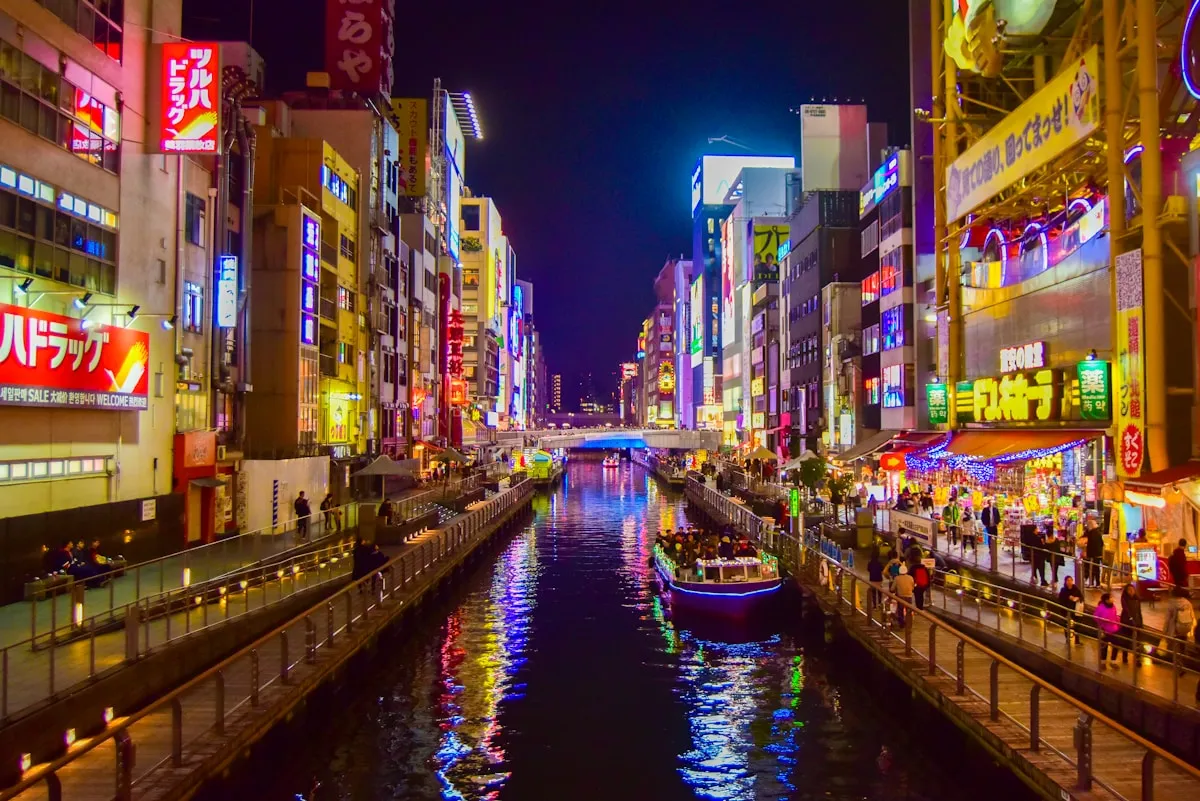
Your first night in Osaka comes down to one choice: which neighborhood matches the kind of evening you want. Dotonbori delivers neon, canal views, and nonstop street food. Shinsekai trades polish for retro kushikatsu bars and a more casual pace. Namba stays open latest for anyone who wants the night to keep going. Pick wrong and you’ll spend your first hours backtracking across town instead of eating and drinking — this guide breaks down what each area actually delivers so you can decide before you land.
Heading to multiple cities? Our Japan nightlife guide compares Tokyo, Osaka, Kyoto, and beyond so you can plan which night belongs in which city.
This city runs on three things after dark: street food, cheap drinks, and the kind of aggressive friendliness that Osaka is famous for. The locals have a word for it — kuidaore (食い倒れ), which roughly translates to “eat until you drop.” They apply the same philosophy to drinking.
Here’s your neighborhood-by-neighborhood guide to making the most of it.
Dotonbori: The Neon Heart of Osaka
Dotonbori (道頓堀) is the first place every visitor sees in Osaka, and for good reason — it’s the most visually overwhelming nightlife strip in Japan. A canal lined with restaurants, bars, and the kind of oversized neon signage that makes Times Square look restrained. The famous Glico Running Man sign has been greeting visitors here since 1935.
What to Expect
Dotonbori is loud, bright, and chaotic in the best way. Both sides of the canal are packed with restaurants, each with towering 3D signs competing for attention — a giant crab with moving legs (Kani Doraku), a blowfish the size of a car (Zuboraya), a dragon coiling around a building facade. The restaurants behind these signs range from excellent to tourist traps. Knowing the difference matters.
Street Food Circuit
The street food is Dotonbori’s main event. You don’t sit down in Dotonbori — you graze.
Essential stops:
- Takoyaki (octopus balls): Osaka’s signature food. The best stalls have long lines and you can watch the cook flip each ball in the griddle. ¥500-800 for 6-8 pieces. Look for stalls where locals are queuing, not just tourists.
- Okonomiyaki: Osaka-style savory pancakes stuffed with cabbage, pork, squid, and whatever else they throw in, covered in sauce and mayo. Some stalls cook it in front of you. ¥800-1,200.
- Kushikatsu (deep-fried skewers): Meat, vegetables, and seafood on sticks, battered and fried. The rule: never double-dip in the communal sauce. Osaka takes this extremely seriously. ¥100-200 per skewer.
- Gyoza: Pan-fried dumplings. Several stalls along the canal serve them fresh. ¥400-600 for 6 pieces.
Pro tip: Eat on the move. Start at the Ebisu Bridge (center of Dotonbori), head west along the south bank, cross back east on the north side. You’ll pass every major food stall in about 30 minutes. The first time I tried this I made the mistake of stopping at the very first takoyaki stall — they were fine, but the third one I tried (further west, smaller queue, gnarled grandma running the griddle) was visibly better.
Drinking in Dotonbori
Dotonbori itself is more food than drink, but the streets immediately behind the canal hide some good options:
- Standing bars (tachinomi): Osaka has a massive standing bar culture. Look for small places with counter service, ¥300-500 drinks, and salarymen decompressing after work. These are the cheapest drinks in the district.
- Craft beer: Several craft beer bars have opened on the backstreets behind Dotonbori in recent years. Pints from ¥800.
- Canal-side drinks: A few bars on the upper floors of canal-facing buildings offer terrace seating overlooking the neon strip. Overpriced (¥1,500+ per drink) but the view is worth one round.
What to Avoid
- Touts. Men on the street offering “cheap drinks” or “special deals” are steering you to overpriced establishments with hidden charges. Walk past.
- English-menu-only restaurants on the canal front. These tend to be tourist-priced. The better food is one street back.
Shinsekai: Retro Osaka at Its Best
If Dotonbori is Osaka’s present, Shinsekai (新世界) is its past — and it’s glorious. This retro entertainment district was built in the early 1900s as a “new world” of modern amusement, modeled partly after Paris and partly after Coney Island. A century later, it looks like a time capsule from the 1960s: faded neon, hand-painted signs, and the kind of bars where a beer costs ¥300 and nobody’s heard of a cocktail menu.
The Atmosphere
Shinsekai is anchored by Tsutenkaku Tower, a 103-meter steel tower that’s Osaka’s rough equivalent of the Eiffel Tower (it was literally inspired by it). The streets radiating from the tower are lined with kushikatsu restaurants, cheap izakayas, pachinko parlors, and bars that look like they haven’t been redecorated since the Showa era.
This neighborhood has a reputation among Japanese tourists as “rough” — a label that’s decades out of date. Modern Shinsekai is safe, welcoming, and considerably more interesting than the polished commercial districts elsewhere in Osaka.
What to Do
Kushikatsu crawl: Shinsekai is the birthplace of kushikatsu, and the district has dozens of restaurants specializing in it. Daruma (the one with the angry chef mascot outside) is the most famous, but any place with a queue is worth trying. Budget ¥1,000-2,000 for a full meal with drinks.
Cheap beer tour: Several bars and izakayas in Shinsekai serve draft beer from ¥200-300. That’s not a typo. These are small, no-frills places where the entertainment is conversation (or watching baseball on a tiny TV above the bar). The cheapest beer I’ve ever bought in Japan was a 250-yen draft at a Shinsekai counter bar in 2019; the owner was watching the Hanshin Tigers and wouldn’t let me speak until the inning ended.
Spa World: A massive hot spring complex on the south side of Shinsekai. Open late (until 1 AM), it’s a good way to end a Shinsekai evening — soak in onsen baths themed around different countries, then stumble home warm and relaxed. Admission ¥1,500. I’ve used Spa World as my unofficial post-kushikatsu reset more times than I’d care to count; the rotation between European-themed baths and an icy plunge pool genuinely sobers you up. For more on Japanese bathing culture, check our onsen etiquette guide.
Prices
Shinsekai is Osaka’s cheapest nightlife district:
| Item | Price |
|---|---|
| Draft beer | ¥200-400 |
| Highball | ¥250-400 |
| Kushikatsu (10 skewers) | ¥800-1,500 |
| Izakaya dinner + drinks | ¥2,000-3,500 |
Namba & Shinsaibashi: The All-Night Zone
Namba (難波) and Shinsaibashi (心斎橋) form a continuous entertainment zone between Dotonbori and the Shinsaibashi shopping arcade. This is where Osaka’s nightlife extends past midnight — late-night bars, clubs, karaoke, and restaurants that serve until dawn.
Shinsaibashi-suji
The main shopping arcade runs north-south for about 600 meters, covered and pedestrian-only. After the shops close (around 8-9 PM), the arcade takes on a different energy — groups heading to bars, restaurant touts making last pitches, street performers set up near the intersections.
The real nightlife is on the side streets branching east and west from the arcade. These narrow lanes hide izakayas, bars, and restaurants that locals know but tourists walk right past.
Late Night Options
- Bar Nayuta: A jazz bar in a basement near Shinsaibashi Station. Live performances most evenings. Cover charge ¥1,000 includes one drink. A Osaka institution. I went on a Wednesday last spring and the trio that was playing turned out to be one of the bassist’s farewell sets — fewer than twelve people in the room.
- Craft beer bars along Amerikamura’s edge: Several good options on the streets between Shinsaibashi and Amerikamura. Pints ¥800-1,200.
- Late-night ramen: After drinking, ramen is the Osaka tradition. Kinryu Ramen (identifiable by the dragon sign) is open 24 hours and a Dotonbori institution. Bowl from ¥700. I’ve eaten there at every imaginable hour; the 3 AM bowl is the platonic ideal of shime no ramen.
Clubs
Osaka’s club scene is concentrated around Namba and the southern end of Shinsaibashi:
- Entry typically ¥2,000-3,000 with one drink included
- Most clubs open at 10 PM and run until 5 AM
- Dress codes exist but are more relaxed than Tokyo — clean sneakers are usually fine
- The scene is more approachable and less fashion-conscious than Tokyo clubs
Amerikamura: Osaka’s Alternative Quarter
Amerikamura (アメリカ村, “America Village”) is Osaka’s youth culture district — a few blocks of vintage shops, street art, independent cafes, and bars with a deliberately counter-cultural vibe. Think Harajuku meets Brooklyn, but more relaxed.
The Vibe
Amerikamura attracts a younger crowd (20s-30s) and has a creative energy that’s different from the rest of Osaka’s nightlife. The bars tend to be small, independently owned, and themed around music, art, or subcultures. Prices are moderate — cheaper than Shinsaibashi, slightly more than Shinsekai.
Where to Drink
- Triangle Park area: The small park at the center of Amerikamura is a gathering spot. The surrounding blocks have the highest bar density — vinyl bars, hip-hop bars, punk bars, and a few places that defy categorization.
- Rooftop bars: A few buildings in the district have rooftop bars with views over the Osaka skyline. Drinks from ¥1,000.
- International bars: Amerikamura has a higher concentration of foreigner-friendly bars than other Osaka districts. English-speaking staff is common.
Budget
| Item | Price |
|---|---|
| Beer | ¥500-800 |
| Cocktail | ¥800-1,500 |
| Bar snacks | ¥400-800 |
| Live music cover | ¥1,000-2,000 (usually includes one drink) |
Umeda & Kita: Sophisticated Night Out
If the neighborhoods above feel too chaotic, Umeda (梅田) in northern Osaka offers a completely different register. This is Osaka’s business district, and the nightlife reflects it — skyline bars, hotel lounges, refined cocktail spots, and restaurants where the food is art.
Skyline Bars
- Umeda Sky Building observation deck: Not a bar, but the nighttime view from the floating garden observatory (173 meters) is stunning. Open until 10:30 PM. Regular adult admission is ¥2,000 (checked October 9, 2026). Go here first, then drink. On my last visit in February the deck was windy enough that I lasted about ten minutes outside before retreating to the indoor section — bring a coat even when Osaka itself feels mild.
- Hotel bars: The Ritz-Carlton, Conrad, and InterContinental all have bars on upper floors with views across the city. Cocktails ¥2,000-3,500. Dress code: smart casual.
Kitashinchi
Kitashinchi (北新地) is Osaka’s most upscale entertainment district — a grid of narrow streets lined with high-end bars, clubs, and hostess bars. The bars here are serious about cocktails. The clientele is mostly business professionals on expense accounts.
- Cocktails: ¥1,500-3,000. The quality justifies the price.
- Whisky bars: Several excellent whisky bars with Japanese whisky collections rivaling Tokyo’s best. Drams from ¥1,000-5,000.
- Cover charges: Common, typically ¥500-1,500.
When to Go
Umeda nightlife starts later than southern Osaka (most bars don’t fill up until 8-9 PM) and clears out earlier (by midnight on weeknights). It’s better for a focused 2-3 hour evening of quality drinks than an all-night session.
Planning Your Osaka Night
Suggested Routes
Route 1: Classic Osaka (3-4 hours) Dotonbori street food (6:30-8 PM) → Hozenji Yokocho hidden alley (8-8:30 PM) → Shinsaibashi side street bars (8:30-10 PM) → Late-night ramen (10 PM)
Route 2: Retro & Real (3-4 hours) Shinsekai kushikatsu dinner (6-7:30 PM) → Spa World soak (7:30-9 PM) → Dotonbori canal walk (9:30-10:30 PM) → Standing bar nightcap (10:30-11 PM)
Route 3: All-Nighter (5+ hours) Dotonbori food + drinks (7-9 PM) → Amerikamura bars (9-11 PM) → Namba clubs (11 PM-3 AM) → Late-night ramen (3 AM)
Getting Around
All five nightlife districts are in central Osaka, connected by the Midosuji subway line:
| From → To | Metro Time | Walking Time |
|---|---|---|
| Dotonbori → Shinsekai | 10 min | 20 min |
| Dotonbori → Namba | 2 min | 5 min |
| Dotonbori → Amerikamura | — | 8 min |
| Dotonbori → Umeda | 8 min | 30 min |
Last trains run until approximately midnight. After that, taxis between central Osaka districts cost ¥1,000-2,000.
Getting to Osaka from Kyoto
If you’re based in Kyoto, consider exploring Gion after dark before or after your Osaka night — the two cities pair perfectly. Getting to Osaka from Kyoto is quick:
- JR Special Rapid: Kyoto Station → Osaka Station, 30 minutes, ¥580
- Hankyu Line: Kawaramachi → Umeda, 45 minutes, ¥410
- Last train back: Around 11:30 PM from Osaka to Kyoto
This makes an Osaka night totally feasible as an evening trip from Kyoto — arrive by 6 PM, eat and drink until 10:30 PM, catch a train home.
Osaka vs Tokyo Nightlife
| Osaka | Tokyo | |
|---|---|---|
| Food integration | Eating IS the nightlife | Food and drinks more separate |
| Formality | Casual everywhere | Ranges from casual to very formal |
| Cost | 20-30% cheaper | Higher, especially in Shinjuku/Shibuya |
| Closing time | Clubs until 5 AM, most bars by 2 AM | Similar |
| Walkability | All major areas within 30 min | Spread across the city |
| Vibe | Loud, friendly, unfiltered | Varied by neighborhood |
For a taste of what Tokyo nightlife offers, compare with our guides to Golden Gai, bar hopping in Tokyo, and Tokyo’s best nightclubs.
If you want a local to show you the spots that don’t appear in guidebooks, an Osaka food and drink tour is the fastest way to skip the tourist traps. For those wanting to combine nightlife with Osaka’s daytime highlights, a Dotonbori and Namba evening walking tour provides context and local recommendations. If Osaka’s summer festival energy appeals to you, our Japan summer festivals guide covers Tenjin Matsuri — Osaka’s biggest celebration.
For general travel tips including etiquette and transportation basics, check our first-timer’s guide before your trip.
Osaka’s nightlife scene evolves constantly — new bars open, old favorites close, and neighborhoods shift in character. The information in this guide was accurate as of early 2026. Prices and hours are approximate and may vary by season and day of the week.
How This Fits Into Japan Nightlife
If you’re plotting nights across more than one city, the Japan nightlife guide is the cross-city overview — it lays out Tokyo, Osaka, Kyoto, and regional scenes side by side so you can decide which neighborhood and which kind of night belongs in which stop on your itinerary.
The specific spots covered above slot into that broader picture; a country-wide nightlife framing helps you avoid spending two nights doing the same thing in two different cities.
Frequently Asked Questions
- Is Osaka nightlife better than Tokyo?
- Different, not better. Osaka nightlife is more food-focused, more casual, and more affordable. Tokyo has more variety and more polished cocktail bars. Osaka's advantage is that the best nightlife areas — Dotonbori, Shinsekai, Namba — are all walking distance from each other. In Tokyo, neighborhoods are spread across the city.
- What area in Osaka has the best nightlife?
- Dotonbori and Namba for the full sensory experience — street food, neon, crowds, energy. Shinsekai for cheap drinks and retro atmosphere. Amerikamura for a younger, alternative crowd. Umeda for upscale bars and skyline views. Most visitors start in Dotonbori and explore outward.
- Is Osaka safe at night?
- Very safe. Osaka is one of the safest major cities in the world for nighttime activities. The main nightlife areas are well-lit, heavily populated, and police presence is visible. Standard precautions apply — watch for touts in Dotonbori and avoid following strangers to unlisted establishments.
- How much does a night out in Osaka cost?
- Osaka is cheaper than Tokyo for nightlife. Street food dinner in Dotonbori: ¥1,500-3,000. Drinks at a standing bar: ¥300-600 each. Izakaya dinner with drinks: ¥3,000-5,000. Cocktail bar: ¥1,500-2,500 per drink. A full evening (food + 3-4 drinks) runs ¥5,000-8,000 — about 30% less than equivalent Tokyo neighborhoods.
- What time do bars close in Osaka?
- Izakayas and restaurants typically close by midnight. Most bars stay open until 2-3 AM. Clubs and late-night spots in Namba and Shinsaibashi run until 5 AM. Street food stalls in Dotonbori wind down around midnight on weekdays, later on weekends.
More on Japan Nightlife
Continue exploring this cluster.
Japan Nightlife Guide: Where to Go After Dark Across the Country
The complete guide to nightlife in Japan — izakaya, bars, clubs, night temples, karaoke, and more. City-by-city breakdown from Tokyo to Kanazawa with practical tips for every budget.
Fushimi Inari at Night: Is It Worth It?
Wondering if Fushimi Inari at night is worth it? A Kyoto local weighs the lantern-lit atmosphere against a dark, isolated upper trail before you go alone.
Gion at Night: Kyoto's Geisha District Walk
See Gion the way locals do: lantern-lit alleys, geiko spotting etiquette, and the best streets for an evening walk through Kyoto's historic district.
Tokyo Izakaya Tour: Food & Drink Guide
The best izakaya neighborhoods in Tokyo for food and drink. Yurakucho, Shinjuku, Ueno, Asakusa — with prices, ordering tips, and etiquette.
Golden Gai Shinjuku: A First-Timer's Bar Crawl
Nervous about your first Golden Gai bar crawl? A Tokyo local shows which alleys welcome visitors, how much cash to bring, and a ¥9,800 four-bar route.