Tokyo Izakaya Tour: Food & Drink Guide
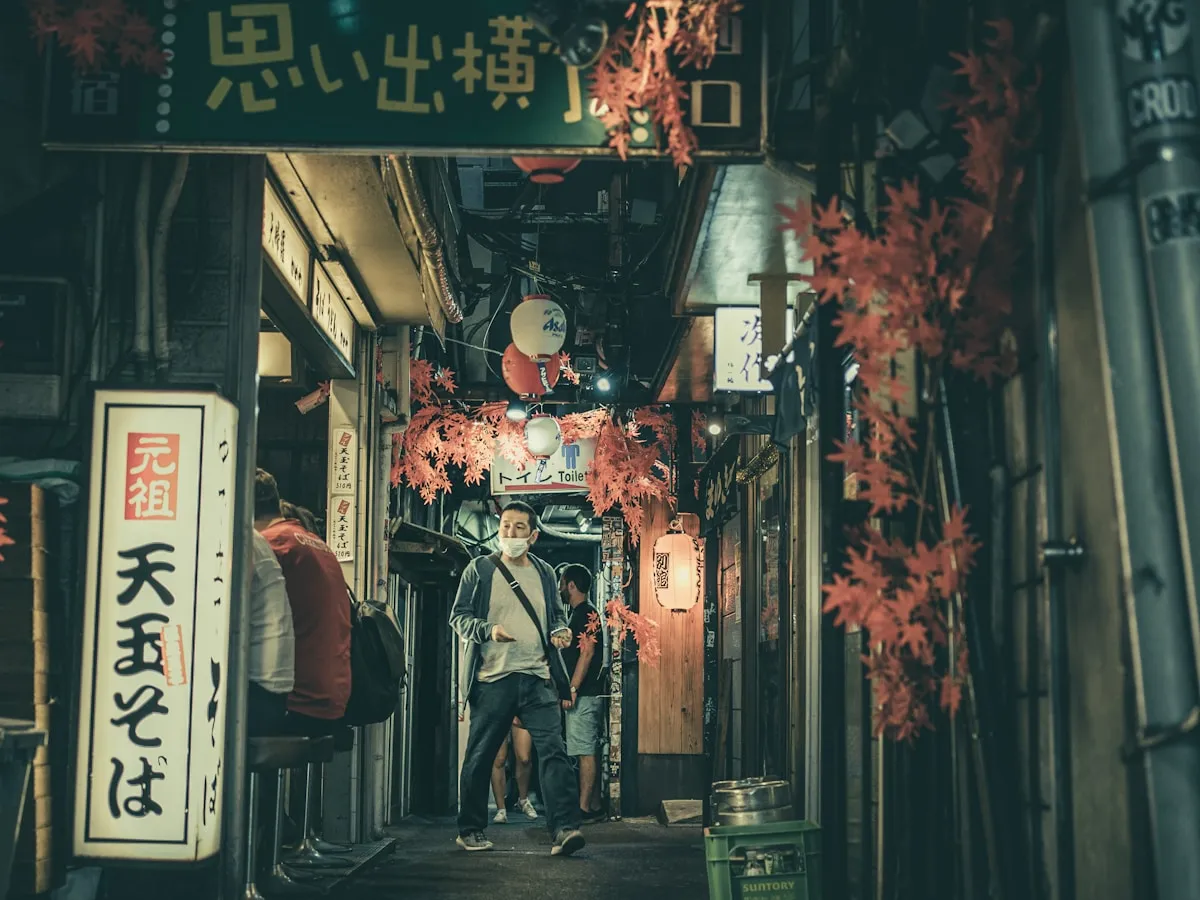
An izakaya is Japan’s version of a pub — except the food is better, the portions are smaller, and nobody’s watching football on a TV in the corner. These casual drinking spots serve small shareable dishes designed to accompany beer, sake, and shochu, and they’re where most Japanese people actually spend their evenings. Not at cocktail bars. Not at clubs. At a scuffed wooden counter, ordering another plate of yakitori and arguing about whether to get one more round.
Heading to multiple cities? Our Japan nightlife guide compares Tokyo, Osaka, Kyoto, and beyond so you can plan which night belongs in which city.
Tokyo has tens of thousands of izakayas, from fluorescent-lit chains with tablet ordering to six-seat holes-in-the-wall where the chef decides what you eat. An izakaya tour — guided or self-guided — is the single best way to experience Tokyo’s food and drinking culture in one evening.
Here’s how to do it right.
What Makes an Izakaya Different
If you’ve never been to an izakaya, here’s the short version: it’s a casual restaurant where the primary purpose is drinking, and the food exists to make the drinking better. That distinction matters because it shapes everything about the experience.
The Format
- You order drinks first. Always. A server will come to your table within 30 seconds of sitting down and ask for your drink order. “Toriaezu nama” (とりあえず生) — “draft beer for now” — is the national opening line.
- Food comes in small plates. Izakaya dishes are meant to be shared. You order 2-3 dishes at a time, eat them, then order more. Nobody gets an entrée.
- The evening builds. You start with light snacks (edamame, pickles), progress to grilled items (yakitori, fish), and finish with something heavier (fried rice, ramen, ochazuke). The menu is designed for this progression.
- You stay for 2-3 hours. This isn’t a quick dinner. Izakaya culture is about lingering — refilling drinks, adding dishes, conversation.
Otoshi (Table Charge)
Almost every izakaya charges otoshi — a small appetizer (¥300-500) that arrives automatically with your first drink. This is your cover charge. It’s not optional, it’s not a scam, and sending it back is not a thing. Think of it as the price of your seat.
Nomihoudai (All-You-Can-Drink)
Many izakayas offer nomihoudai — all-you-can-drink for a fixed time period (usually 90-120 minutes) for ¥1,500-2,500 per person. This typically covers beer, highballs, sake, shochu, and basic cocktails. If you’re planning to have more than 4-5 drinks, nomihoudai saves money.
Some izakayas pair nomihoudai with tabehoudai (all-you-can-eat) for ¥3,000-5,000 total. These are usually chain izakayas with reliable but not exceptional food.
The Best Izakaya Neighborhoods in Tokyo
Not all izakaya experiences are equal. Each neighborhood has its own character, price point, and clientele.
Yurakucho & Shinbashi: Under the Tracks
The quintessential Tokyo izakaya experience.
The railway arches between Yurakucho and Shinbashi stations house dozens of tiny izakayas, yakitori joints, and standing bars in the spaces beneath the JR tracks. Trains rumble overhead every few minutes. Smoke drifts from charcoal grills. Salarymen in loosened ties pack the counters.
This is what most people picture when they imagine Tokyo after-work drinking culture — and it lives up to the image completely.
What to expect:
- Tiny spaces (6-15 seats), mostly counter seating
- Yakitori is the specialty — chicken grilled over charcoal, skewer by skewer
- Beer and highball territory. Cocktails are not a thing here.
- Prices are reasonable: yakitori ¥100-200 per skewer, beer ¥500, highball ¥400
How to find the right spot: Walk under the tracks from Yurakucho Station toward Shinbashi. Look for places with smoke coming out, locals packed at the counter, and hand-written menus on the wall. If there’s a queue, it’s probably good. The under-the-tracks place I keep returning to has no English signage and seats exactly nine; the negima yakitori is good enough that I’ll wait 25 minutes for a stool on a Thursday.
Best for: Authentic atmosphere, yakitori, the feeling that you’re experiencing real Tokyo.
Shinjuku: Omoide Yokocho & Beyond
Shinjuku has two distinct izakaya zones:
Omoide Yokocho (“Memory Lane”) — A narrow lane of yakitori stalls running alongside the JR tracks on the west side of Shinjuku Station. Similar energy to Yurakucho but more concentrated and slightly more tourist-aware. Draft beer ¥400-600, yakitori ¥100-200 per skewer. Covered in detail in our Best Bars in Shinjuku guide.
East Shinjuku backstreets — Behind the main Kabukicho entertainment strip, a network of narrow streets hides excellent izakayas that are less touristy than Omoide Yokocho. These tend to be slightly larger, with proper table seating and more extensive menus. Budget ¥3,000-5,000 per person.
After your izakaya rounds, Shinjuku offers the option to continue into Golden Gai for a nightcap — a different drinking format entirely but perfectly complementary.
Ueno: Ameyoko Market
Planning museums before an evening in Ueno? Our Grutto Pass exhibition worksheet compares actual admission benefits with individual tickets before you buy a pass.
Ameyoko (アメ横) is a bustling market street near Ueno Station that transforms into an open-air drinking zone after dark. Izakayas and standing bars spill onto the street, with customers drinking on plastic stools set up on the pavement.
The vibe: Chaotic, loud, cheap. This is Osaka-style drinking energy in the heart of Tokyo. Ueno’s izakaya scene attracts a mix of locals, expats, and tourists, and the atmosphere is notably more relaxed and rowdy than the buttoned-up Yurakucho scene. I take cousins visiting from Seattle to Ameyoko at 5 PM specifically because by 7 the standing bars get loud enough that you stop noticing the language barrier.
Prices: The cheapest izakaya zone in central Tokyo:
| Item | Price |
|---|---|
| Draft beer | ¥300-500 |
| Highball | ¥200-400 |
| Yakitori set (5 skewers) | ¥500-800 |
| Sashimi plate | ¥500-1,000 |
Best for: Budget drinking, casual atmosphere, outdoor seating.
Asakusa: Traditional Izakaya
Asakusa offers what other neighborhoods can’t: izakayas in a historic setting. The streets around Sensoji temple and the Sumida River have traditional-style izakayas — some operating for decades — with tatami seating, sliding doors, and menus that lean toward classic Edo-period drinking food.
What to expect:
- More traditional atmosphere — shoes off, sit on tatami or at low tables
- Slightly older clientele and more Japanese-speaking environment
- Specialties include dojo (loach fish), monjayaki (Tokyo-style savory pancake), and seasonal dishes
- Prices: moderate. ¥3,000-6,000 per person for food and drinks
Hoppy Street (Hoppy-dori) near Sensoji is a concentration of standing bars and izakayas serving Hoppy — a beer-flavored drink mixed with shochu that’s been an Asakusa staple since the 1940s. A Hoppy set costs ¥500-700. The first time I drank Hoppy was at an outdoor Asakusa stall in October — paper lantern overhead, plastic stool, half a gyusuji stew on the table — and it instantly replaced my “first drink in Japan” mental snapshot.
Best for: Traditional atmosphere, history buffs, pairing with a daytime Asakusa visit.
Shibuya: Modern Izakaya
Shibuya’s izakaya scene is newer and more diverse than the old-school neighborhoods above. The backstreets behind Center-gai and the Nonbei Yokocho (“Drunkard’s Alley”) offer a mix of traditional tiny bars and modern izakayas with creative menus.
Nonbei Yokocho is Shibuya’s answer to Golden Gai — two narrow alleys of tiny bars behind the Shibuya Mark City building. Smaller and less famous than Golden Gai, but more local. Cover charges ¥300-500, drinks from ¥600. I prefer Nonbei to Golden Gai on weeknights — same compressed-bar feeling but a fraction of the foot traffic.
Guided vs. Self-Guided: Which Is Right for You?
Guided Tours
A guided izakaya tour typically takes you to 2-3 hand-picked izakayas over 2.5-3 hours, with a local guide who handles ordering, explains the food, and navigates the social dynamics.
Pros:
- No language barrier — the guide orders and explains everything
- Access to places you wouldn’t find or feel comfortable entering alone
- Learn the etiquette (ordering protocol, how to pour for others, when to say “kanpai”)
- All-inclusive pricing — no bill shock
Cons:
- Fixed schedule and route — less spontaneity
- Group setting (usually 4-12 people)
- More expensive than going alone
Who should book a guided tour: First-time visitors to Japan, anyone uncomfortable with the language barrier, groups who want a structured evening.
For a guided introduction to Tokyo’s izakaya culture, Ueno’s Ameyoko area is one of the easiest places to understand why locals love casual food-and-drink nights: market energy, standing bars, grilled snacks, and izakayas packed close together. Asakusa is the more historic alternative, pairing Senso-ji after dark with Hoppy Street and old-Tokyo drinking culture.
Self-Guided
After one guided tour (or if you’re comfortable with some uncertainty), self-guided izakaya hopping is more rewarding. You choose the pace, the neighborhoods, and can linger at a place you love.
The strategy:
- Pick a neighborhood from the list above
- Walk until something looks good (smoke, noise, locals inside)
- Open the door, say “sumimasen” and hold up the number of fingers for your group size
- Sit down, order “nama biiru” (draft beer) immediately
- Look at the menu or ask “osusume wa?” (what do you recommend?)
- Order 2-3 small dishes, eat, order more
- After 60-90 minutes, pay (“okaikei kudasai”), and move to the next place
Izakaya Ordering Guide
Essential Vocabulary
| Japanese | Pronunciation | Meaning |
|---|---|---|
| 生ビール | nama biiru | Draft beer |
| ハイボール | haibōru | Highball (whisky + soda) |
| 日本酒 | nihonshu | Sake |
| 焼酎 | shōchū | Japanese distilled spirit |
| 乾杯 | kanpai | Cheers! |
| おすすめは? | osusume wa? | What do you recommend? |
| もう一杯 | mō ippai | One more (drink) |
| お会計 | okaikei | Check, please |
The Classic Order
A standard izakaya progression for two people:
-
Round 1 — Drinks arrive, otoshi on the table
- 2× draft beer (¥500 each)
- Edamame (¥300)
- Sashimi assortment (¥1,000)
-
Round 2 — Shift to grilled items
- Yakitori assortment, 5 skewers (¥500-1,000)
- Karaage / fried chicken (¥600)
- Switch to highballs or sake (¥400-800)
-
Round 3 — Wind down
- One more light dish (pickles, cold tofu)
- Final drink
- Optional: rice ball or ochazuke to finish
Total per person: ¥2,500-4,000. That’s a full evening of excellent food and drink.
Navigating a Japanese-Only Menu
If the menu is entirely in Japanese (common at the best places):
- Point at what your neighbors are eating. This is completely normal and even flattering in Japan.
- Ask “osusume?” and let the chef/server choose for you. This often gets you the best food.
- Look for picture menus — many izakayas have a separate picture menu or photos on the wall.
- Use Google Translate camera mode on your phone to translate written menus in real time.
Izakaya Etiquette
The Rules
- Pour for others, not yourself. When drinking with companions, fill their glass when it’s empty. They’ll fill yours. It’s a social ritual, not a rule, but participating makes the experience better. The first time a regular at the next stool reached over to top up my sake without saying anything, I realized this is half of why people keep coming back to the same izakaya for decades.
- First drink together. Wait until everyone has their drink, then cheers (“kanpai!”) together. Don’t sip before the group toast.
- Don’t stick chopsticks upright in rice. This resembles funeral incense. Lay them across your plate or on the chopstick rest.
- The oshibori (hot towel) is for your hands. Not your face, not the table. Hands only.
- Calling the server: Raise your hand and call “sumimasen!” This is normal, expected, and not rude. Japanese service culture doesn’t involve hovering — you summon when ready.
How to Pay
Most izakayas split the bill equally among the group (warikan — 割り勘). Individual item-by-item splitting is unusual and considered inconvenient. If you’re with friends, agree to split evenly. If you’re treating someone, tell the server “watashi ga haraimasu” (I’ll pay) when ordering.
Cash is still king at traditional izakayas. Chains accept credit cards, but smaller places may be cash-only. Bring ¥10,000-15,000 in cash for an evening out. I’ve ended up at a 7-Eleven ATM at 11 PM enough times that I now top up at the start of the night before I’ve had a single drink.
Building Your Own Izakaya Crawl
2-Stop Evening (Casual, 2 hours)
Yurakucho → Shinbashi under the tracks
- Start at any busy yakitori spot under the Yurakucho tracks (6:30 PM). Beer + yakitori, 45 minutes.
- Walk 5 minutes to Shinbashi side. Different izakaya, different specialty. Sake + grilled fish, 45 minutes.
Budget: ¥4,000-6,000 per person
3-Stop Full Evening (Recommended, 3-4 hours)
Shinjuku circuit
- Omoide Yokocho yakitori (6:30-7:30 PM) — Beer + skewers
- East Shinjuku izakaya (7:45-9:00 PM) — Sake + seasonal dishes
- Golden Gai bar for a nightcap (9:15-10:30 PM) — Whisky or cocktail
Budget: ¥6,000-10,000 per person
4-Stop Adventure (Full Night, 5+ hours)
Cross-neighborhood tour
- Asakusa Hoppy Street (5:30-6:30 PM) — Hoppy + monjayaki
- Train to Ueno, Ameyoko standing bars (7:00-8:00 PM) — Cheap beer + sashimi
- Train to Yurakucho, under-the-tracks yakitori (8:30-9:30 PM) — Grilled everything
- Walk to Ginza for one proper cocktail (10:00-11:00 PM) — Contrast and cap the night
Budget: ¥8,000-12,000 per person
For the most hassle-free experience, especially on your first night in Tokyo, a local-guided food and bar tour handles the planning and language navigation so you can focus on the food and atmosphere. Once you’ve done one guided evening, you’ll have the confidence — and the favorite spots — to explore on your own.
For more Tokyo nightlife beyond izakayas, check our Tokyo bar hopping guide and the complete guide to Shinjuku’s best bars.
Izakayas open and close frequently in Tokyo, and the best spots are often the ones that look the most worn-in. The neighborhoods and general advice in this guide are durable; specific bars may change. As with all Japanese dining — if there’s a line outside, it’s worth joining.
How This Fits Into Japan Nightlife
If you’re plotting nights across more than one city, the Japan nightlife guide is the cross-city overview — it lays out Tokyo, Osaka, Kyoto, and regional scenes side by side so you can decide which neighborhood and which kind of night belongs in which stop on your itinerary.
The specific spots covered above slot into that broader picture; a country-wide nightlife framing helps you avoid spending two nights doing the same thing in two different cities.
Frequently Asked Questions
- How much does an izakaya tour in Tokyo cost?
- Guided izakaya tours typically cost ¥8,000-15,000 per person and include 2-3 izakaya stops, food at each, and several drinks. Self-guided izakaya hopping costs ¥4,000-8,000 per person for a full evening (3-4 stops, food and drinks). Budget ¥1,500-2,500 per izakaya stop including one drink and shared dishes.
- What food is served at an izakaya?
- Izakayas serve small shareable dishes designed for drinking. Common items: yakitori (grilled chicken skewers, ¥100-200 each), edamame (¥300-500), karaage (fried chicken, ¥500-800), sashimi (¥800-1,500), agedashi tofu (¥400-600), grilled fish, pickles, and rice dishes. Most menus have 30-100+ items.
- Do I need to speak Japanese at an izakaya?
- Helpful but not essential. Chain izakayas often have picture menus or tablet ordering in English. Smaller, local izakayas may be Japanese-only — learn these phrases: 'nama biiru kudasai' (draft beer please), 'osusume wa?' (what do you recommend?), 'okaikei' (check please). Pointing at what neighbors are eating works everywhere.
- What's the best area in Tokyo for izakaya hopping?
- Yurakucho and Shinbashi for the classic under-the-tracks experience. Shinjuku's Omoide Yokocho for yakitori and atmosphere. Ueno's Ameyoko for cheap, chaotic energy. Asakusa for traditional izakayas in a historic setting. Each area has a different character — Yurakucho is the most quintessential.
- Are izakaya tours worth it?
- For first-time visitors, yes. A good guide navigates the language barrier, explains ordering customs, takes you to places you'd never find alone, and handles the social dynamics of walking into tiny local bars. After your first guided experience, you'll have the confidence to izakaya-hop on your own.
More on Japan Nightlife
Continue exploring this cluster.
Japan Nightlife Guide: Where to Go After Dark Across the Country
The complete guide to nightlife in Japan — izakaya, bars, clubs, night temples, karaoke, and more. City-by-city breakdown from Tokyo to Kanazawa with practical tips for every budget.
Fushimi Inari at Night: Is It Worth It?
Wondering if Fushimi Inari at night is worth it? A Kyoto local weighs the lantern-lit atmosphere against a dark, isolated upper trail before you go alone.
Gion at Night: Kyoto's Geisha District Walk
See Gion the way locals do: lantern-lit alleys, geiko spotting etiquette, and the best streets for an evening walk through Kyoto's historic district.
Osaka Nightlife: Best Areas, Bars & Clubs
Deciding where to spend your first Osaka night? Compare Dotonbori's neon energy, Shinsekai's retro bars, and Namba's late crowds before you land.
Golden Gai Shinjuku: A First-Timer's Bar Crawl
Nervous about your first Golden Gai bar crawl? A Tokyo local shows which alleys welcome visitors, how much cash to bring, and a ¥9,800 four-bar route.