Gion at Night: Kyoto's Geisha District Walk
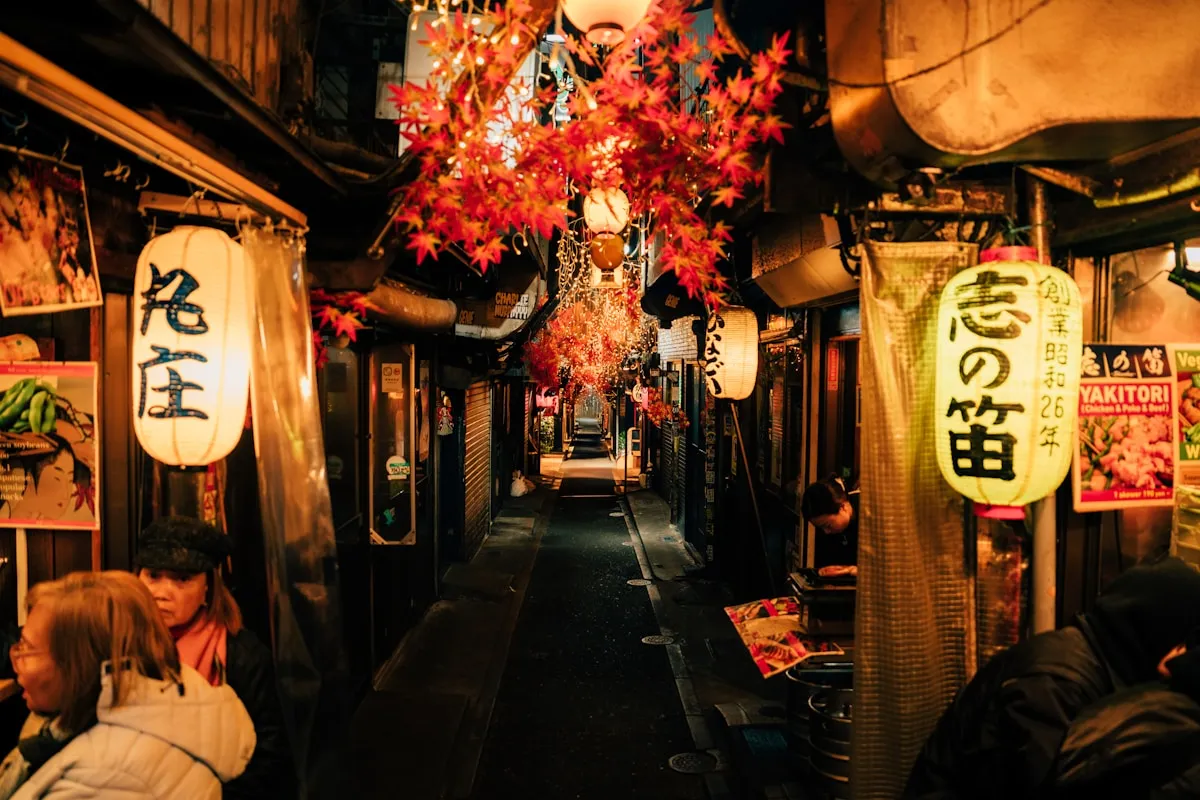
Gion at night means lantern-lit machiya streets, a real chance of spotting geiko on their way to evening engagements, and a hidden bar scene that simply doesn’t exist in daylight. Walk Hanamikoji-dori between 6-9 PM, once the tour buses have cleared out, and the stone-paved lanes empty to a handful of visitors — geiko slipping between teahouses, bars opening behind unmarked doors, and the Shirakawa Canal reflecting centuries-old cherry trees under warm lantern light.
Heading to multiple cities? Our Japan nightlife guide compares Tokyo, Osaka, Kyoto, and beyond so you can plan which night belongs in which city.
This is Kyoto’s most atmospheric evening experience, and it requires no reservation, no ticket, and no guide — just knowing where to walk and what to look for.
What Makes Gion Special at Night
Gion (祇園) is Kyoto’s most famous geisha district — a neighborhood of traditional wooden architecture, teahouses (ochaya), and cultural establishments that has operated continuously since the 17th century. During the day, it’s one of Kyoto’s most visited areas. At night, it becomes something else entirely.
The Atmosphere Shift
The difference between daytime and nighttime Gion is dramatic:
- Daytime: Tour buses, photo-snapping crowds, rental kimono groups posing at every corner. Hanamikoji-dori feels like a theme park.
- Nighttime: The tour groups vanish. The lanterns come on. The streets belong to the few dozen people who know that Gion’s real character emerges after dark.
This isn’t an exaggeration. By 7 PM on most evenings, Gion’s population drops by 80% or more. The people who remain are either locals heading to dinner, visitors who did their research, or geiko and maiko moving between engagements.
Why Evening Is the “Real” Gion
The geisha district was never designed for daytime tourism. Historically, Gion came alive at dusk — when the teahouses opened, the lanterns were lit, and the entertainment began. The wooden architecture, the narrow alleys, the paper-screened windows — all of it was designed to look its best under lamplight, not midday sun.
Visiting Gion at night isn’t an alternative to the daytime visit. It’s the way Gion was meant to be experienced.
Hanamikoji-dori: The Main Street After Dark
Hanamikoji-dori (花見小路通) is Gion’s central street — a straight lane of traditional machiya buildings running from Shijo-dori south to Kennin-ji temple. During the day, it’s packed. At night, it’s transformed.
What to See
The wooden facades of the teahouses are designed with backlit screens — at night, you can see the warm glow of interiors through translucent paper windows. Some teahouses have small gardens visible through gaps in their fences. The effect is intimate and voyeuristic in the best sense: glimpses of a private world that has been operating for centuries.
The southern end of Hanamikoji (near Kennin-ji) is quieter and more residential. This is where the architecture feels most authentic — fewer souvenir shops, more working teahouses and private residences.
Geiko and Maiko Sightings
Let’s address this directly: many people visit Gion hoping to see geisha. Here’s what you should know.
When: The best window is 5:30-7:00 PM, when geiko and maiko are walking from their lodgings to evening engagements. They move quickly along Hanamikoji-dori and the surrounding side streets.
What to look for: Real geiko and maiko are distinguishable from tourists in rental kimono by their movement — they walk with purpose, often accompanied by an attendant, and their makeup and kimono are noticeably more elaborate. Maiko (apprentices) wear more colorful, elaborate kimono with long trailing obi sashes and distinctive hair ornaments.
What NOT to do:
- Do not stop them, block their path, or follow them
- Do not take close-up photographs without permission (many now cover their faces when cameras appear)
- Do not touch their kimono or accessories
- Do not shout “geisha!” at them — the Kyoto term is geiko (芸妓) for full practitioners and maiko (舞妓) for apprentices
This is a genuine problem in Gion. The district has installed signs in multiple languages asking visitors to respect geiko privacy. In 2024, parts of Gion were closed to tourists due to harassment. The geiko are working professionals going to work — treat them the same way you’d treat anyone walking to their office.
The honest truth: Sightings are not guaranteed on any given evening. Some nights you’ll see several maiko on Hanamikoji. Other nights, none. If seeing geiko perform is important to you, book a Gion cultural experience rather than hoping for a street encounter. In my Kyoto years I went looking specifically for sightings maybe twenty times — saw a maiko on five or six of those visits and zero on the rest.
Pontocho Alley: Kyoto’s Narrowest Bar Street
Pontocho (先斗町) is a narrow pedestrian alley running parallel to the Kamogawa River, one block west of Gion proper. It’s technically a separate district, but it’s a 3-minute walk from Hanamikoji and the two are inseparable in any Gion evening itinerary.
The Layout
Pontocho is about 500 meters long and barely wide enough for two people to pass. Both sides are lined with restaurants, bars, and teahouses — most with lanterns hanging outside and menus posted by the door. The western-facing establishments have terraces (kawayuka) overlooking the Kamogawa River, one of Kyoto’s most iconic dining experiences.
Where to Drink
- Standing bars (tachinomi): A few standing bars near the northern end of Pontocho serve drinks from ¥500. These are the most accessible — just walk in, order, and stand at the counter.
- Sake bars: Pontocho has several bars specializing in Kyoto-region sake (Fushimi sake, brewed just south of the city). Expect ¥800-1,500 per serving.
- Cocktail bars: Upscale cocktail spots in converted machiya. Beautifully designed spaces, but prices reflect it — cocktails from ¥1,500-2,500.
River Terraces (Kawayuka)
From May through September, many Pontocho restaurants extend wooden terraces over the Kamogawa River. Dining on a kawayuka on a warm evening — river breeze, lantern light, traditional food — is one of Kyoto’s great experiences. Reservations are essential for popular spots, especially on weekends. The first kawayuka dinner I ever had — late June, two friends, a small kappo restaurant — ran about ¥10,000 per person and remains my benchmark for what dinner over a river should feel like.
Budget tip: Some bars (not restaurants) also have river-facing seating. A drink on a bar’s kawayuka costs ¥800-1,500 instead of the ¥5,000+ dinner minimum at the restaurants.
Prices
Pontocho is more expensive than average Kyoto dining:
| Item | Price Range |
|---|---|
| Draft beer | ¥700-1,000 |
| Sake (glass) | ¥800-1,500 |
| Cocktail | ¥1,200-2,500 |
| Bar snacks | ¥500-1,000 |
| Dinner (per person) | ¥3,000-15,000 |
| Kawayuka dinner | ¥5,000-20,000 |
Shirakawa Canal: The Most Photogenic Night Walk
The Shirakawa area, running along the northern edge of Gion, is where Kyoto’s nighttime beauty reaches its peak.
The Setting
A narrow canal lined with willow trees and traditional buildings. Stone bridges cross the water every 50 meters or so. In spring, cherry blossoms hang over the canal — illuminated at night during the annual light-up. Year-round, the water reflects the lanterns of the restaurants and bars that line its banks.
This is the Gion that appears on postcards. And unlike Hanamikoji, Shirakawa is genuinely quiet at night — you might share the canal walk with a handful of people.
The Walk
Start at the Shirakawa-minami-dori bridge (where Shirakawa meets the main Gion streets) and walk east along the canal. The path is about 400 meters and takes 15-20 minutes at a stroll. Highlights:
- Tatsumi Bridge (Tatsumi-bashi): The most photographed bridge in Gion. A small stone bridge with a willow tree on one side and a shrine (Tatsumi Daimyojin) on the other. At night, with the lanterns reflected in the canal, it’s the single best photo spot in the district. I once stood here for nearly an hour with a tripod during a misty November evening — even with multiple long-exposure shots, the photos don’t capture how quiet the bridge gets after 10 PM.
- Machiya bar row: Several converted townhouses along the canal operate as intimate bars. Look for warm light behind latticed windows and small signs by the door.
- Shirakawa cherry blossoms (spring): The canal is one of Kyoto’s best cherry blossom night viewing spots. The trees are lit from below during the annual illumination (usually late March to mid-April), and the blossoms reflect in the dark water.
Hidden Bars Along Shirakawa
The side streets off Shirakawa hide some of Gion’s best bars:
Sake Bar Yoramu — Run by an Israeli sake sommelier who speaks fluent English and Japanese, this tiny bar (8 seats) serves exceptional Kyoto-region sake with enthusiastic explanations of each brew. One of the easiest bars for non-Japanese speakers. Sake from ¥900. No cover charge.
Bar K6 — A classic cocktail bar on Shijo-dori, technically just outside Gion but within walking distance. Old-school mixology in a dim, wood-paneled room. Cocktails from ¥1,500. Jacket not required but you’ll feel more comfortable dressed up slightly.
Gion Nishi — A whisky bar in a renovated machiya. Japanese whisky flights from ¥2,500. The interior preserves the original wooden beams and paper screens.
A Walking Route for Your Evening
Here’s a recommended route that covers the highlights in about 2-3 hours:
Early Evening (5:30-7:00 PM) — Hanamikoji-dori
- Start at the corner of Shijo-dori and Hanamikoji-dori. Walk south on Hanamikoji as the lanterns are being lit. This is the prime window for geiko/maiko sightings.
- Walk the full length to Kennin-ji temple. The temple grounds are usually accessible (and free) until dusk. Worth a quick look at the gardens.
- Explore the side streets east and west of Hanamikoji. These narrow alleys are where the most atmospheric teahouses and private restaurants hide.
Twilight (7:00-8:30 PM) — Shirakawa Canal
- Walk north to the Shirakawa Canal. Cross Shijo-dori and head east along the water.
- Stop at Tatsumi Bridge for photos.
- Stroll the full canal path to the eastern end.
- Optional: Drop into one of the canal-side bars for a drink.
Later Evening (8:30-10:00 PM) — Pontocho
- Walk west to Pontocho Alley. Enter from the Shijo-dori end and walk the full length.
- Choose a bar or restaurant for drinks or a late dinner. If the weather is good, prioritize a kawayuka seat.
- End your evening at the northern end of Pontocho, which connects to Sanjo-dori and the Kawaramachi shopping area.
Total walking distance: About 2.5 kilometers. The route is flat and entirely on paved streets.
Practical Information
Getting There
Gion is in eastern Kyoto, easily reached from the city center:
- Bus: Routes 100 and 206 from Kyoto Station stop at Gion (祇園). About 20 minutes, ¥230.
- Keihan Line: Gion-Shijo Station puts you right at the western edge of Gion. From Fushimi-Inari, about 10 minutes.
- Hankyu Line: Kawaramachi Station is a 5-minute walk west of Gion.
- Taxi: From Kyoto Station, roughly ¥1,500 (15 minutes).
Getting Back
Last trains from the Gion area depart around 11:15-11:45 PM. Taxis are available on Shijo-dori until late.
If you’re combining Gion with a night visit to Fushimi Inari, take the Keihan Line from Gion-Shijo Station to Fushimi-Inari Station (10 minutes, ¥220). Start Gion at sunset, head to Fushimi Inari by 8:30-9:00 PM.
Budget
| Activity | Cost |
|---|---|
| Walking Gion streets | Free |
| 2-3 drinks at bars | ¥3,000-6,000 |
| Dinner at mid-range restaurant | ¥3,000-8,000 |
| Kawayuka dinner (Pontocho) | ¥5,000-20,000 |
| Guided evening tour | ¥5,000-15,000 |
A pleasant evening of walking, one canal-side drink, and a casual dinner runs about ¥5,000-8,000 per person.
When to Go
- Best months: March-May (cherry blossoms, pleasant evenings) and October-November (autumn atmosphere, comfortable temperatures)
- Best days: Tuesday-Thursday for fewer visitors. Friday-Saturday evenings are busier but still far quieter than daytime.
- During Gion Matsuri (July): The district transforms for Kyoto’s biggest festival. Street food stalls, parade preparations, and a carnival atmosphere that’s completely different from regular evenings. See our Gion Matsuri guide for details. Gion Matsuri is one of the highlights covered in our Japan summer festivals guide.
What to Wear
Gion has a dress code — not an enforced one, but an unspoken one. The district’s elegant atmosphere means you’ll feel more comfortable in smart casual clothing than in shorts and flip-flops. This isn’t a rule, and nobody will turn you away, but dressing with some care shows respect for the neighborhood’s character.
For a broader perspective on Japan after dark, explore our guides to Tokyo’s bar-hopping scene, Osaka’s nightlife neighborhoods, and tips for first-time visitors. If you’re planning your Kyoto trip timing, our guide to the best time to visit Japan covers seasonal considerations.
For those who want deeper cultural context — and the best chance of understanding the geisha tradition respectfully — a Gion evening walking tour with a local guide provides history and insider knowledge you won’t get from walking alone. For a broader Kyoto experience, a Kyoto highlights and hidden gems tour covers the district as part of the city’s wider story.
Gion is a living neighborhood, not a museum. Restaurants, bars, and teahouses change over time. The information in this guide was accurate as of early 2026. For the latest on geisha district access policies, check the Gion district association’s announcements before your visit.
How This Fits Into Japan Nightlife
If you’re plotting nights across more than one city, the Japan nightlife guide is the cross-city overview — it lays out Tokyo, Osaka, Kyoto, and regional scenes side by side so you can decide which neighborhood and which kind of night belongs in which stop on your itinerary.
The specific spots covered above slot into that broader picture; a country-wide nightlife framing helps you avoid spending two nights doing the same thing in two different cities.
Frequently Asked Questions
- Can you see geisha in Gion at night?
- Yes, but sightings are not guaranteed. Geiko and maiko (apprentice geisha) move between teahouses and engagements primarily between 5:30-7 PM on Hanamikoji-dori. Evenings are your best chance — they're heading to appointments. They walk quickly and should not be stopped, followed, or photographed up close.
- Is Gion worth visiting at night?
- Absolutely. Gion is arguably more beautiful at night than during the day. The wooden machiya buildings glow under lantern light, the Shirakawa Canal reflects the cherry trees, and the crowds thin to a fraction of daytime levels. The hidden bar scene also only comes alive after dark.
- What time is best to visit Gion at night?
- Between 6-9 PM for the best experience. Earlier (5:30-6:30 PM) for geiko/maiko sightings on Hanamikoji-dori. Later (8-10 PM) for quieter streets and the bar scene on Pontocho and along Shirakawa. Most restaurants and bars stay open until 11 PM-midnight.
- Are there bars in Gion?
- Yes, many. Gion has a hidden bar scene tucked into machiya townhouses and narrow alleys. Pontocho Alley is a famous bar street running parallel to the Kamogawa River. Shirakawa area has upscale cocktail bars. Expect to pay more than Tokyo — cocktails from ¥1,500, sake from ¥800.
- Is Gion safe at night?
- Very safe. Gion is one of the safest nightlife areas in Japan. Streets are well-lit, well-patrolled, and the district has a respectful atmosphere. The only concern is navigating narrow alleys after rain (stone paths can be slippery). Standard travel precautions apply.
More on Japan Nightlife
Continue exploring this cluster.
Japan Nightlife Guide: Where to Go After Dark Across the Country
The complete guide to nightlife in Japan — izakaya, bars, clubs, night temples, karaoke, and more. City-by-city breakdown from Tokyo to Kanazawa with practical tips for every budget.
Fushimi Inari at Night: Is It Worth It?
Wondering if Fushimi Inari at night is worth it? A Kyoto local weighs the lantern-lit atmosphere against a dark, isolated upper trail before you go alone.
Osaka Nightlife: Best Areas, Bars & Clubs
Deciding where to spend your first Osaka night? Compare Dotonbori's neon energy, Shinsekai's retro bars, and Namba's late crowds before you land.
Tokyo Izakaya Tour: Food & Drink Guide
The best izakaya neighborhoods in Tokyo for food and drink. Yurakucho, Shinjuku, Ueno, Asakusa — with prices, ordering tips, and etiquette.
Golden Gai Shinjuku: A First-Timer's Bar Crawl
Nervous about your first Golden Gai bar crawl? A Tokyo local shows which alleys welcome visitors, how much cash to bring, and a ¥9,800 four-bar route.