Kobe in a Day: Kitano Hillside to Harbor Route
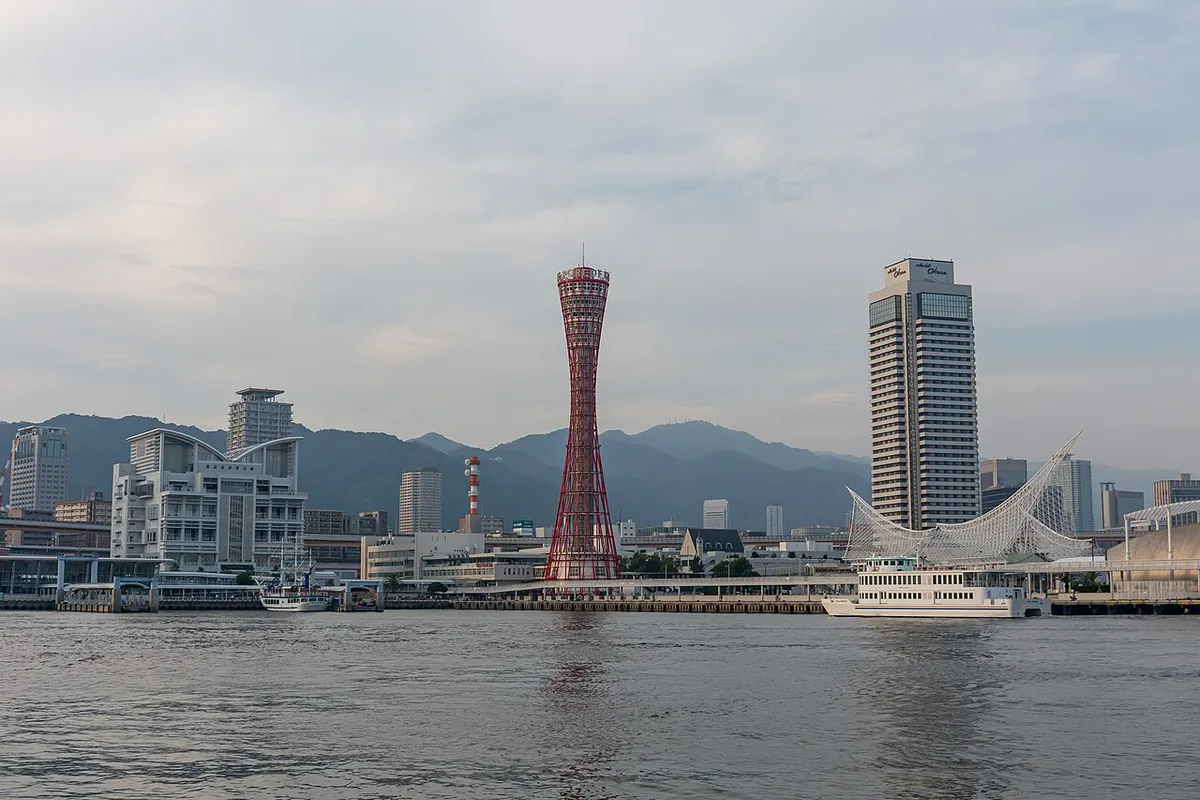
Kobe is often treated as a half-day add-on to Osaka or Kyoto, but the city has enough range to fill a full day without feeling stretched. The shape that works best is a hillside-to-harbor route: start above the city in Kitano, come downhill through the shopping streets and Chinatown, then finish at the waterfront as the light changes. Treat it as a route decision, not a checklist, and the day stays comfortable even if you trim a stop or two.
If you are still building the wider trip around this stop, pair this guide with our Japan travel tips and best time to visit Japan guides before locking transport and hotel location.
Arriving at Kobe Airport: terminal first, city route second
If you fly into Kobe Airport (UKB), choose the terminal-to-city leg before deciding how much of this walking day to keep. The airport quotes 18 minutes on the Port Liner to Sannomiya: that is the train ride, not the time from landing to your hotel, hillside stop or next train. International arrival procedures, baggage collection, station access, waiting and the walk after leaving the train are additional.
Port Liner or a city bus from your arrival terminal?
Swipe the table horizontally on a narrow screen.
| Your starting point or priority | Route to compare | Check before choosing |
|---|---|---|
| Domestic Terminal 1, heading to central Kobe | Follow the Port Liner signs to the station connection on floor 2, then take a Sannomiya-bound train. | The airport station plan shows the gates on floor 2 and platforms on floor 3. Include the floor changes, ticketing and train wait. |
| International Terminal 2, choosing rail | Reach the airport station on the Terminal 1 side using the walking or free airport-island shuttle option. | Use the operator’s Terminal 2 access guide for stairs versus elevator access. The free shuttle timetable is separate from the train timetable; some journeys go via the ferry terminal and may stop for more than 10 minutes for schedule adjustment. |
| Terminal 1 or 2, hoping to reduce station access | Compare the paid Marine Air Shuttle city bus serving Sannomiya and Shin-Kobe with the rail route. | Check your actual terminal, departure and city drop-off stop. This is a different service from the free island shuttle. No advance reservation is required; the operator warns that a full highway-bus-type vehicle means taking a later service. Road conditions and the walk after alighting still matter. |
| Fixed onward train, appointment or late arrival | Compare the complete journey to the actual destination, including the next operator’s departure. | A landing before a last departure does not establish that you can board it. Check current airport-station departures and the next leg for your travel date. If the chain is uncertain, revise the onward commitment and investigate a backup rather than counting on an unverified connection. |
The free shuttle’s published Terminal 2 row currently ends at 19:51; later departures shown under Terminal 1 or the ferry terminal do not extend Terminal 2 service. Recheck the row for your boarding point before relying on it. The airport’s English city-bus page still labels its linked table April–September 2026, so use the city-bus operator’s current timetable rather than treating that older coverage label as proof of your travel date.
Count the whole leg before keeping the full sightseeing day
- Confirm UKB and your arrival terminal on your flight details. Allow for arrival formalities and baggage before assessing the departure you can actually reach.
- Choose terminal-to-station access or the city-bus boarding point. If you need lifts or help with luggage, check the current access guide and staff guidance. The Port Liner operator asks wheelchair users to notify staff at the gates or via interphone before riding its driverless trains.
- Check the train’s destination and the exact city station, bus stop or hotel address you need. Reaching Port Liner Sannomiya is not the same as boarding a different railway or reaching its platform; include that transfer and the next departure separately.
- Dated access note, checked October 14, 2026: the city’s Sannomiya south-elevator notice lists a suspension from September 4 at 13:00 through November 30, 2026, subject to change. Consult its current detour map and on-site signs if that lift is part of your route; do not assume every exit has the same step-free access.
- Once you reach the city, choose the remaining stops from the route below. An afternoon arrival need not keep the morning hillside and ropeway blocks; prioritize the stops you still have time and energy for, while preserving your onward departure or hotel check-in deadline.
This comparison does not check live service, seats, taxi availability or a minimum safe transfer buffer. The station access guide includes videos; use them for the detailed walking route rather than inferring an indoor passage or a guaranteed walking time from the train’s 18-minute ride.
Quick route: hillside first, harbor last
Start the day at Kitano, Kobe’s hillside foreign settlement, while you have the most energy for stairs and slopes. From there, move downhill toward Sannomiya Station, cross into Nankinmachi for lunch, and finish at the harbor for an afternoon or twilight waterfront walk. This order keeps the most physically demanding section early and saves the flattest, most relaxed walking for later in the day.
Reverse the order only if you are staying near the harbor and want a sunrise-quiet waterfront before crowds build, or if a Kitano dinner reservation pulls your evening back uphill. For most first-time visitors arriving by train, hillside-to-harbor is the easier default.
Morning: Kitano’s hillside houses
Kitano developed after Kobe’s port opened to foreign trade in 1868, and the hillside above Sannomiya still holds a cluster of preserved Western-style residences known collectively as the Kitano ijinkan district. Many now operate as small museums, cafes, or boutiques, so you can choose how much time to spend without committing to a single long museum visit.
The Kobe Kitano Museum is a useful anchor: it occupies a residence built in 1898 that later served as U.S. Consulate staff quarters before opening to the public, and it now displays Art Nouveau glass art. Use it as one stop among several rather than the only reason for the hillside detour — the value of Kitano is the walk between buildings as much as any single interior.
Budget a relaxed hour to ninety minutes for Kitano if you are choosing two or three houses. Add more time only if you plan a sit-down cafe break on the hillside, since the slope and stairs make this the most tiring section of the day.
Late morning: ropeway and herb garden, weather permitting
From Kitano, the Kobe Nunobiki Herb Gardens & Ropeway is a short walk toward Shin-Kobe Station. The ropeway lifts you above the city for a mountainside view over Kobe and Osaka Bay, arriving at gardens with seasonal herb and flower plantings across a series of themed areas.
This stop is the most weather-dependent part of the route. Strong winds or lightning can suspend the ropeway and close the gardens, so check the operator’s current operating notice before heading uphill. If conditions are poor, skip it and move directly toward Sannomiya — Kitano, Nankinmachi, and the harbor can remain your city-day anchors.
If you go, choose the return before starting the garden walk. Keep time for boarding, slopes, breaks and the journey back to your next city stop; the ropeway ride alone does not describe the whole outing.
Ropeway back, garden descent or a separate hike?
Checked October 15, 2026: use the operator’s 2026–27 hours and ticket table (Japanese) for your date. Its seasonal boundaries and winter maintenance dates differ from the English overview; the current Japanese table is the basis for the cutoffs below.
Swipe the table horizontally on a narrow screen.
| What you want to do | Return to plan | Decide before going up |
|---|---|---|
| See the upper gardens and return by ropeway | Buy the appropriate round-trip ticket and return to a boarding station before its confirmed cutoff. | The ordinary ticket includes garden admission. Check the last downward ride separately from the last upward ride. |
| Walk downhill through the gardens, then ride back | The official FAQ (Japanese) describes a garden walk ending at Kaze no Oka Mid Station, followed by the ropeway to the bottom. | This is different from hiking all the way to the city. Garden paths include steep slopes. A round-trip ticket allows repeat rides between the middle and top stations, but evening upward boarding from the middle ends around garden-area closure; ask staff before descending if you want to return uphill. |
| Ride one way and hike the other direction | Check the actual hiking route, conditions and daylight separately before choosing a one-way ticket. | A walk beyond the garden is an outdoor hike, not a timed substitute for a missed last gondola. The cheaper bottom–middle interval ticket excludes garden admission. Confirm the product you need rather than assuming every one-way ticket includes it. |
| Stay for a night view | Confirm that your exact date has evening service and which garden areas remain open. | An evening ropeway does not mean the full garden walk remains available. Evening-rate tickets are round trip only; summer and Christmas periods have different pricing. |
Check the garden deadline as well as the last gondola
For September 4–November 6, 2026, the published schedule is:
- Weekdays: last ascent 16:45, garden-area entry until 16:30, garden closes 17:00, last descent 17:15.
- Weekends and public holidays: last ascent 20:15, last descent 21:00, with only the upper observation area operating after 17:00. The 20:30 facility closing time does not extend the daytime garden walk.
The dated 2026 Christmas notice (Japanese) changes the pattern from November 7–December 28, including Friday evenings and daily evening operation from December 11. Read its actual date row and the current operating notice; do not carry the autumn weekday rule into that period.
For this hillside-to-harbor day, choose which evening matters more: Nunobiki’s upper observation area or the waterfront. If you stay uphill for the night view, move or shorten the harbor block. Before walking down through the gardens, confirm the middle-station return with staff and leave time for the walk and boarding. No published final departure establishes a safe arrival time for your group or a connection to an onward train.
Midday: Ikuta Shrine and downtown
Heading back toward central Kobe, Ikuta Shrine sits close to Sannomiya Station and is counted among the city’s oldest shrines. It is a compact stop — enough time to walk the grounds and pay respects, not a destination that needs a long block on its own. Use it as a short pause between the hillside and Nankinmachi rather than a standalone anchor.
This is also a natural point to reassess your pace. If the morning ran long or the weather turned, this is the moment to drop the ropeway and herb garden rather than rushing the harbor section later.
Lunch: Nankinmachi
Nankinmachi, Kobe’s compact Chinatown, sits a short walk south of Sannomiya and Motomachi Stations. The street layout is dense and mostly covered by shopfronts, which makes it a reasonable indoor-adjacent fallback if rain picks up during the day. Treat lunch here as a browse-and-choose stop rather than planning around one specific restaurant, since queues, hours, and availability shift by shop and season.
Keep this stop time-boxed to roughly an hour. Nankinmachi is easy to linger in, but the harbor section works best with daylight or early evening light still ahead of you.
Afternoon to twilight: the harbor
From Nankinmachi, Meriken Park is a short walk toward the waterfront. The park anchors Kobe’s harbor identity, with the Kobe Port Tower as its most recognizable structure and Harborland’s shopping and dining area adjoining it to the west. This is also where Kobe’s independent-travel route overlaps with guided experiences local operators build around the harbor: water, the Port Tower, and the Harborland skyline all create useful photo subjects as the light fades.
You do not need a guide to enjoy this stretch. A self-guided visitor can walk from Meriken Park into Harborland, choose a waterfront bench or the Port Tower observation deck for the view, and stay through sunset if the sky cooperates. If composition and timing around twilight photography are your main interest, a guided harbor photo walk is worth comparing before you commit to a fully independent route — browse Roam Japan tours for guided Japan experiences while a dedicated Kobe comparison route is still pending.
When to skip or extend
Skip the ropeway and herb garden on a rainy, foggy, or very hot day, and use the saved time to slow down in Kitano or extend the Nankinmachi stop. Skip Ikuta Shrine only if you are genuinely pressed for time — it costs you little to keep, since it sits directly on the Kitano-to-harbor path.
Extend the day by adding a longer Harborland browse after dark, or by treating the harbor twilight window as the anchor and building the rest of the day loosely around it rather than a fixed schedule. If Kobe is a day trip from Osaka or Kyoto rather than an overnight stop, build in extra buffer for the return train and avoid pushing the harbor section past your last comfortable connection.
Crowd and season notes
Kitano’s narrow lanes and stairs feel busiest in the late morning on weekends and during cherry blossom and autumn foliage periods; an earlier start helps here more than almost anywhere else on the route. Nankinmachi gets crowded around typical lunch hours, so an earlier or later lunch window is more comfortable if the street feels packed. The harbor is more forgiving of crowds because Meriken Park and Harborland are open, waterfront spaces rather than narrow lanes.
Making the call
A full Kobe day works best as hillside first, harbor last, with the ropeway and herb garden treated as a flexible, weather-dependent middle section rather than a fixed requirement. Keep Nankinmachi as your lunch anchor and let the harbor stretch as long as your daylight and energy allow. For other single-day regional routes with similar route-and-timing logic, see our Hiroshima and Miyajima, Sapporo and Otaru, and Kamakura and Enoshima guides.
Frequently Asked Questions
- Is Kobe a good day trip from Osaka or Kyoto?
- Yes. Kobe sits close enough to both cities that a hillside-to-harbor route fits into a single day, though you should still pick a compact version if you are starting after lunch.
- Is the Nunobiki Ropeway worth it if the weather is bad?
- Skip it in heavy rain, fog, or high wind, since the appeal is the mountainside and harbor view. Use the extra time for Kitano's covered ijinkan interiors or Nankinmachi instead.
- Do I need a guide to see Kobe's harbor at twilight?
- You can walk the harbor independently, but a guided photo walk can help with composition and timing around sunset if photography is your main goal.
- Should I visit Kitano or the harbor first?
- Start at Kitano in the morning while you have energy for the hillside streets, then work downhill toward Sannomiya, Nankinmachi, and the harbor for a calmer afternoon and evening.
More on Regional Travel
Continue exploring this cluster.
Best Things to Do in Kanazawa: 2026 Guide
Plan the best things to do in Kanazawa: Kenrokuen Garden, samurai and geisha districts, and Sea of Japan seafood — from someone who visited twice.
Sawara First-Time Guide: Merchant Town Walks
Plan a first visit to Sawara around its historic merchant-town streets, flexible culture stops, and current official planning sources.
Fukuoka First-Time Guide: Hakata and Canal Days
Plan a first Fukuoka stay around Hakata, a flexible city day, and an optional Dazaifu side trip using current official sources.
Miyazaki Travel Guide: Aoshima and City Days
Plan a first Miyazaki trip by choosing a city base or an Aoshima coastal day, then check official sources before you travel.
Hakodate and Hirosaki: A Cross-Strait Route
Plan a Hakodate and Hirosaki cross-strait route by choosing a night-view city base, a castle-town day, and when the transfer is worth it.