Sapporo and Otaru: Split a Hokkaido City Day
Hokkaido’s two most-photographed stops — the wide boulevards of Sapporo and the gas-lit canal of Otaru — sit close enough that travelers constantly ask whether to see both in one day. The honest answer depends less on distance than on your start time, the season, and how much you enjoy moving between places. This guide helps you decide between a full Sapporo day and a split Sapporo-plus-Otaru day, then sequences each option with conservative timing and transport checks rather than promises.
Quick picker. Choose Sapporo only if you want a relaxed pace, prefer markets and nightlife over sightseeing logistics, or are traveling in deep winter with limited daylight. Choose Sapporo + Otaru if you can be out the door early, are happy to trim the Sapporo portion, and want the contrast of a compact port town after a big-city morning. If you are unsure, default to Sapporo-only and treat Otaru as a separate half-day.
Arriving at New Chitose: flexible train or reserved seat?
Before committing to both cities on your arrival day, choose your airport train and seat separately. JR Hokkaido’s Airport Train guide distinguishes non-reserved travel from the reserved u-seat in car 4 of the standard formation; formations can vary. A reservation covers the selected train and seat, not your flight-to-platform connection.
Swipe the table sideways on a small screen.
| Your situation | Preparation that fits | Check before boarding |
|---|---|---|
| Arrival formalities or baggage collection make your departure uncertain | Keep the departure choice open; consider non-reserved travel once ready | Seats may be full. Non-reserved travel does not promise a seat. |
| You can commit to a particular departure and want an assigned seat | Check available u-seat reservations for that train | Have both the basic fare and the seat reservation; use the booked train and seat. |
| You already bought a Reserved Seat E-ticket | Prepare a compatible IC card or paper basic-fare ticket for the gate | The seat e-ticket alone cannot open the ticket gate. It does not include the basic fare. |
| You want to continue to Otaru | Check the train’s destination before choosing it | Some Airport Trains continue directly; others do not. Reconsider the two-city day if arrival runs late. |
Terminal first, train second
The airport’s JR access page places the station on B1F and provides escalator/elevator directions from the domestic terminal’s 2F Center Plaza. International arrivals use the international terminal’s 2F arrivals lobby; allow separately for arrival formalities, baggage and reaching the station. Consult the airport’s connecting-corridor guide for the terminal connection. This is not a measured walking time or a complete accessibility route.
Before reserving, write down three separate pieces: terminal-to-station preparation, the actual train’s departure and ride, and your onward walk or connection. JR’s fastest published Sapporo ride is 33 minutes; it is not an airport-arrival-to-city deadline. Check the dated timetable and service status rather than applying that fastest figure to every train.
If a seat matters more than the earliest departure, compare available reservations after your timing becomes clearer. If you already hold a reservation and your flight is delayed, check your actual seller and product’s change/cancellation conditions before the train departs; this guide does not establish a refund or later-train entitlement. Confirm current prices at purchase. A rail pass or an IC card should not be treated as an assigned-seat reservation by itself.
Airport and JR guidance checked October 15, 2026. Seat availability, queues, service operation and onward connections are not guaranteed; recheck the linked official guidance for your date.
Sapporo only vs Sapporo plus Otaru
The core trade-off is depth versus contrast. A full day in Sapporo lets you linger — a slow market breakfast, an unhurried walk, an evening in the entertainment district — without watching the clock for a return train. Splitting the day trades some of that ease for variety: you get the metropolitan feel of Sapporo and the small-town, waterfront character of Otaru in the same twelve hours.
Split the day only if the practical pieces line up. You need an early start, a willingness to keep the Sapporo segment to a couple of highlights, and a weather forecast that will not sabotage tight transfers. If any of those are shaky, you will enjoy each city more as its own outing. There is no prize for stacking both into one exhausting sprint.
The Sapporo core: park, market, and nightlife
Sapporo is easy to read because so much sits along one axis. Odori Park runs roughly 1.5 kilometers through the city center, spanning about thirteen blocks, and it is where Sapporo stages its best-known seasonal events — the Snow Festival in February, the Yosakoi Soran Festival in June, and the summer beer garden among them. All three subway lines meet at Odori Station, so the park doubles as your orientation point. The Sapporo TV Tower anchors the park’s eastern end if you want an elevated look at the grid.
A short walk away, Nijo Market is the natural morning anchor. The Hokkaido official tourism site describes it as a downtown market near the Sosei River, roughly a seven-minute walk from Odori Station, with around twenty-five stalls selling Hokkaido seafood — king crab, salmon, and salmon roe among them — and a cluster of small eateries serving seafood rice bowls. Individual shops set their own hours, so arrive earlier rather than later and treat any specific counter as optional.
For the evening, Susukino is Sapporo’s main entertainment and dining district, a short subway hop or walk south of Odori. It is the logical bookend to a Sapporo-only day: markets and park in the morning, a relaxed dinner and neon-lit streets after dark. If you are pairing this with broader trip planning, our Japan travel tips guide covers the transit cards and etiquette that make city days smoother.
The Otaru extension: canal and old town
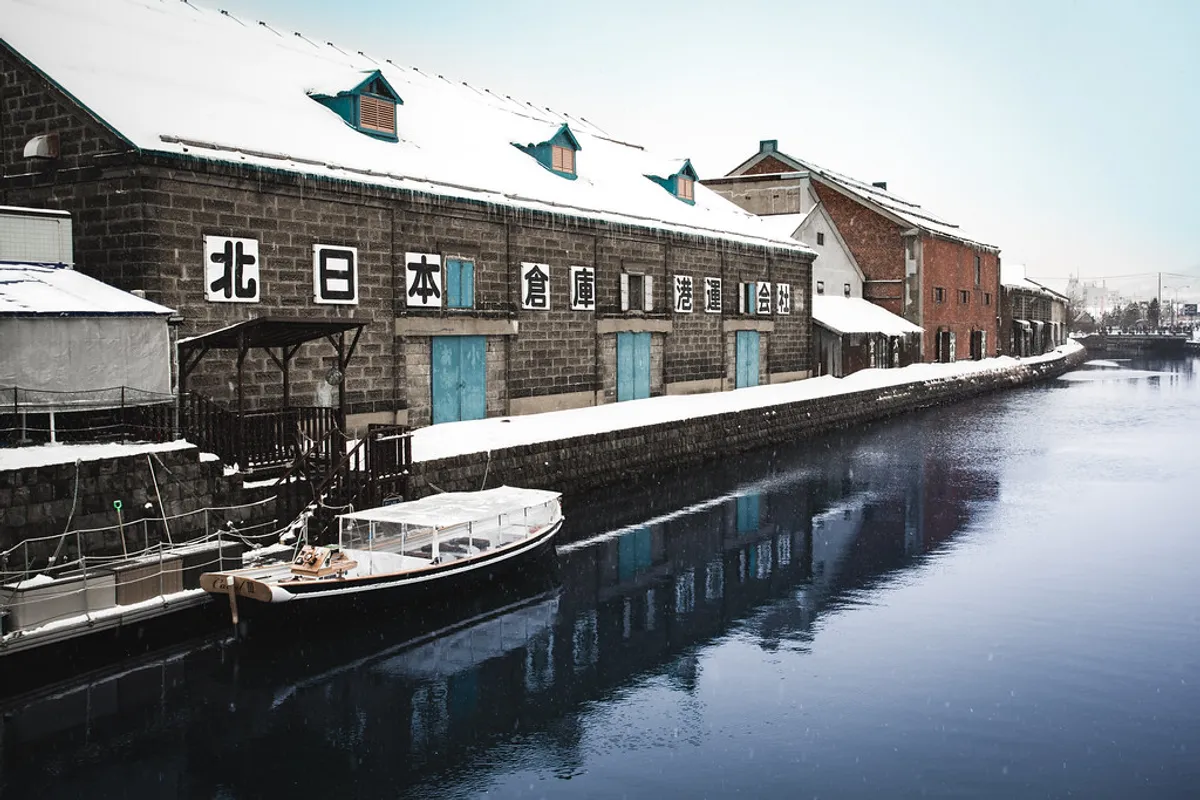
Otaru rewards a half-day, not a marathon. The Otaru Canal is the centerpiece: a 1,140-meter waterway completed in 1923, lined with preserved stone warehouses from the Meiji and Taisho eras. At dusk, 63 gas lamps light along the banks, which is why the canal is most atmospheric in the late afternoon and early evening. The Hokkaido official tourism site places it about a ten-minute walk from JR Otaru Station, so the town’s signature sight is within easy reach of your arrival point.
Around the canal, the old town’s former trading houses and warehouses now hold shops, cafes, and museums, and the streets are compact enough to explore on foot. This walkability is exactly why Otaru works as an add-on: you can arrive, take in the canal and a few nearby blocks, and be back at the station without a complicated plan. In winter, the canal district is associated with the Otaru Snow Light Path illumination event, which draws crowds after dark — beautiful, but a reason to confirm your return train before you settle in.
Combining them: sequencing and rail buffers
If you split the day, sequence it so the fixed constraints — daylight and return trains — work in your favor. Otaru’s canal photographs best near dusk, so a clean structure is a Sapporo morning followed by an Otaru afternoon and early evening, returning to Sapporo after the gas lamps come on.
The two cities share the same JR line, and Otaru’s official tourism site describes the ride as roughly 35 minutes by train. Rapid services run faster than all-stops local trains, so the real figure on your day depends on which you catch. Rather than trust a fixed number, check the live timetable with JR Hokkaido before you leave, and again before you head back. A workable shape for a split day looks like this:
- Morning in Sapporo: market breakfast at Nijo Market, a walk through Odori Park, then back to Sapporo Station.
- Midday transfer: take a rapid train toward Otaru; leave slack in case you miss the first departure you had in mind.
- Afternoon and dusk in Otaru: the canal, the warehouse streets, and the gas lamps as the light fades.
- Return: head back to Sapporo in the evening, keeping dinner or Susukino as a flexible bookend.
Build a buffer of at least 20–30 minutes into each transfer. Trains, weather, and your own pace rarely align perfectly, and a small cushion is what keeps a split day from becoming a stressful one. For choosing the right season for this kind of trip, see our guide on the best time to visit Japan.
Weather and the winter buffer
For early trip planning, compare Sapporo with other stops in the Japan weather-by-month city comparison. It uses the same 1991–2020 climate-normal period for five stations. A monthly mean is not a daily high or low, and Sapporo’s figures are not an Otaru forecast; check the actual forecast and transport notices before deciding the day’s route.
Hokkaido’s weather is the single biggest reason to keep plans loose. Winter brings snow, cold, and short daylight, which compresses the useful sightseeing window and can slow travel. That does not mean avoiding winter — the snow is part of the appeal in both cities — but it does mean padding your schedule and preparing indoor fallbacks.
If snow or wind disrupts your timing, lean on covered options: the market stalls and eateries in Sapporo, the museums and shops in Otaru’s old town, and the warmth of a sit-down meal. Treat any outdoor highlight as weather-dependent, and decide in advance which segment you will drop if the day runs short. A conservative winter plan keeps only one city as the “must,” with the second as a bonus you abandon without regret if conditions turn.
Food, without guarantees
Both cities are strong for food, but specifics shift by shop and season, so plan around categories rather than a single address. In Sapporo, Nijo Market is the easy introduction to Hokkaido seafood, and the surrounding downtown covers everything from ramen to izakaya dinners in Susukino. Otaru is associated with fresh seafood and local sweets near the canal, and its walkable center makes grazing simple.
A useful rule is to check hours on the day, expect queues at popular counters, and keep a backup in mind. Treating one restaurant as guaranteed can create disappointment; choosing a type of food first and deciding on the ground keeps the plan more flexible. If onsen towns are also on your radar for this trip, our best onsen towns in Japan guide pairs well with a Hokkaido itinerary.
A conservative return plan
The most common way a Sapporo-plus-Otaru day goes wrong is a rushed or missed return. Avoid it by deciding your latest acceptable return train early, then working backward. Note a realistic “last good train” from Otaru while you still have daylight, and set a personal turnaround time in Otaru that leaves margin before it.
If you are relying on connections beyond Sapporo — an onward train, an airport transfer, or a New Chitose Airport departure — add another layer of buffer, because a delay in Otaru can cascade. When in doubt, come back to Sapporo earlier and enjoy a longer evening in the city rather than gambling on the last departure. A calm return is worth more than one extra half-hour by the canal.
Making the call
For most first-time visitors, a full day in Sapporo is the safer, more relaxing choice, with Otaru saved for a dedicated half-day. Combine them only when your start time, the weather, and your appetite for movement all line up — and even then, sequence Sapporo in the morning and Otaru toward dusk, with generous rail buffers and a firm return plan. Get those pieces right and the split day delivers the best of both: a big Hokkaido city and its storybook port town in a single, well-paced outing.
For other regional food-and-city contrasts, continue with our Kanazawa city guide, Kanazawa food guide, and Asakusa neighborhood guide.
Ready to explore guided experiences elsewhere in Japan? Browse Roam Japan tours.
Frequently Asked Questions
- Should I visit only Sapporo, or add Otaru in one day?
- If it is your first time in Hokkaido and you want markets, parks, and nightlife at a relaxed pace, a full day in Sapporo alone is plenty. Add Otaru only if you can start early, keep the Sapporo portion tight, and are comfortable with a roughly 35-minute train each way. If your schedule is loose or the weather is poor, keep both cities as separate half-days instead of cramming them together.
- How long does the train from Sapporo to Otaru take?
- The two cities sit on the same JR line, and Otaru's official tourism site describes the trip as roughly 35 minutes by train. Rapid services are faster than all-stops local trains, so build in a buffer and check the current JR Hokkaido timetable on the day you travel rather than assuming a fixed departure.
- Is winter a good time to combine Sapporo and Otaru?
- Winter is scenic — Otaru's canal and Sapporo's Odori Park are both associated with major snow events — but cold, snow, and shorter daylight make tight timing risky. Add extra buffer between segments, plan indoor fallbacks like markets and covered arcades, and confirm return trains earlier than you think you need to.
- What should I eat in Sapporo and Otaru?
- Sapporo's Nijo Market is known for Hokkaido seafood such as king crab, salmon, and salmon roe, plus seafood rice bowls at its eateries. Otaru is associated with fresh seafood and sweets near the canal district. Hours and availability vary by shop and season, so treat any single spot as optional rather than guaranteed.
More on Regional Travel
Continue exploring this cluster.
Best Things to Do in Kanazawa: 2026 Guide
Plan the best things to do in Kanazawa: Kenrokuen Garden, samurai and geisha districts, and Sea of Japan seafood — from someone who visited twice.
Sawara First-Time Guide: Merchant Town Walks
Plan a first visit to Sawara around its historic merchant-town streets, flexible culture stops, and current official planning sources.
Fukuoka First-Time Guide: Hakata and Canal Days
Plan a first Fukuoka stay around Hakata, a flexible city day, and an optional Dazaifu side trip using current official sources.
Miyazaki Travel Guide: Aoshima and City Days
Plan a first Miyazaki trip by choosing a city base or an Aoshima coastal day, then check official sources before you travel.
Hakodate and Hirosaki: A Cross-Strait Route
Plan a Hakodate and Hirosaki cross-strait route by choosing a night-view city base, a castle-town day, and when the transfer is worth it.