Niigata City Walk: Bridge, Sake, and River
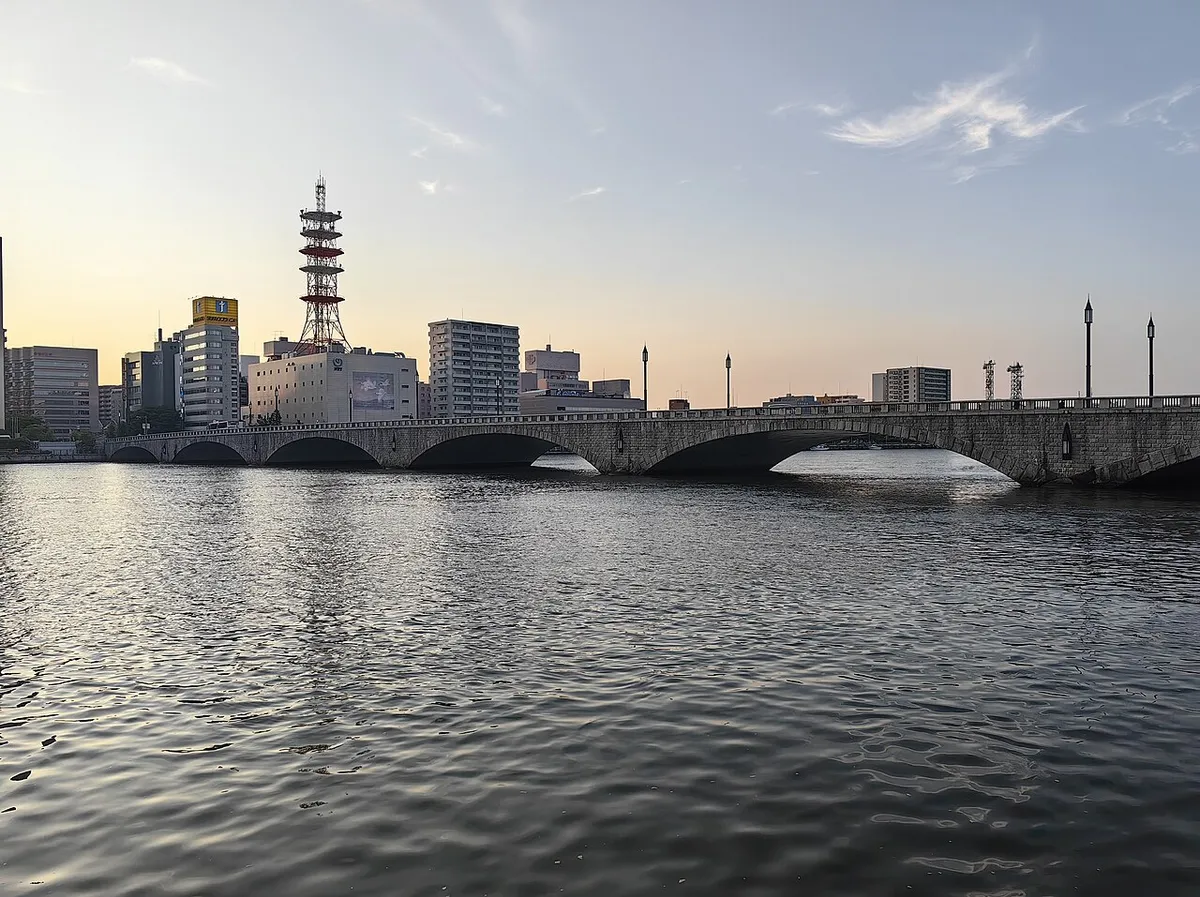
Niigata City does not try to be a checklist destination, and that is its advantage. The core experience is compact: a landmark river bridge, a hands-on sake tasting, and an old entertainment district you can walk in under an hour. Treat it as a half-day anchor that can expand into a full day if the sake side of the city interests you, rather than a place that demands a packed itinerary.
If Niigata is one stop in a longer Japan trip, pair this guide with our Japan travel tips and best time to visit Japan guides before you lock transport and hotel plans.
Quick route: bridge, sake, old town
From Niigata Station, the simplest route is a loop: walk toward Bandai Bridge, cross the Shinano River and back (or continue to the far bank if you want a longer riverside stretch), then work into central streets for a sake tasting and a walk through Furumachi. This keeps the day anchored to a single, walkable axis instead of scattering stops across the city.
Reverse the order and start with the sake tasting if you land in Niigata hungry or tired from travel — a seated indoor stop first can make the outdoor walking that follows more comfortable.
The bridge and the river
Bandai Bridge crosses the Shinano River, Japan’s longest, and connects the newer Bandai side of the station area with the older Furumachi side of the city. The bridge itself is roughly a fifteen-minute walk from Niigata Station, with wide sidewalks that make it a comfortable, unhurried crossing rather than a quick photo stop. Budget twenty to thirty minutes here if you plan to walk across and pause partway for the river view in both directions.
This stretch of riverfront is also where much of Niigata’s independent-travel appeal overlaps with guided photo-walk itineraries built around the city: a bridge crossing, a market browse, and a sake stop are a natural sequence whether you are walking it yourself or following a guide’s route.
Ponshukan: a hands-on sake stop
Niigata Prefecture is known for its sake breweries, and the Ponshukan Sake Museum is built around that reputation: a tasting room where visitors sample sake from a wide range of the prefecture’s producers using a token system, rather than committing to a single bottle or brewery visit. There are multiple Ponshukan locations at major stations in the prefecture, so confirm you are heading to the Niigata City branch near the station if this is your only stop.
Treat this as a forty-five-minute to hour-long stop, longer if you want to compare several sakes at an unhurried pace. It works well as either your first stop of the day or a midday break between the bridge and Furumachi, and it is a reliable indoor option if the weather turns.
If sake is more than a passing interest for your trip, our sake brewery tour guide covers the deeper brewery-visit side of the topic beyond a single tasting counter.
Furumachi: the old entertainment district
Furumachi is Niigata’s historic entertainment and commercial district, where shops, restaurants, and the city’s geigi performance tradition share the same compact set of streets. As a casual first-time visitor, you do not need to arrange a performance to enjoy the area — the value of walking Furumachi is the old streetscape itself and the contrast it creates with the open riverfront.
Give Furumachi thirty to forty-five minutes as a walking stop rather than a seated destination, unless you have specifically arranged a restaurant reservation that includes a performance.
Weather and crowd fallback
Niigata’s riverside walk is the most weather-exposed part of this route. In rain or strong wind off the river, shorten the bridge crossing to a there-and-back rather than continuing to the far bank, and shift your remaining time toward Ponshukan and Furumachi’s covered shop streets. Neither of those stops depends on clear skies the way the open riverfront does.
Crowds are rarely the limiting factor in central Niigata compared to Kyoto or Tokyo-scale destinations, so timing your visit around weather is a bigger planning factor here than avoiding peak-hour congestion.
When to skip or extend
Skip the far side of the river if you are short on time or the weather is poor — the bridge itself, walked partway and back, gives you the same core view. Skip a second Ponshukan-style tasting stop if you have already visited one at another station on your trip, since the format and selection overlap.
Extend the day by pairing this route with a broader look at Niigata’s food and rice culture, or by using Niigata as a base for a coastal or Sado-bound side trip if your schedule allows an overnight stay. For most first-time visitors passing through, the bridge-sake-Furumachi loop is a satisfying half-day that does not require an extension to feel complete.
Getting oriented
For general trip context, the Niigata City official travel guide is the best place to check current seasonal events, hours, and any access changes before you go. Use it to confirm details rather than relying on fixed assumptions about opening times or availability, since these can shift by season.
Making the call
Niigata rewards a focused half-day more than an ambitious full one: cross the bridge, taste a flight of prefectural sake at Ponshukan, and walk the old streets of Furumachi before deciding whether the city has earned more of your time. For other compact regional routes with the same route-and-timing logic, see our Sapporo and Otaru, Sendai, and Kamakura and Enoshima guides.
Ready to compare guided experiences elsewhere in Japan? Browse Roam Japan tours for guided Japan experiences while a dedicated Niigata comparison route is still pending.
Frequently Asked Questions
- Is Niigata worth a stop if I only have half a day?
- Yes, if you keep the plan to Bandai Bridge, a Ponshukan sake tasting, and a short Furumachi walk rather than trying to add a full second neighborhood.
- What should I do in Niigata if it rains?
- Move the sake tasting at Ponshukan earlier in the day, shorten the outdoor riverside walk, and treat Furumachi's covered shop streets as your main walking time instead of the open riverbank.
- Do I need to book anything in advance for Ponshukan?
- The tasting format uses tokens purchased on site, so advance booking is not the usual approach, but check current hours and any seasonal changes before you go.
- Is Niigata a day trip or worth an overnight stay?
- A day trip covers the core river-and-sake route comfortably. An overnight adds room for a slower Furumachi evening or a side trip toward the coast without rushing the return train.
More on Regional Travel
Continue exploring this cluster.
Best Things to Do in Kanazawa: 2026 Guide
Plan the best things to do in Kanazawa: Kenrokuen Garden, samurai and geisha districts, and Sea of Japan seafood — from someone who visited twice.
Sawara First-Time Guide: Merchant Town Walks
Plan a first visit to Sawara around its historic merchant-town streets, flexible culture stops, and current official planning sources.
Fukuoka First-Time Guide: Hakata and Canal Days
Plan a first Fukuoka stay around Hakata, a flexible city day, and an optional Dazaifu side trip using current official sources.
Miyazaki Travel Guide: Aoshima and City Days
Plan a first Miyazaki trip by choosing a city base or an Aoshima coastal day, then check official sources before you travel.
Hakodate and Hirosaki: A Cross-Strait Route
Plan a Hakodate and Hirosaki cross-strait route by choosing a night-view city base, a castle-town day, and when the transfer is worth it.